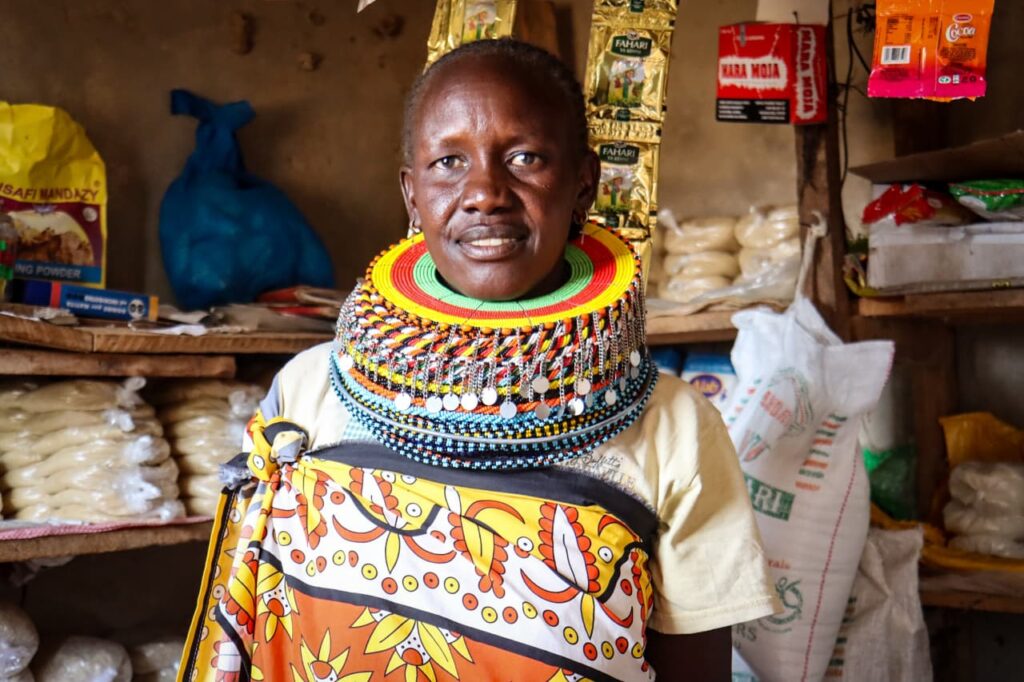
Water for the People, Work for Paul

Before the sound of running water ever meant income, Paul Kiperus was known around Kiwanja as the guy you’d find at the riverbeds, loading sand onto lorries. Today, he’s the one people call when their tanks are leaking or when they finally decide to install indoor plumbing.

He was in Form 1 when everything changed. An elephant attacked his father while he was running errands. The injuries were serious, such that both legs were broken, and just like that, Paul had to stop school. The money that would have been allocated for his school fees was redirected to cover hospital bills and other medical expenses. As the eldest child, he stepped up, and school had to wait as he stayed back to take care of his siblings.

To make ends meet, Paul worked at sand harvesting sites. He’d get Ksh. 300 for every lorry he helped load. Most of the time, he was forced to work in the dead of night; it was cold, tiring, and risky. The riverbeds could flood without warning, and on more than one occasion, he feared for his life. But he kept going because staying idle was not an option.

While working as a sand harvester, Paul still found time to help around his community. He had volunteered for two years to monitor water pipes in a nearby Community Land Management Committee (CLMC) project, even though he didn’t know how to fix them. Whenever there was a leak, someone else had to be called in. The board saw his dedication, and when Ujuzi Manyattani came, they suggested he take it a step further by enrolling in a plumbing course under the vocational training program. It was something he had quietly been working toward all along.

At first, upon joining, he was nervous. He had never been to a classroom since dropping out of school. Some of the skills he was taught included pipe fitting, water supply, drainage systems, and plumbing fixtures, among others. They even had practical sessions in nearby schools.

After completing training, Paul didn’t sit still. He took on small jobs, such as fixing tanks, repairing leaks, and connecting homes to the water supply. His phone started ringing more often. For the first time in years, he had regular work and income he could count on. “I’d leave the house in the morning and come back in the evening with something for the family,” he says.

With his nationally recognized certificate in hand, Paul applied for a job under the Makurian Osirua Water Project with Laikipia County. He was accepted as a casual and has now been on the payroll for nine months, earning around Ksh. 9,000 monthly. For bigger jobs, he links his classmates from the program.

He’s also been involved by the Mayianat Conservancy management in repairing pipelines that elephants have destroyed.

Their area had always struggled with access to water. When a storage tank was finally built to help the community, many families wanted water piped directly to their homes. Paul took it upon himself to lend a hand. The demand grew so rapidly that he decided to open a small plumbing workshop, stocking fittings and connectors that people used to travel as far as Nanyuki to buy.

With support from Rangelands SACCO through FFI-Darwin, he got a Ksh. 50,000 loan to expand.  Paul dreams of further growing his shop, adding things beyond plumbing and other hardware materials.

A New Dawn: Ufugaji Bora Mashinani Radically Transforms a Herder’s Life

Loimap Lekula’s education journey was cut short in grade 6.

Perennial drought in Sasaab Village, Samburu County, where he lived with his parents, forced the now 29-year-old father of four and devoted husband to take care of his family’s livestock instead. For many years after he dropped out of school, Lekula’s days revolved around herding and grazing his family’s livestock across the vast northern Kenya rangelands. Often, he would trek long distances in search of pasture, while protecting the animals from harsh conditions and predators.

This was his routine until 2021, when he learnt about the Ufugaji Bora Mashinani Programme, run by MashinaniWORKS through West Gate Community Conservancy. Lekula decided to enroll, alongside 299 other herders.

The Program’s first training session covered livestock breeding and quickly became his favorite, as he learnt how to improve his livestock’s productivity through selective breeding. Inspired by this knowledge, Lekula purchased a Galla she-goat, a breed renowned for its superior quality. This decision increased Lekula’s milk production and improved his family’s nutritional health, instilling a sense of pride he had never experienced before.

The training also deepened Lekula’s understanding of climate change, a major challenge for pastoralists in northern Kenya. He learnt adaptation strategies, including preserving feed and breeding more resilient livestock. Having previously lost nearly all his cattle to drought, Lekula, who currently owns 20 goats and two cows, felt more prepared than ever to face the prolonged dry seasons that once decimated his herd.

“Not long ago, I had 20 cows and lost all but three to drought,” Lekula vividly recalls. “That huge
loss taught me to adapt to our changing environment, and now I know how to prevent such
losses.”

Loimap Lekula

The Ufugaji Bora Mashinani Programme appointed Lekula as a Livestock Marketing Agent (LMA). To enable him to conduct his responsibilities, he was issued a solar-powered smartphone through which he communicates and collects data. As an LMA, he disseminates information on market trends, the condition of grazing lands, and livestock health to other herders.

On the 20th of March, Lekula graduated alongside other herders at a spectacular ceremony to celebrate their completion of three years of training. When he received his certificate, he saw more than a piece of paper. For him, the certificate symbolised the dawn of a new era—an opportunity to help his community, share the knowledge he had gained, and break the cycle of poverty that had held him back for so long. Lekula realised he no longer was just a herder. Now, he was a trained professional with the skills to make a real difference in West Gate Community Conservancy.

Loimap Lekula receives his certificate of completion from the Ufugaji Bora Mashinani program on the 20th of March, 2024.

After his graduation, Lekula joined a 30-member self-help group where he and his peers engage in various income-generating activities, including beading, selling livestock, and running small businesses. The group pools members’ earnings into a joint account, which creates a financial safety net that increases their resilience and provides timely support during difficult times.

Beyond livestock farming and the self-help group’s activities, Lekula has ventured into poultry farming—a role traditionally perceived as reserved for women. Having begun with a modest flock, he now owns 55 chickens and regularly receives orders for eggs and meat. He reinvests the additional income in his goat herd, further increasing his financial stability.

Lekula envisions a future where every herder has a stable income and the skills to adapt to climate change, prevent losses, and secure fair livestock prices in the market. He strives to inspire the next generation and ensure that his children—and every child in his community—has access to nutritious food and better education.

Rangelands SACCO: Harnessing Inclusion for Economic Development

At the age of 10, Alice Shakinei from Masol Community Conservancy in West Pokot County experienced a severe reaction in her right leg following a polio injection during a clinic visit.

Her family sought treatment from community herbalists, and after several failed attempts, took her back to the hospital. Unfortunately for Alice, it was too late. She was left with a disability that physically restricted her in multiple ways. Determined to rise above her circumstances, Alice grew up to become an industrious lady who today runs her own petroleum business.

On a typical day, you will find her cheerfully filling up her jerry-cans with petroleum, ready to serve her customers. Before she established her business, Alice was a stay-at-home mother with no source of income, and was left to raise her children by herself after her husband left.

“At that moment, I knew that the children were looking up to me as their provider, so I decided to start selling petrol and diesel on people’s verandas. It took me two years before I secured a space.”

In 2019, Alice used a Ksh 25,000 loan from Rangelands SACCO to grow her business. As the sole fuel supplier in her area, which lacks a petrol station, the demand for her products and services has risen. On a good day, she makes up to Ksh 10,000 and on an average day, up to Ksh 6,000.

The business training Alice received from Biashara Mashinani played a crucial role in the expansion of her business. “I had the skills and a bit of knowledge, but what I was taught was not even close to half what I knew. Learning budgeting, proper business planning, record keeping, and time management helped me,” she explains.

Alice fills a jerry can at her shop in Marich Centre, West Pokot County. Photo|©MashinaniWORKS

Alice is not immune to the stigma associated with her condition. “People have said negative things about me, but at the end of the day, I know that I am the only one who can help my children and myself.” Additionally, Alice’s limited mobility causes her to lose customers sometimes, as deliveries are unsuccessful or delayed.

These challenges would discourage many, but not Alice, now 37. She draws strength from knowing she has built a safe home for her three children and ensured they have access to education and other basic necessities. Alice aspires to own a petrol station and serve customers from all parts of the country. Her advice to young girls and women is, “Prioritise venturing into business, embrace everything that comes with it, and do not let anything stop you from achieving your goals.”

Defying Gravity: How Ujuzi Manyattani Transformed a Young Man’s Life

Born into a Turkana family in a remote village in northern Kenya’s Isiolo County, Jonathan Nawapa’s early life was shaped by financial crisis.

In a desperate attempt to improve their circumstances, Jonathan’s family relocated to the outskirts of Isiolo Town. However, escalating living costs and the difficulties of adjusting to a new environment compelled Jonathan’s parents to make tough decisions, including discontinuing Jonathan’s education.

Consequently, he withdrew from school after completing Grade 7. Ever since he was a little boy, Jonathan had been fascinated by the art of fixing things. Now that he had plenty of free time, he spent countless hours working beside his uncle, who often repaired household equipment such as radios, and learnt by observing each step.

As fate would have it, Jonathan’s uncle passed away, and he felt the loss deeply. Death had robbed him of a mentor. Despite his devastation, Jonathan followed in the footsteps of his uncle and began repairing small gadgets in the house, including watches and radios. Having no access to electricity, he adopted his uncle’s improvisational techniques. He would heat a five-cent coin on a charcoal stove, then use it as a makeshift soldering tool to connect wires. His ingenuity did not go unnoticed. Over time, the community began to turn to him for assistance fixing broken equipment.

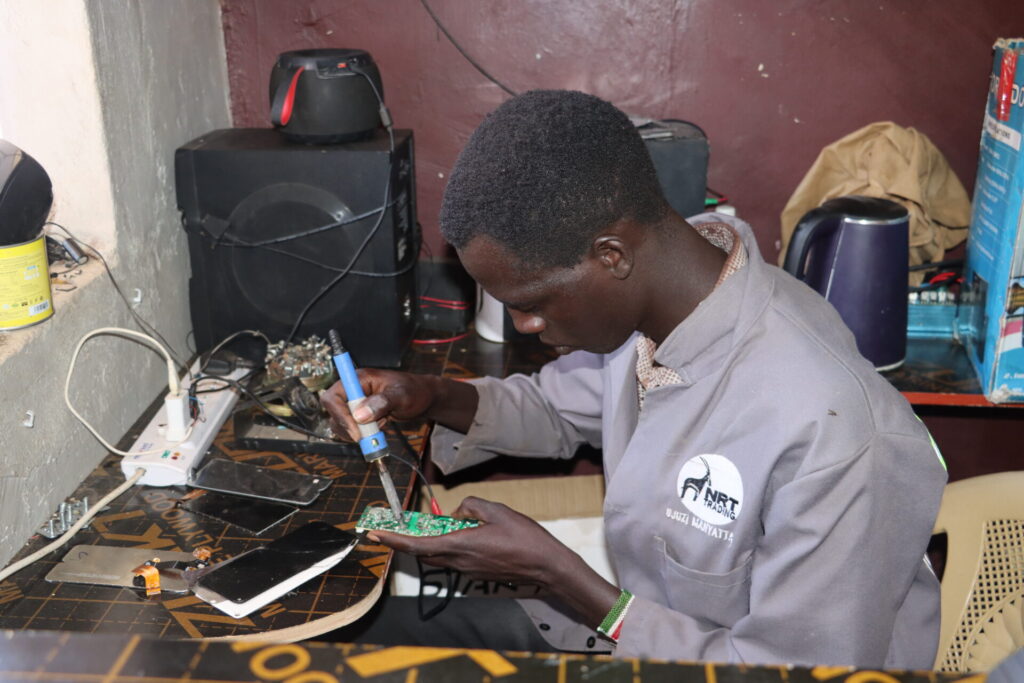
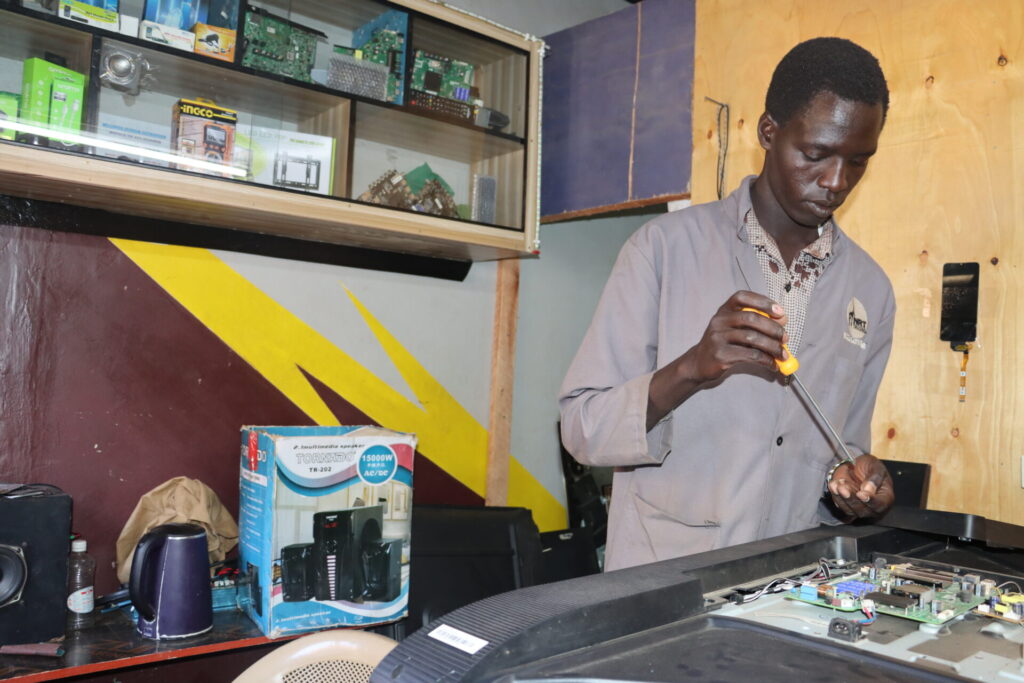
Jonathan repairs a television at his workshop. ©MashinaniWORKS

After turning 20, Jonathan sought ways to learn the intricacies of equipment repair and lift his family out of poverty. In Isiolo Town, he met an experienced technician who took him under his wing as an apprentice for five years. During this period, he learnt to repair a variety of home appliances. His interest was piqued, and he dreamed of expanding his skill set to include mobile phone repair.

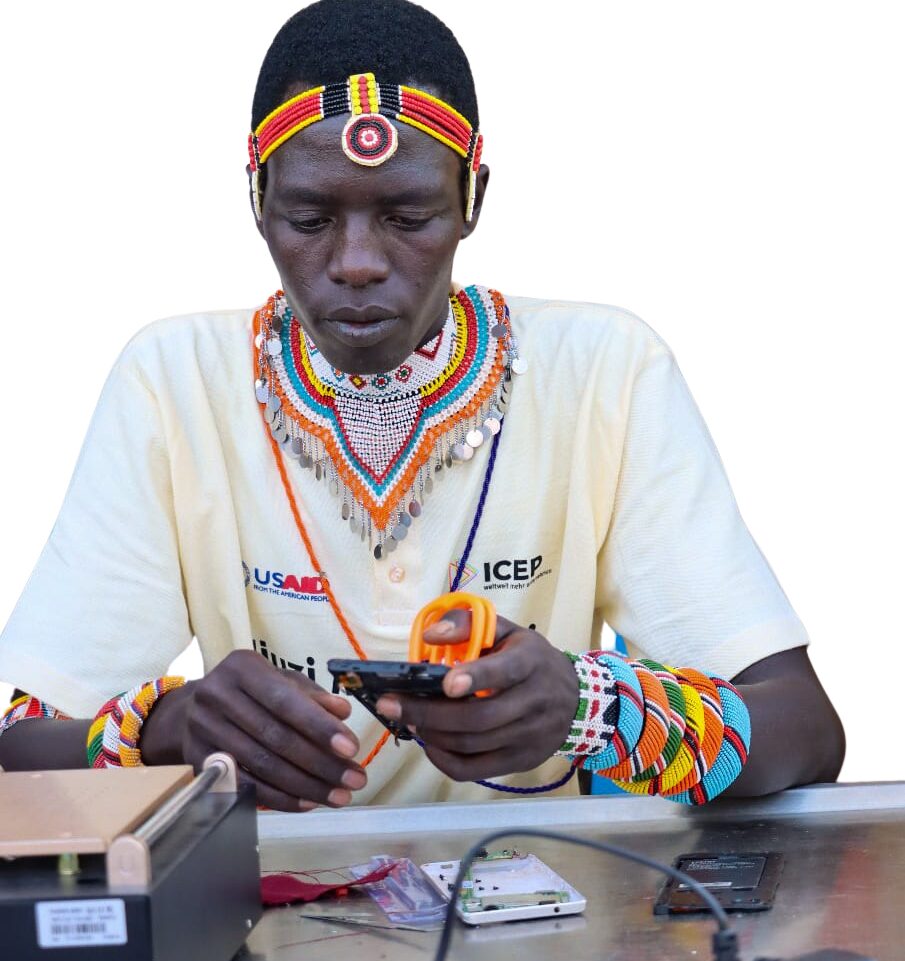
Jonathan’s big break came when a Leparua Community Conservancy board member noticed his dedication and informed him of the ICEP-funded Ujuzi Manyattani vocational training programme. Without hesitation, Jonathan enrolled in the mobile phone repair and maintenance course. The next three months were life-changing for him, as he learned essential repair techniques from a professional TVET trainer.

On February 13, 2024, 140 trainees graduated from Ujuzi Manyattani, and Jonathan was among them.
Like the other graduates, Jonathan was issued a certificate and a start-up toolkit, enabling him to establish a business right after graduation. Soon after, he joined a Village Savings and Loans Association and borrowed Ksh 30,000 (USD 232.55) to rent a small workshop and purchase additional tools.

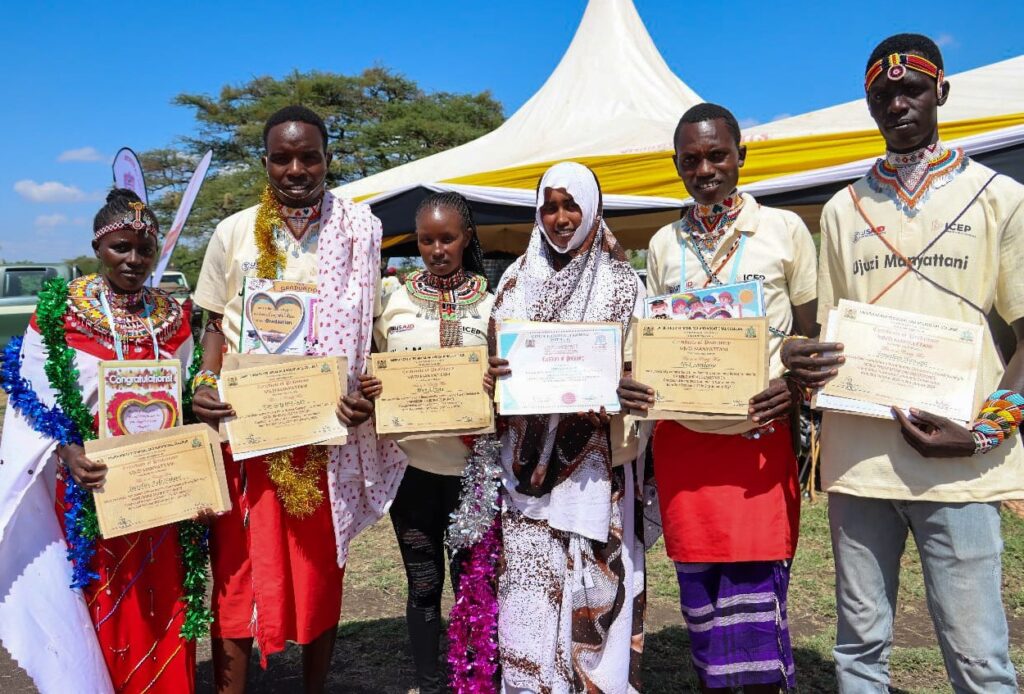
Jonathan (far right) poses for a photo with his classmates as they proudly hold up their certificates during the Ujuzi Manyattani graduation ceremony on February 13th. ©MashinaniWORKS

Today, Jonathan’s shop is a bustling hub of electronic repairs, attracting nearby clients as well as those from neighboring Samburu and Marsabit Counties, who send in their devices via bus. He earns at least Ksh 3,000 daily (approximately USD 23.25) and up to Ksh 10,000 (approximately USD 77.51) for complex repairs, such as fixing television screens.

Jonathan shares his workshop with a business partner. Their combined expertise enables them to expand their service offering, which ranges from repairing phones, thermostats, coils, cables, and kettle fuses to fixing television backlights, motherboards, power supplies, and screens.

Jonathan envisions stocking the workshop with spare parts to reduce costs and training youth in his community. He aspires to create opportunities for others like him to learn profitable skills, so they too can improve their livelihoods, just as he has.

Four Friends and A Vision: How Ujuzi Manyattani is Transforming Lives of Youth in Northern Kenya

Business partnerships have long been a powerful force for success, allowing individuals to pool their strengths, share risks, and create something far greater than what could be achieved alone. In many ways, collaboration can be the cornerstone of building sustainable ventures, particularly in regions where access to resources and capital is limited.

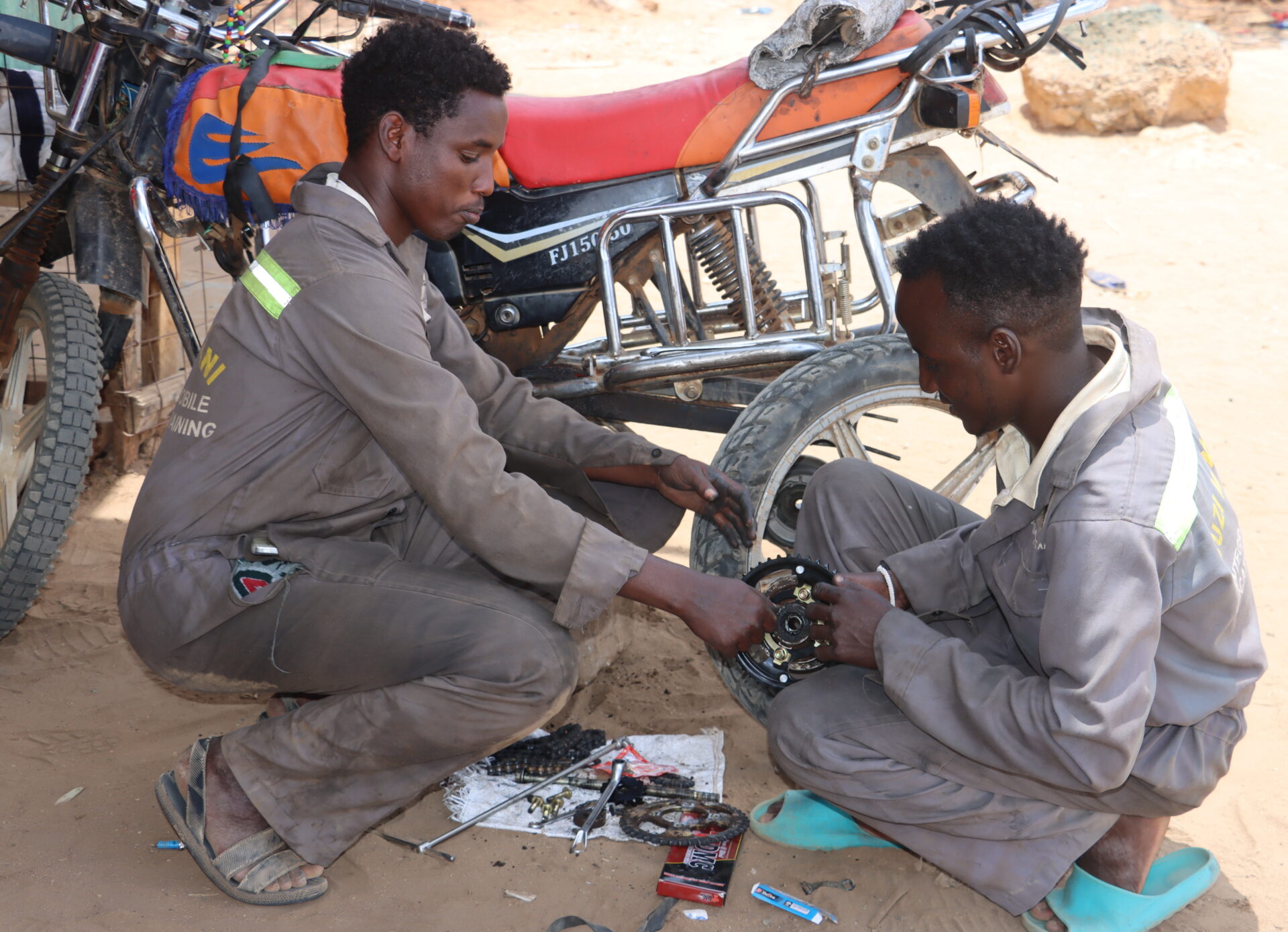
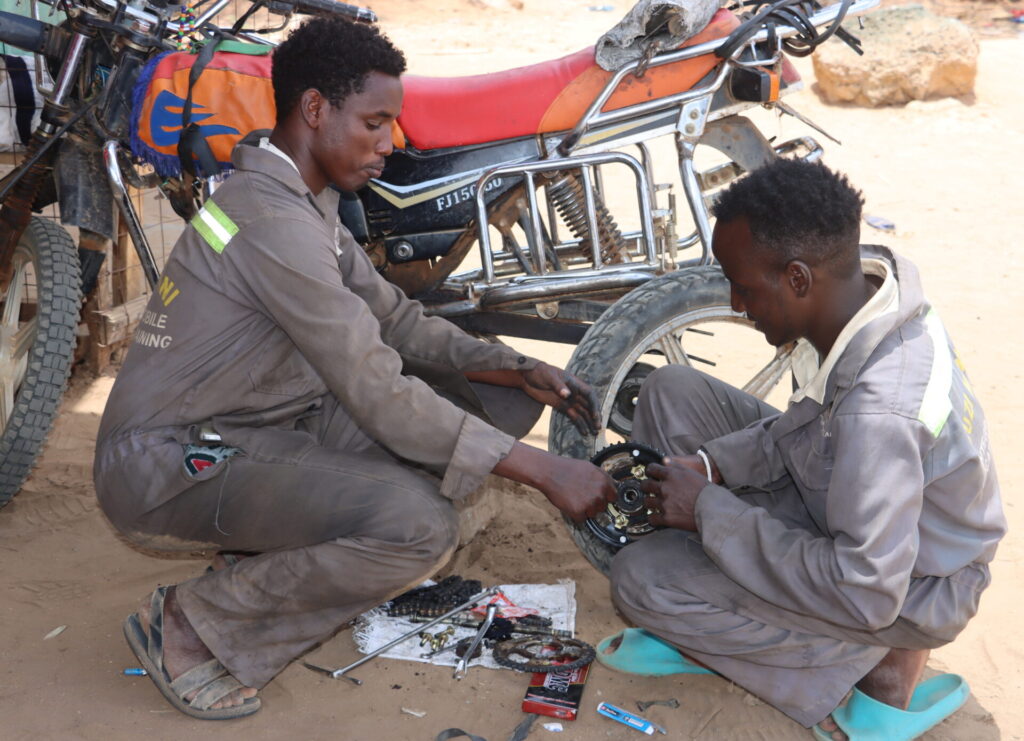
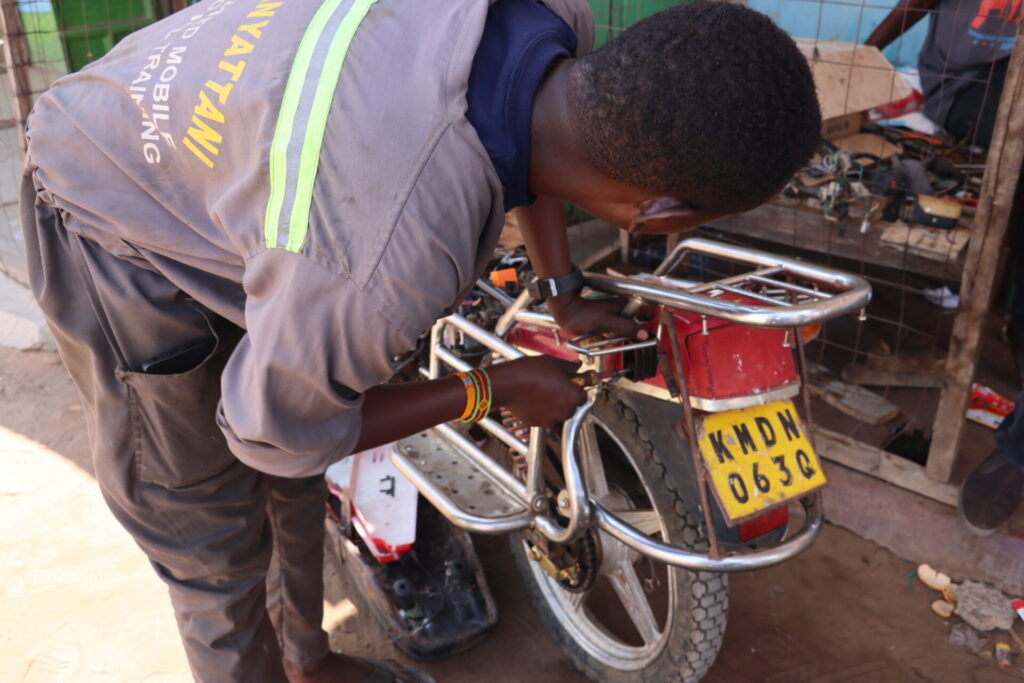
Settled under the shade of an iron sheet roofing, a small team of young men huddles together, tools in hand, working on a motorbike – Shadrack Kinyanjui, Amos Legalhaile, Joram Lemirgichan & Daddy Lemerketo are Ujuzi Manyattani graduates who, with the support of Basecamp Foundation, completed a three-month training in motorcycle repair and maintenance.

Shadrack Kinyanjui, known by his Samburu moniker ‘Lekokoyo,’ was born and raised in Sereolipi. He is the drive behind this partnership, and before joining the program, he was a boda boda operator. His motorbike would often break down in remote areas, far from any garage, leaving him frustrated and stranded. Each time, he would incur additional costs for labor and transport of mechanics who had to come from far away. The worst part? He could do nothing about it. “There were times I would come across a fellow rider stuck in the middle of nowhere with a broken-down bike, but I couldn’t help them. I had no idea how to fix anything,” Shadrack recalls.

Driven by the desire to solve these problems, Shadrack yearned for skills that could help him and others in his community. When he heard about Ujuzi Manyattani, a program that brings vocational training directly to the communities, he jumped at the opportunity, a decision that turned out to be life-changing.
After graduating in June 2024, Shadrack didn’t just hold onto his toolkit—he had a bigger vision. Noticing a gap in qualified mechanics in his home area, he gathered his three friends, all fellow graduates from the course, and together, they set up a small garage for repair services outside an auto spares shop. “Working together has been a good decision,” Shadrack says. “Shared responsibilities and helping each other out. One may be good at wiring, while the other at fixing clutches.”

Shadrack repairs a motorcycle at their garage in Sereolipi, Samburu County

However, the path wasn’t easy. The young men faced skepticism from locals who hesitated to trust their expertise, fearing they were too new to the craft. But they’ve persisted, working hard to prove their worth. On good days, they receive 5-6 customers, earning around KES 1,000 per day each, while on slower days, they focus on smaller jobs like fixing punctures for KES 100. They also began offering mobile services, traveling to remote areas to fix bikes where other mechanics couldn’t reach. It’s this determination to serve their community that has slowly earned them a growing customer base.

Their business is still young, but their dreams are big. They’re currently training a fellow youth, passing on the skills learned through Ujuzi Manyattani. In the future, they dream of expanding their business, opening their own auto spares shop, and eventually establishing individual enterprises, continuing to grow and share in each other’s success.

What started as a three-month course has become a lifelong empowerment and entrepreneurship journey for these four young men. Through collaboration and a shared vision, they are not just fixing bikes but also breaking the cycle of poverty and unemployment in their community.

From Early Motherhood to Building a Life of Independence: Teresa’s Journey of Entrepreneurship and Growth

In a remote village in Masol Conservancy, West Pokot County, Teresa Elolia is a renowned entrepreneur with a reputation growing as quickly as her ambitions. Growing up, her world revolved around family, but as the years passed, she realized that her passion could be something more. When an unexpected opportunity came her way, Teresa saw the chance to turn her skills into something tangible, setting her on a path she hadn’t anticipated.

Born into a modest household, her family provided a stable environment, allowing her to focus on what mattered most—education. However, Teresa’s life took an unexpected turn when she became pregnant in Grade 7 with her first child, yet despite the odds, she managed to complete her primary school education. But after joining Form 1, she soon became pregnant with her second child. Struggling to balance motherhood and education, Teresa made the difficult decision to drop out of school and focus on raising her children. At a young age, Teresa later met a man who fathered her third child. However, this relationship proved to be another challenge. The man, often lost in alcohol, could barely provide for the family. Left with no choice, Teresa parted ways with him and returned to her parents’ home.

With limited options and children to care for, Teresa began wondering how she could change her life’s trajectory. In 2022, through MashinaniWORKS’ Ujuzi Manyattani program, with the support of USAID, Teresa found hope. One of the local community members informed Teresa’s father, who didn’t hesitate to submit her name for enrollment. The beauty of Ujuzi Manyattani lay in its inclusivity—there were no education-level restrictions. Teresa eagerly chose to pursue catering, a craft she had always been passionate about.

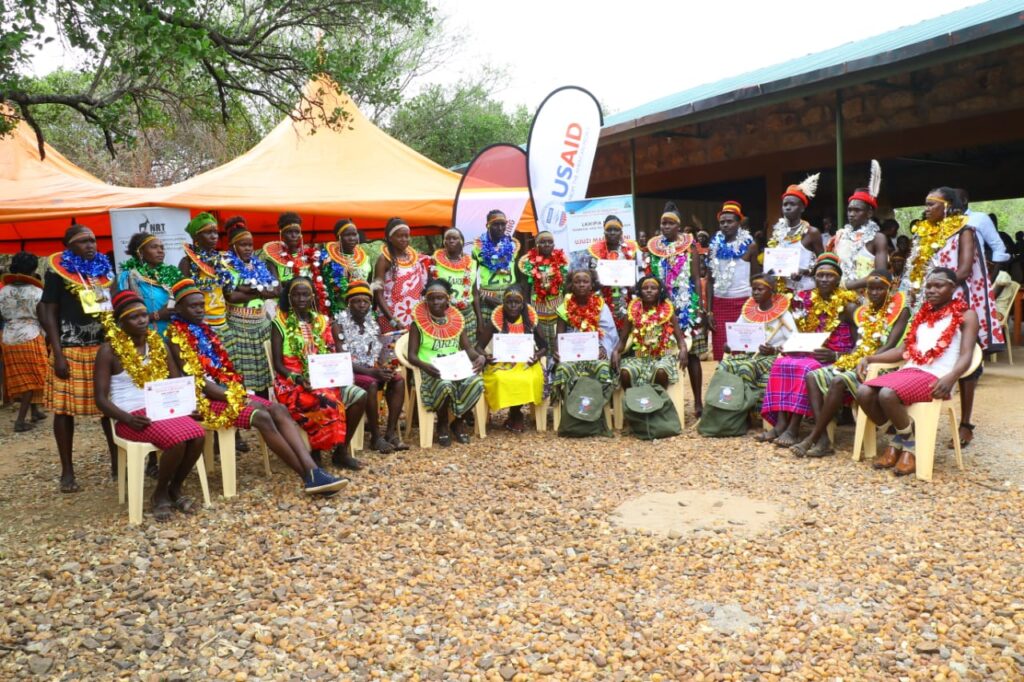
Teresa, second row, first from the right during the Masol Ujuzi Manyattani graduation in 2022

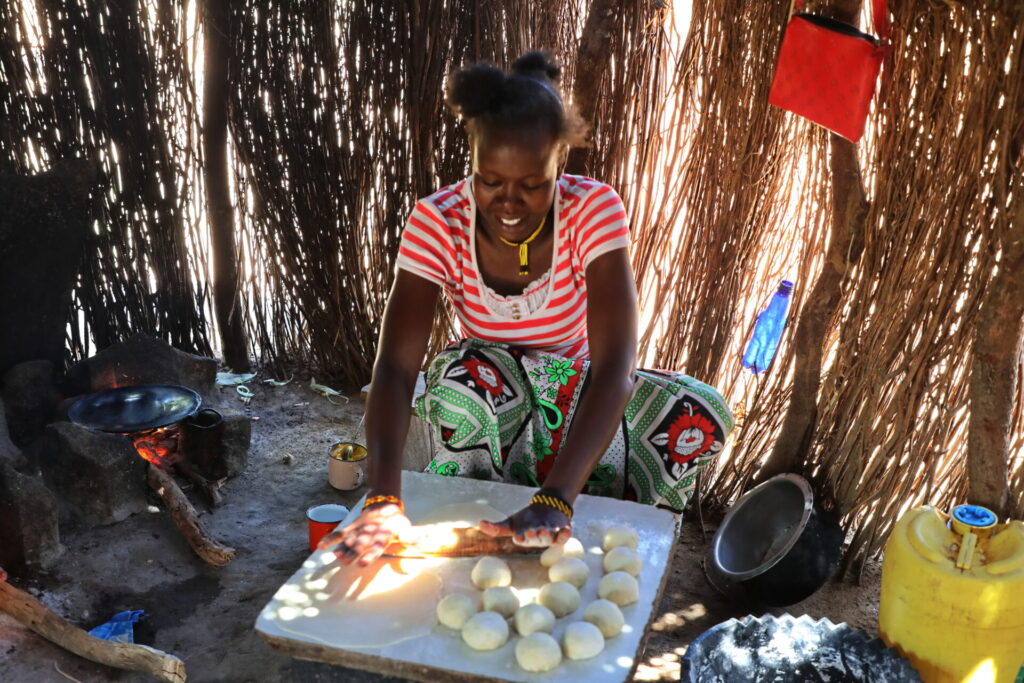
“A few months into the training, I noticed a gap in the local market for baked goods like cakes, donuts, and mandazi, and I seized the opportunity,”

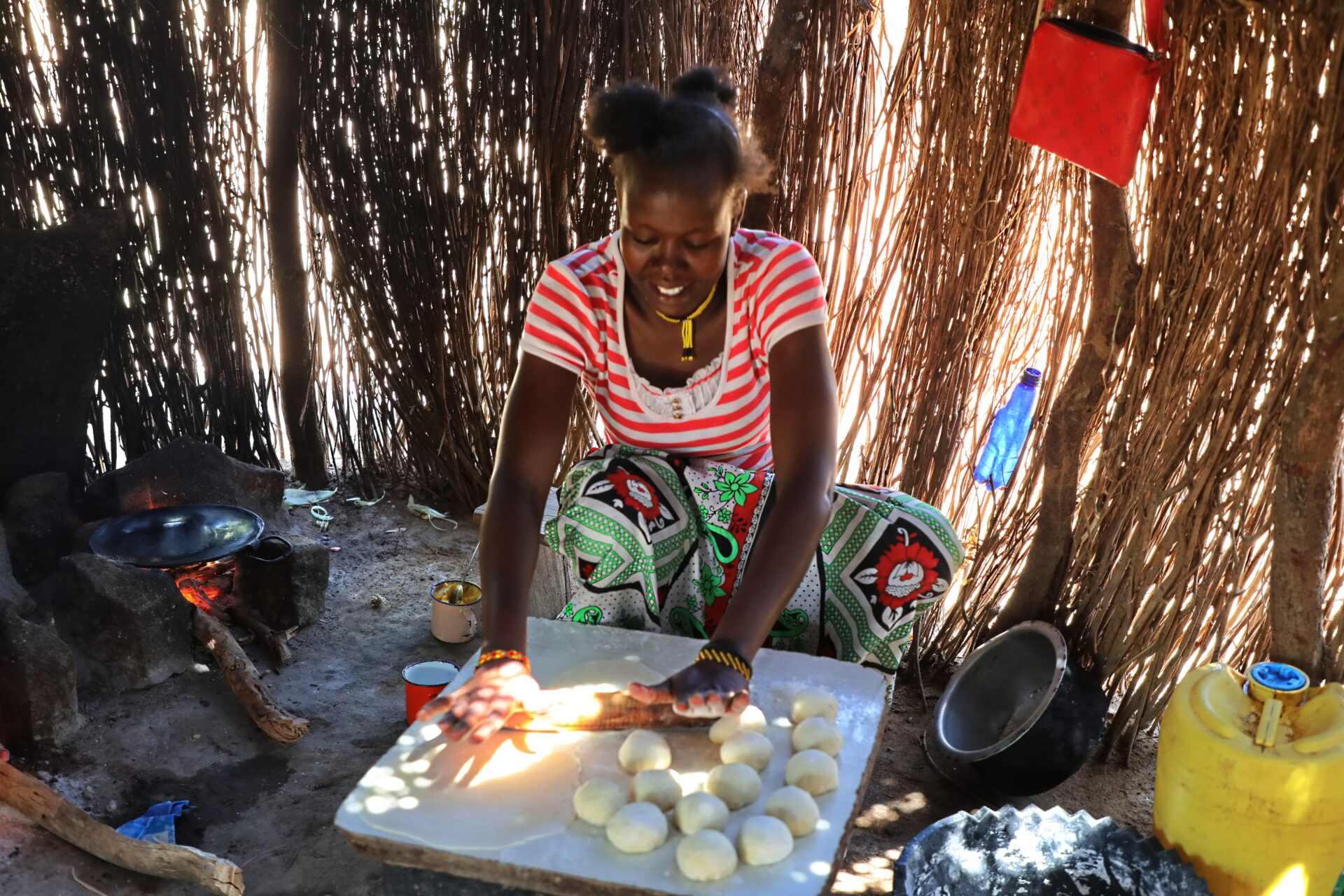
With just a packet of wheat flour and cooking oil, she prepared small batches and hawked them to nearby shops while juggling her studies. This helped her earn an income while getting popular for her services.

Upon graduating with her catering certificate and receiving a tool kit from the program, Teresa fully launched herself into the business world. Her catering skills allowed her to expand her offerings, and she soon started selling maize, beans, and sugar to local hotels, making around KES 12,000 from these sales alone. On a good day, Teresa’s catering business, including a mini hotel, brings in up to KES 6,000. Even on slower days, she can at least make KES 1,000—enough to sustain her family and ensure her children attend school. She no longer relies on her parents for financial support but also helps take care of her siblings; her stability has brought her a sense of independence she once only dreamed of.

With the growing settlement around the area, there has been increased competition in the local market, but the unique touch of her work and the skills she gained from Ujuzi Manyattani keep her ahead of the curve.

With dreams of expanding her business and even employing others, Teresa sees a future where her services are sought after far and wide. She also plans to invest in livestock, diversifying her income sources, and continually upgrading her skills to remain competitive.

Beads of Hope: How BeadWORKS is Transforming Lives of Pastoralist Women through Handicraft

Isn’t it amazing when mastering a craft becomes a pathway to financial independence and community leadership? For Nampaiyo Lepartingat, this was her reality.

As a mother of seven from Kalama Community Conservancy, Samburu County, her daily life revolved around caring for her family and managing their livestock. The unpredictability of livestock sales often left her financially strained, relying solely on her husband’s income. However, Nampaiyo sought ways to improve her family’s financial stability.

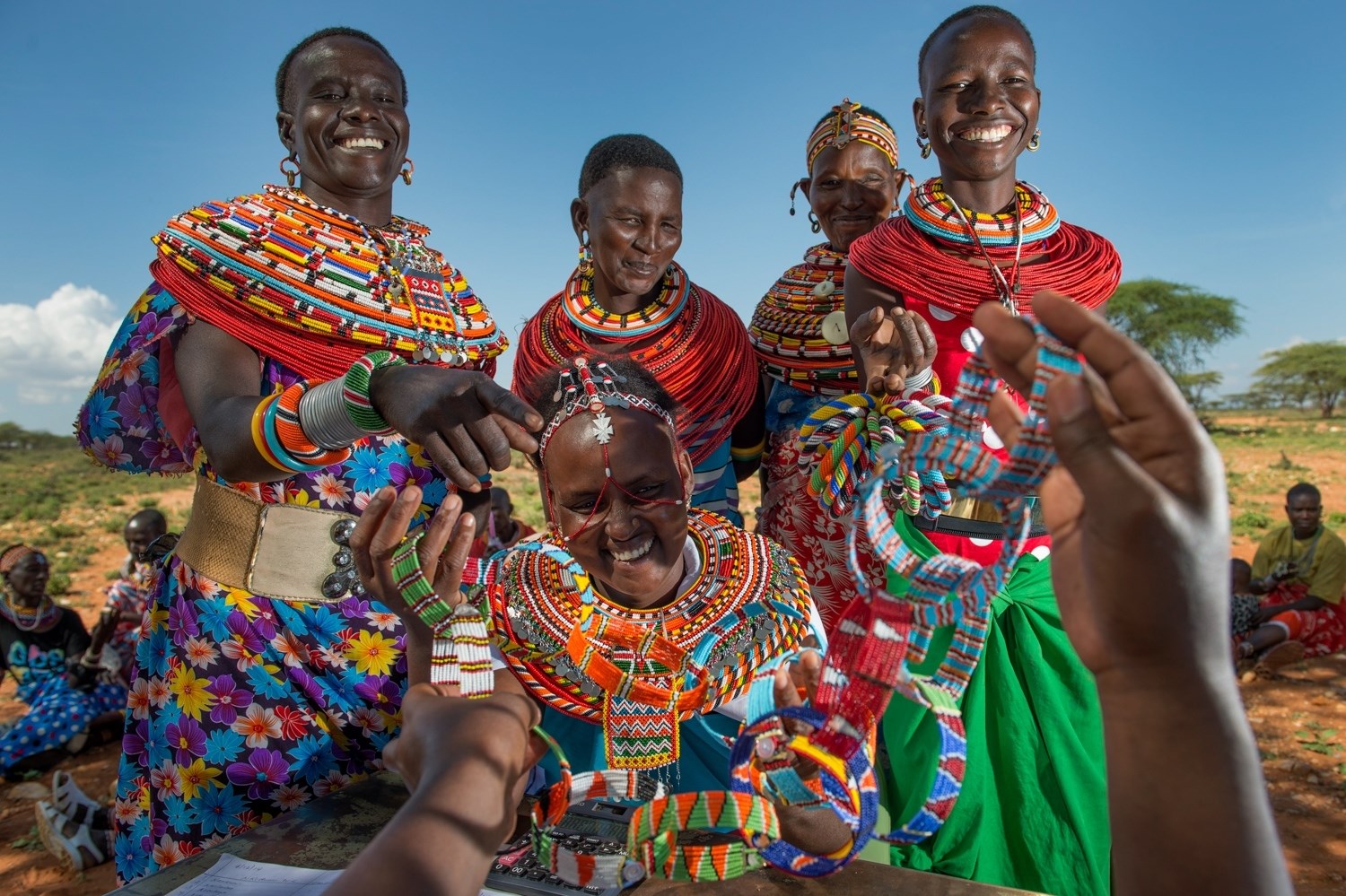
Everything changed five years ago when she discovered BeadWORKS through a friend. Intrigued by the prospect of earning additional income without leaving her home or livestock unattended, she eagerly embraced the opportunity to learn. Joining a Kalama women’s beading group, Nampaiyo quickly distinguished herself as a diligent and skilled artisan. Her talent in creating beautiful pieces and natural leadership capabilities rapidly became evident, leading to her recognition as a starbeader. She is one of 108 starbeaders and acts as a link between BeadWORKS and the beaders. Her responsibilities extend to serving as a supervisor and providing support, guidance, and leadership to the group members.

Through BeadWORKS’ support and training initiatives, Nampaiyo honed her beading skills and gained an understanding of financial management and entrepreneurship. The training offered through the Rangelands SACCO equipped her with essential knowledge in savings and credit management. This enabled her to invest in her businesses, including setting up a successful chicken-rearing business and a shop with mobile money services. With her earnings, Nampaiyo built a modern home for her family, replacing their traditional grass-thatched dwelling, and also provided her children with better living conditions, including access to electricity for smooth learning and security.

Since 2015, BeadWORKS has become a driving force for change among 1,200 pastoralist women in northern Kenya. By leveraging the inbuilt skills of these pastoralist women, BeadWORKS has effectively turned their artisanal craft into a sustainable source of income. For Nampaiyo and the other women, market linkages have been created locally and internationally, expanding their economic opportunities. This increased market access has amplified the impact of BeadWORKS, leading to further economic growth and empowerment for the women.


From Hotel To Shop To Transport Businesses – Mikelina Leparmorijo’s Entrepreneurial Journey

Mikelina Leparmorijo is a 50-year-old mother of 7 who was born into a pastoralist community. She grew up surrounded by traditional livestock-keeping, the primary income source for her family and many others in the community. However, at the young age of 15, Mikelina was forced into marriage and didn’t have the opportunity to continue her education beyond Class 8.

Despite this setback, Mikelina’s entrepreneurial spirit never wavered. A few years later, she began running a hotel and preparing meals for locals, which allowed her to earn enough money to support her children. However, she knew that she needed to diversify her income stream to ensure financial stability for her family.

In 2016, Mikelina learned about the Rangelands SACCO through the Conservancy management and immediately joined as one of the 300 members. Together with other women, she received her first loan of KES 25,000, which helped her boost her hotel business. Michelina later became a Conservancy Enterprise Agent to help recruit new members and follow up on outstanding loans.

“Rangelands SACCO came to our remote areas to change our lives. They trained us to earn a diversified income without depending on livestock. We know about saving and budgeting, and our businesses are running smoothly. We have averted the loss of livestock during the drought period because we were taught how to manage that.” Mikelina happily says.

With the help of the SACCO, Mikelina was able to take a development loan of KES 100,000, which she opened a shop to diversify her income in addition to investing in a vehicle that is being used for transport business together with her sons. Her hard work and dedication paid off when she was elected as the SACCO Chairlady two years ago, a position she holds with pride. Mikelina is proud that more women from her community are taking the opportunity to save and borrow loans from financial institutions like the Rangelands SACCO to improve their lives. Before, they depended on their husbands for everything, but now they have stable businesses.

Today, Mikelina celebrates the increasing number of women in her community who, like her, have embraced the power of savings, loans, and diversified businesses. These women have achieved financial independence, established stable businesses resilient to natural calamities, and secured brighter futures for their children through better education and improved living conditions.

Passion for Progress: Meet Amos Moyare of Tassia Lodge

In the heart of Nadung’oro village, Lekurruki Community Conservancy, a remarkable tale of resilience and determination emerges. Meet Amos Moyare, who rose from humble beginnings to become a crucial asset of a prestigious lodge in northern Kenya. Raised by a single mother alongside six siblings, Amos faced significant financial challenges. Despite these hardships, his family rallied together, enabling him to pursue his education, with his elder brother becoming the family’s pillar of support.

Unlike the conventional image of young men from his community entangled in retrogressive practices such as cattle rustling and banditry, Amos defied stereotypes with his passion for education. He firmly believed education was key to unlocking a future free from poverty and other socioeconomic challenges.

Upon completing his secondary school education in 2011, Amos was at a crossroads. With no means to pursue further studies and faced with harsh living conditions, he courageously took on the role of a volunteer teacher at a local primary school while tirelessly seeking better opportunities.

Amos’s journey took an exhilarating turn when he became enthusiastic about pursuing a career in the tourism industry. His passion was ignited by the region’s diverse wildlife, stunning landscapes, and unique cultural experiences that led to the substantial development of a community-owned tourism facility nearby.

In July 2022, Amos secured an interview with Tassia Lodge, a perfect secluded getaway in Lekuruki Conservancy, and earned a well-deserved spot on the team. Undergoing extensive on-the-job training at Peaks Hotels in Nanyuki, Amos sharpened his hospitality management skills as a food and beverage waiter, preparing himself for the adventurous journey ahead.

Now a 33-year-old, Amos stands tall as he serves guests from all corners of the world. The interactions with these visitors bring him great joy, and the heartfelt appreciation he receives for his exceptional service is deeply rewarding. His role as an F&B waiter has sharpened his prowess and ushered in a newfound sense of financial stability. With his hard-earned income, Amos has established a shop for his wife, significantly contributing to their improved livelihood.

Working at Tassia Lodge has profoundly changed Amos’s life, transforming his outlook on life and shaping his dreams. It has allowed him to envision a future where he can invest in livestock rearing and secure assets, such as plots of land, and expand their business.

Looking ahead, Amos sees himself continuing to grow within the community-owned tourism sector, leveraging his experience and passion to build a sustainable future for himself and his family.

Leadership in Business and Conservation – The Story of Pauline Lolngojine

Recently, women in northern Kenya have emerged as key decision-makers in their communities. They now hold leadership positions and have gained control over benefits, which has resulted in their full participation in the economy as market actors.

Pauline Nduraa Lolngojine is a 47-year-old mother of five from Archers Post in Samburu County, whose story embodies resilience, community impact, and empowerment. Married off at a young age, her education was abruptly cut short in Form 3. However, Pauline chose not to despair. Undeterred by the following hardships, she seized an opportunity during the construction of the Isiolo-Moyale highway to start preparing and hawking meals for the workers. This marked the beginning of her entrepreneurial venture, and she soon expanded to selling groceries by the roadside.

Pauline addresses women during the Marsabit women’s caucus.

As a member of the Sera Community Conservancy, Pauline’s conservation efforts earned her a position on the board, where she later became the tourism chairperson, breaking barriers as the only female in this role. Her journey continued as she was re-elected as the Conservancy’s Chairperson, solidifying her position as a powerful voice for women.

In 2018, Pauline joined Rangelands Savings and Credit Cooperative (Rangelands SACCO), an independent, community-owned, and membership-driven financial organization. Elected as the chairperson, she embraced the training and guidance provided by the SACCO to become a star entrepreneur. Through Rangelands SACCO, Pauline received loans that she strategically invested to catalyze the growth of her businesses. The entrepreneurial and financial literacy training, including business planning, customer service, marketing and branding, managing profits and losses, costing, and pricing, equipped her with the skills to manage every aspect of her enterprises.

Being among over 6,000 members, the impact of Rangelands SACCO on Pauline’s life is evident from an initial loan of KES 30,000 to her latest loan of KES 900,000. She secured her children’s education and a plot for her restaurant and invested in equipment and materials, elevating the quality of her services. The loans met her progressive targets and positioned her in a better place.

Pauline provides outside catering services at Uaso Girls to children on an educational trip.

Her entrepreneurial journey saw her venture into diverse fields, from groceries by the roadside to outside catering services and a Choma Zone (roast meat) restaurant that will serve travelers along Archers Post.

In the Annual Delegates Meetings held on 26th April 2023 and 7th March 2024, she was celebrated as the best borrower in 2022 and 2023, respectively. “The awards motivate me to keep achieving my goals in the Sacco and being a role model by uplifting others through giving them advice and showing them my best practices,” says Pauline. Her journey with Rangelands SACCO is not just about financial gains; it’s about inspiring and uplifting an entire community, creating a ripple effect of positive change. Pauline has become an employer, creating job opportunities and contributing to the economic growth of her community.

Pauline receives her certificate as the Best Borrower in 2023 during the Rangelands SACCO Annual Delegates Meeting held on 7th March 2024
Pauline receives her certificate as the Best Borrower in 2022 during the Rangelands SACCO Annual Delegates Meeting held on 26th April 2023

As Pauline envisions securing plots for accommodation facilities and campsites, her dreams extend beyond personal success. She aims to contribute to the growth of the local economy and leave an indelible mark on the community that she holds dear.