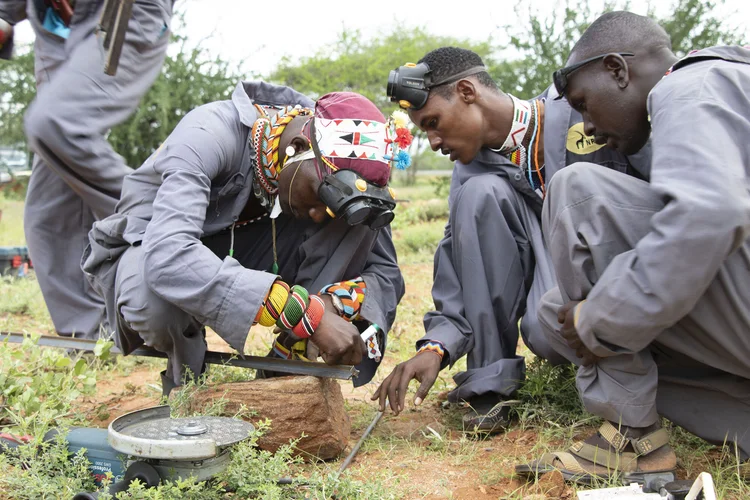
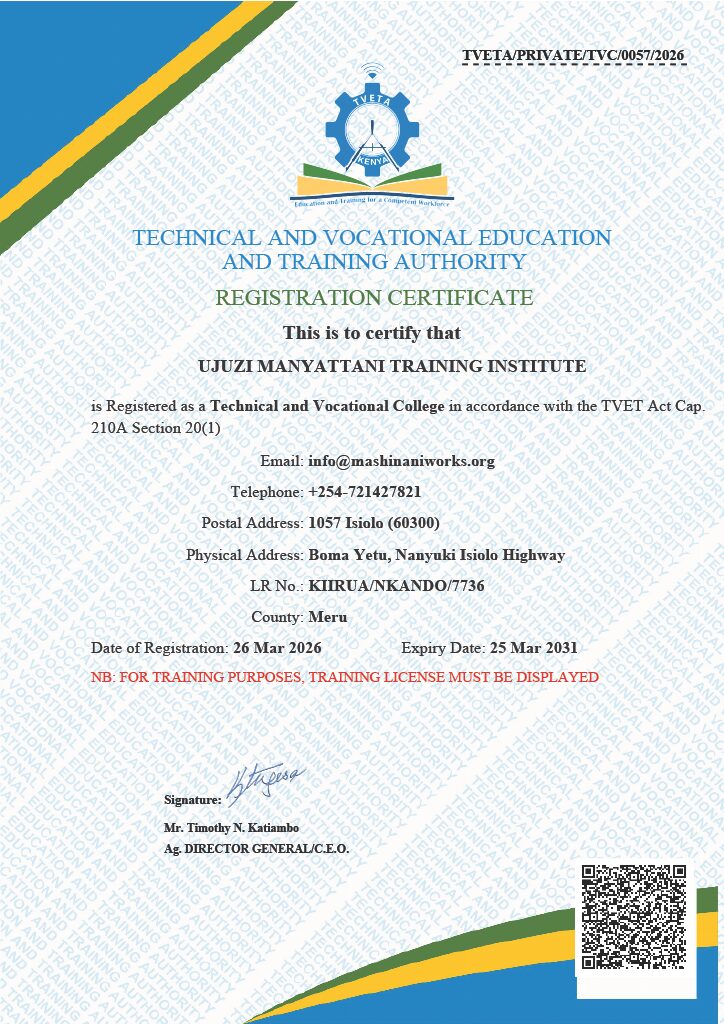
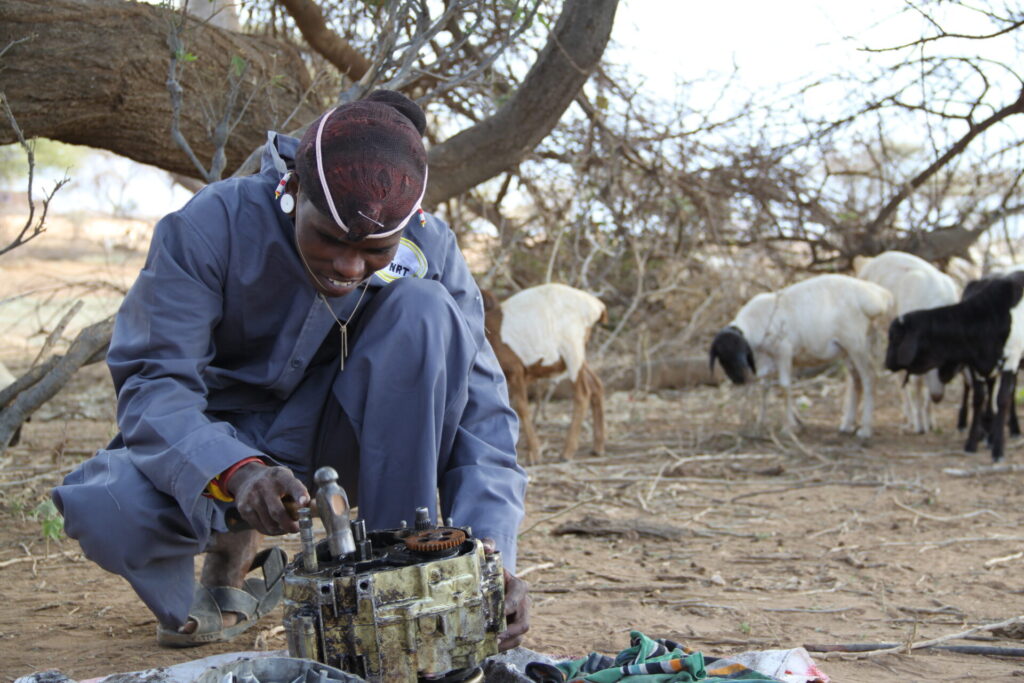
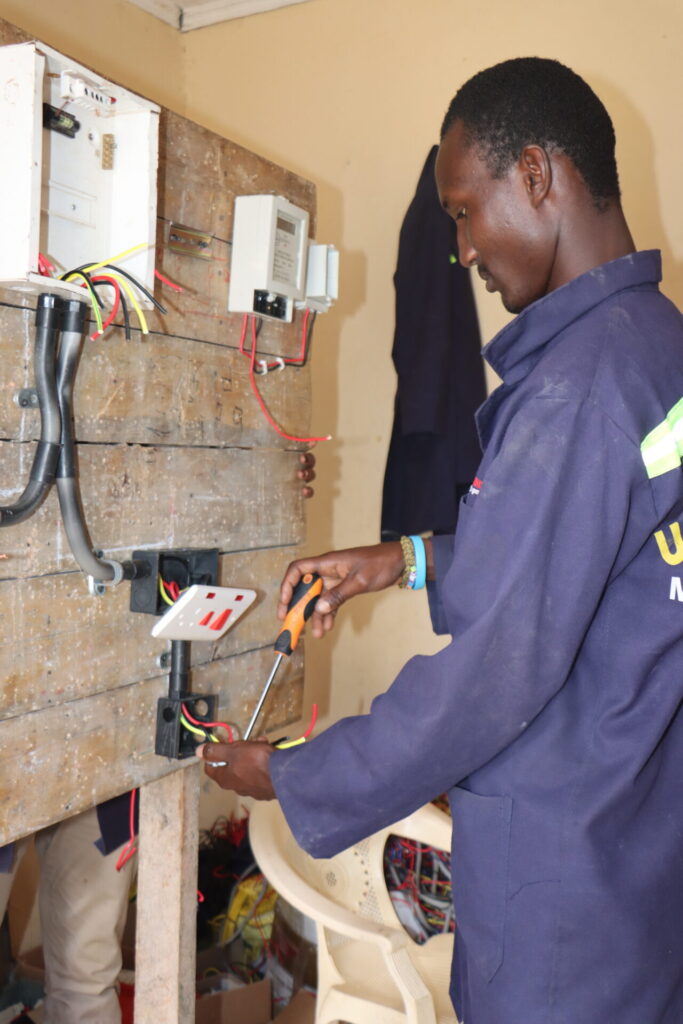
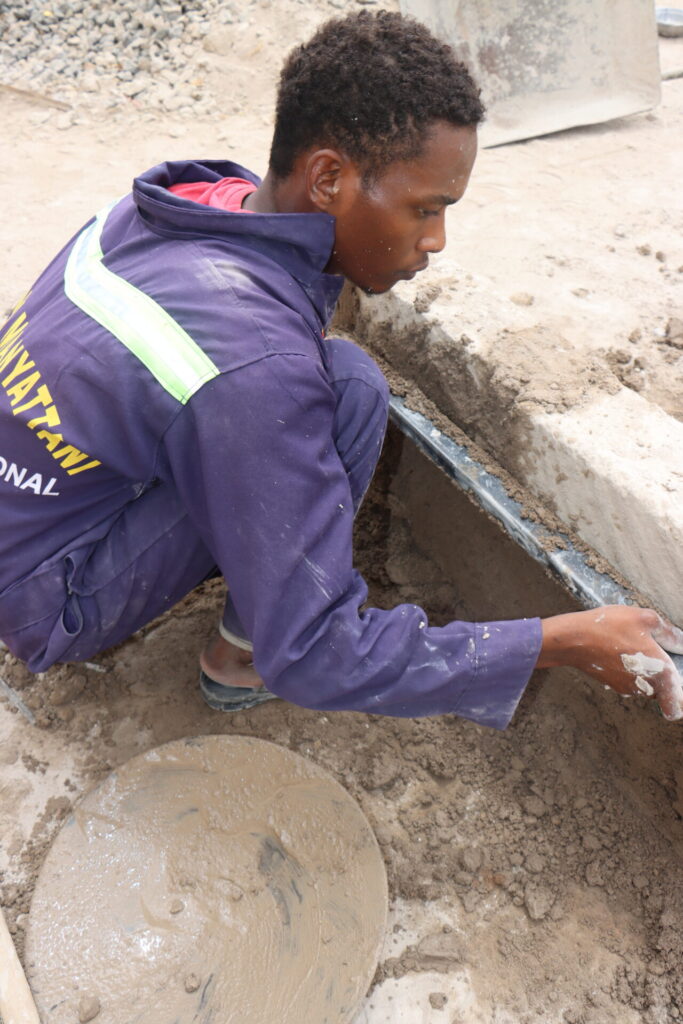
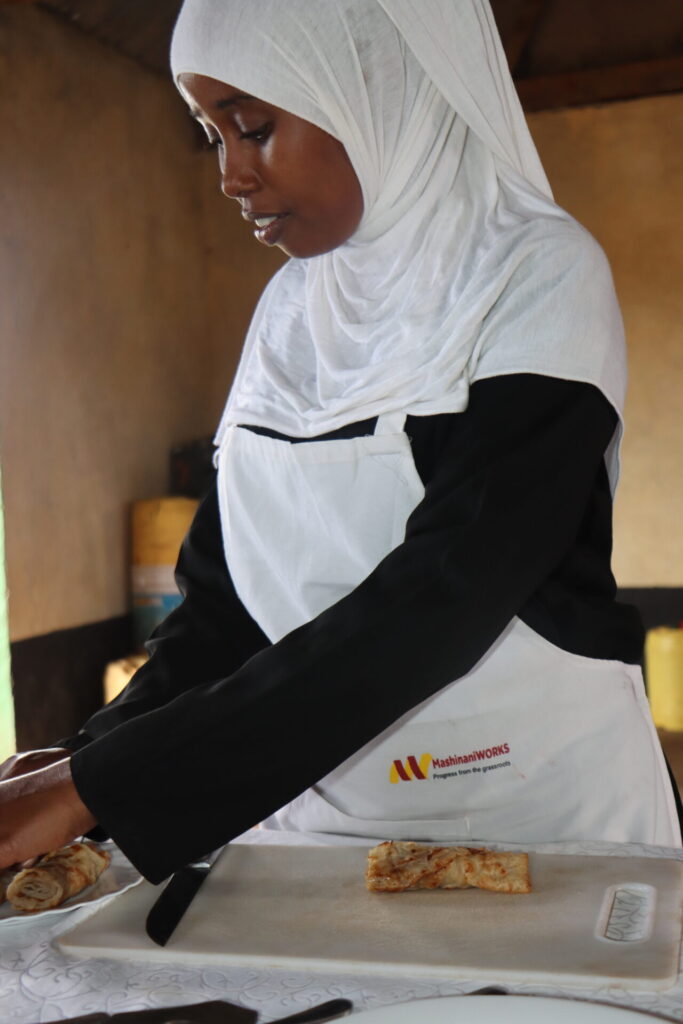
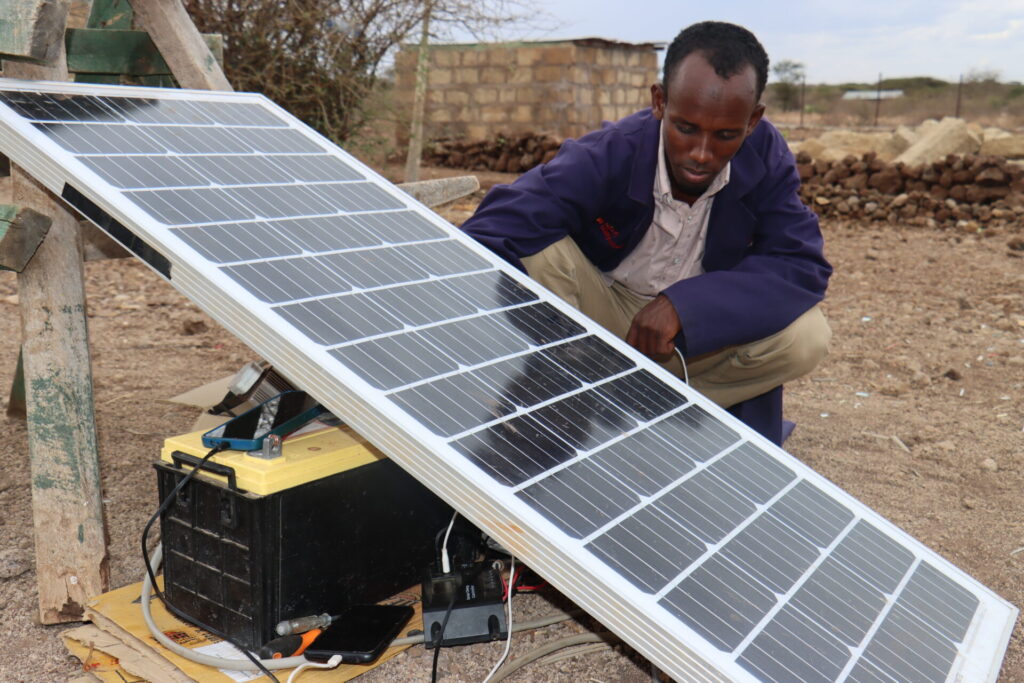
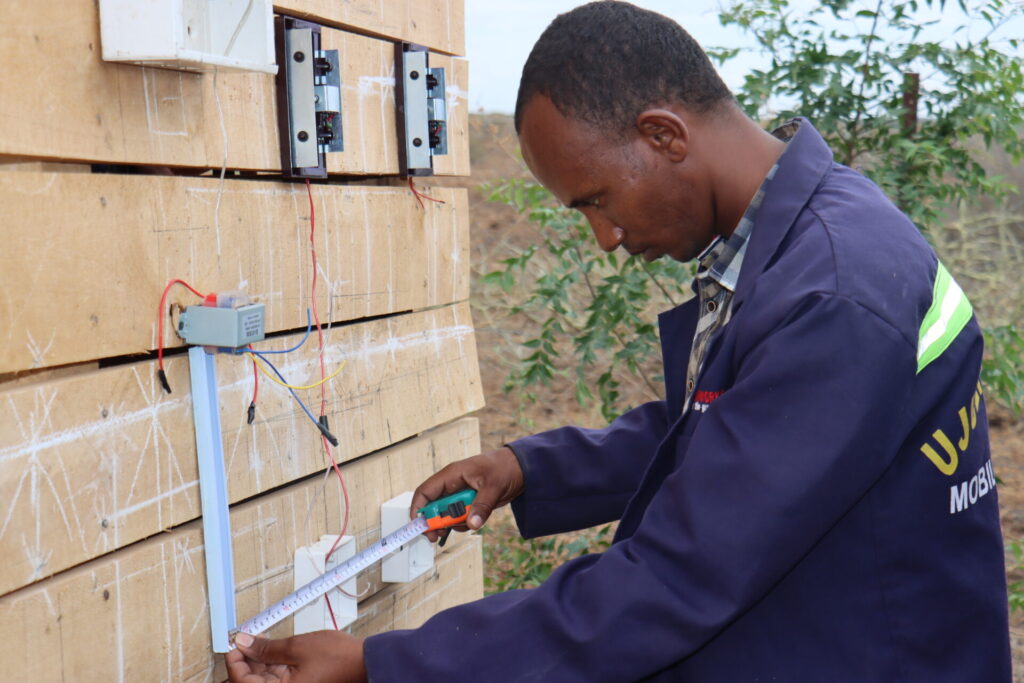
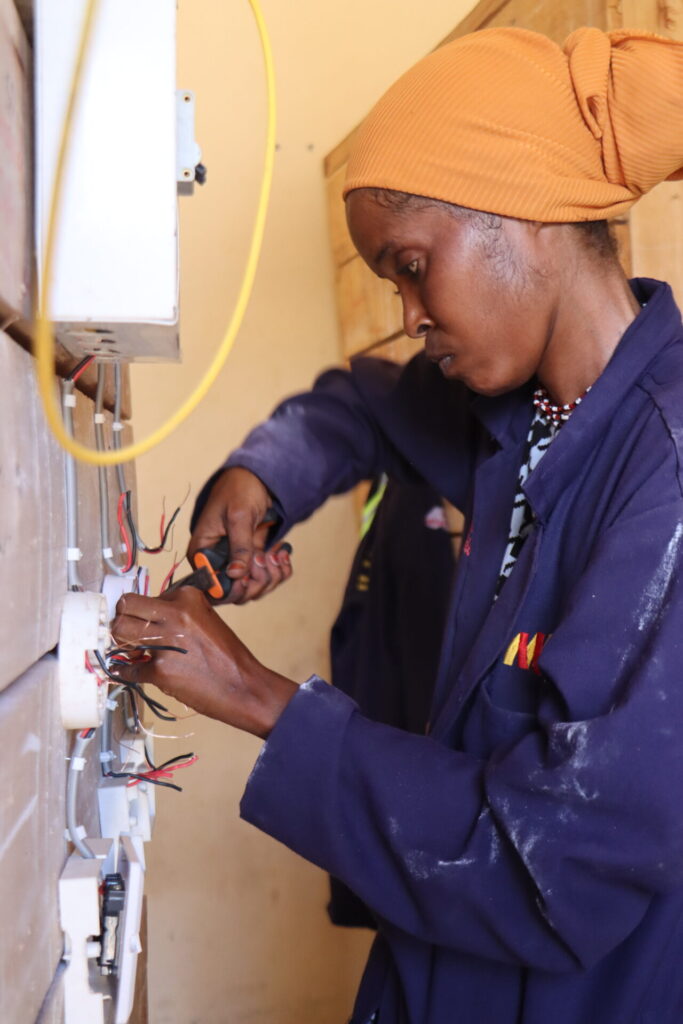
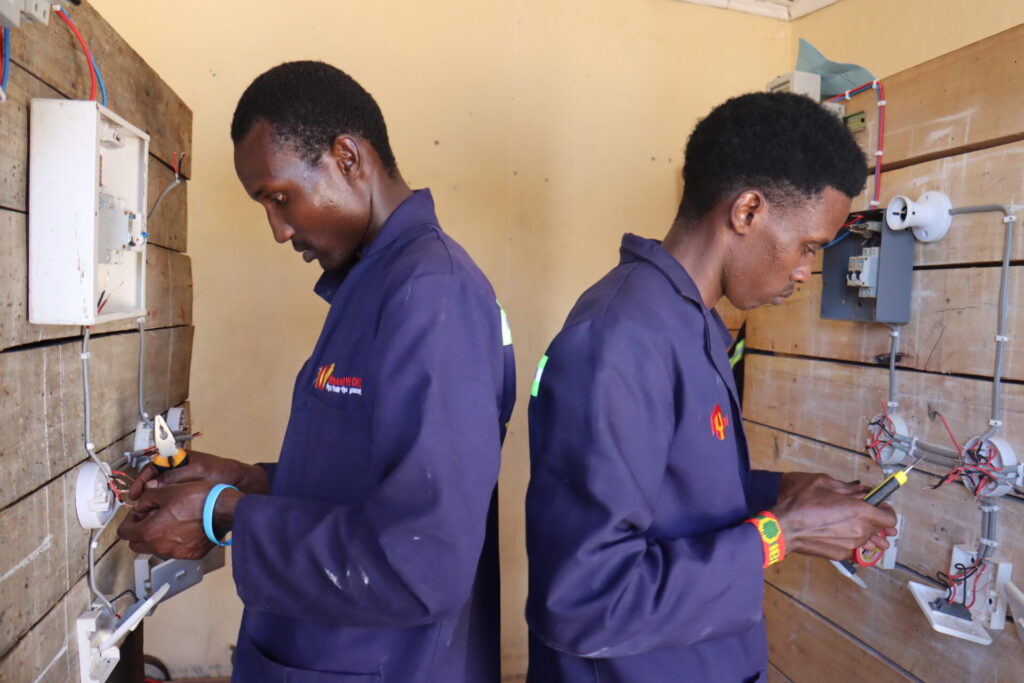
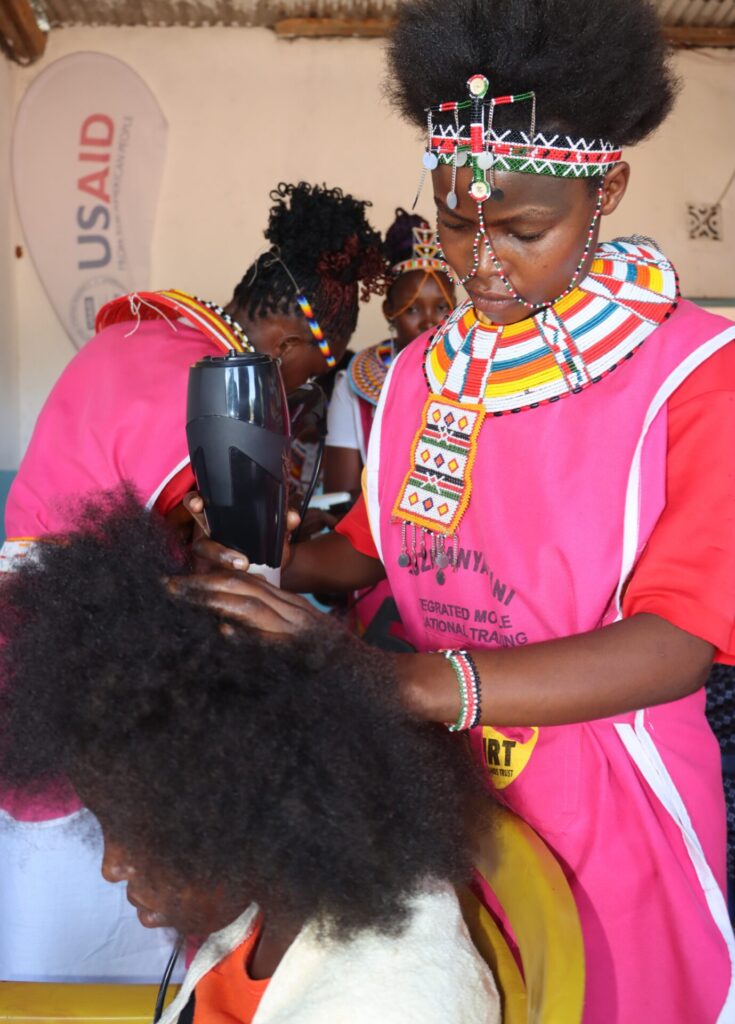
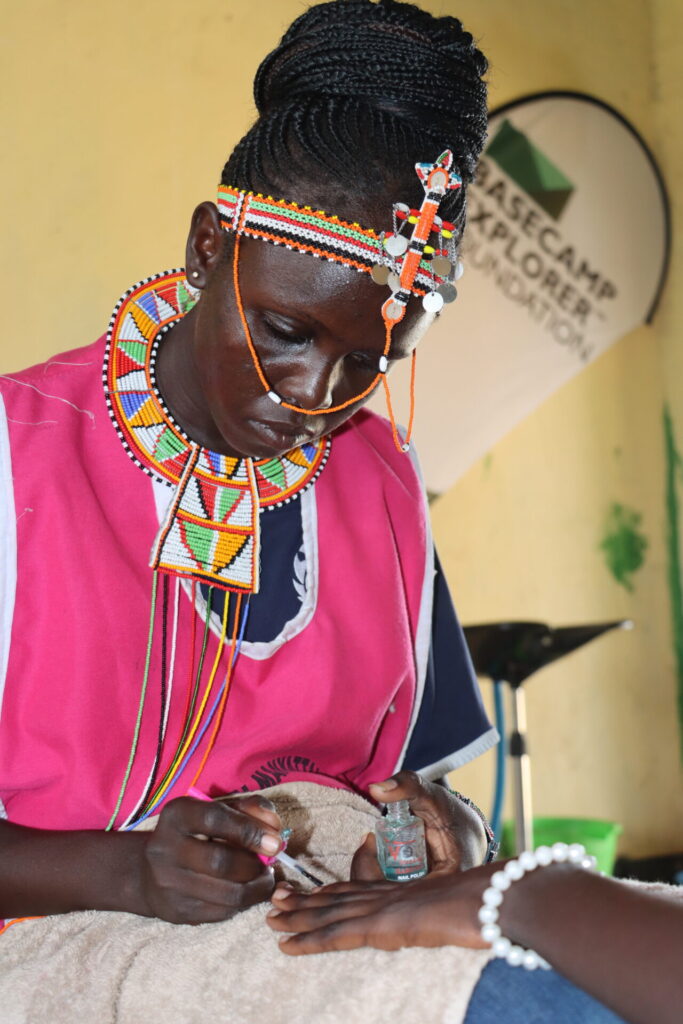
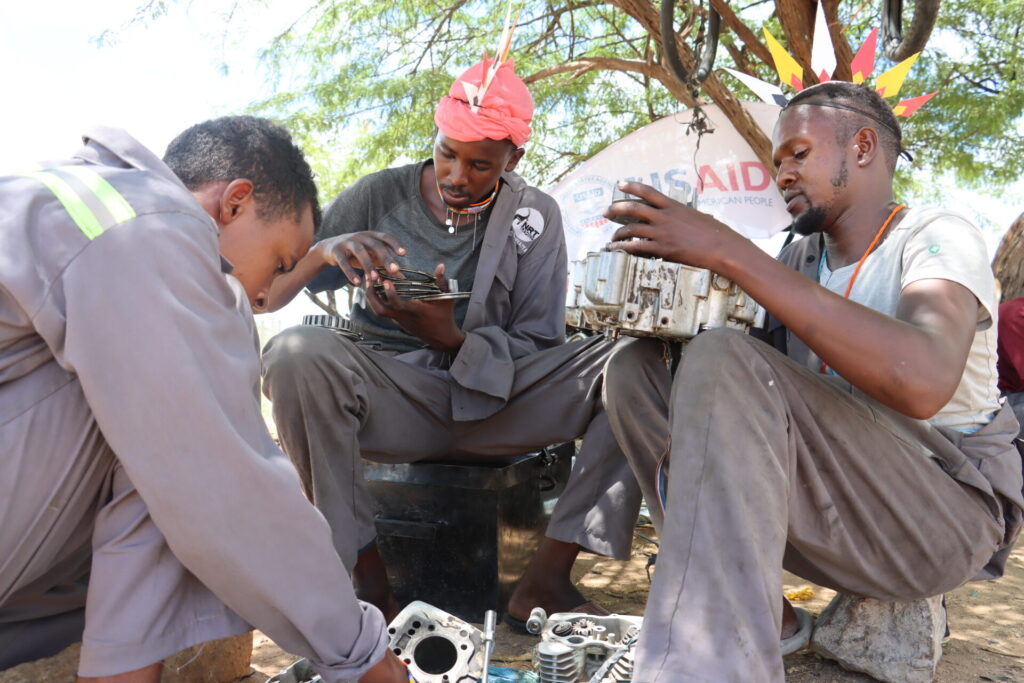
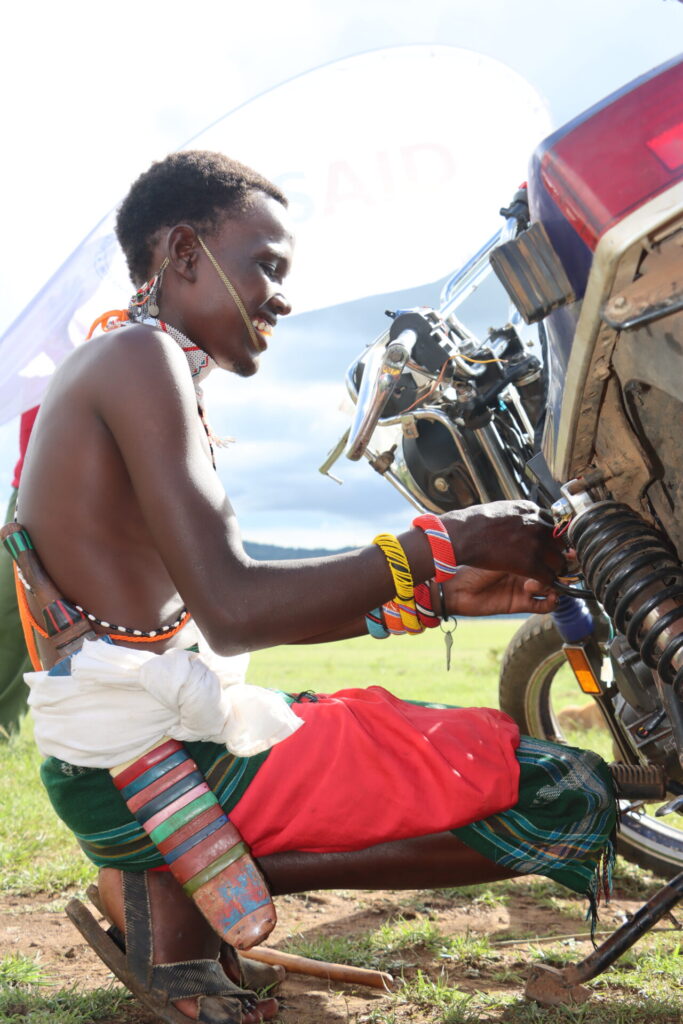
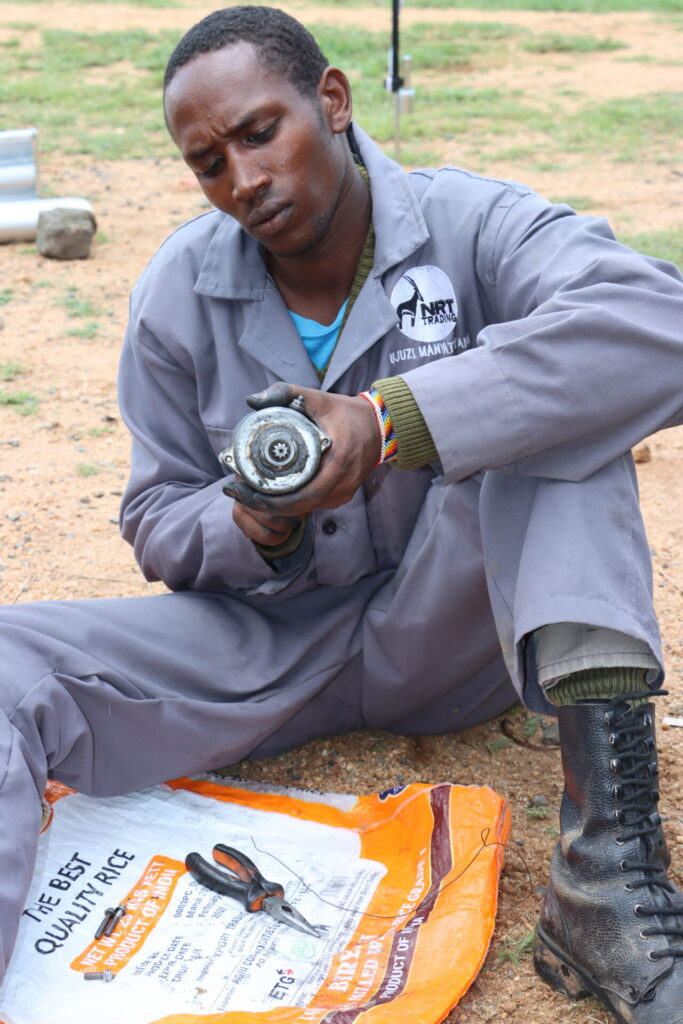
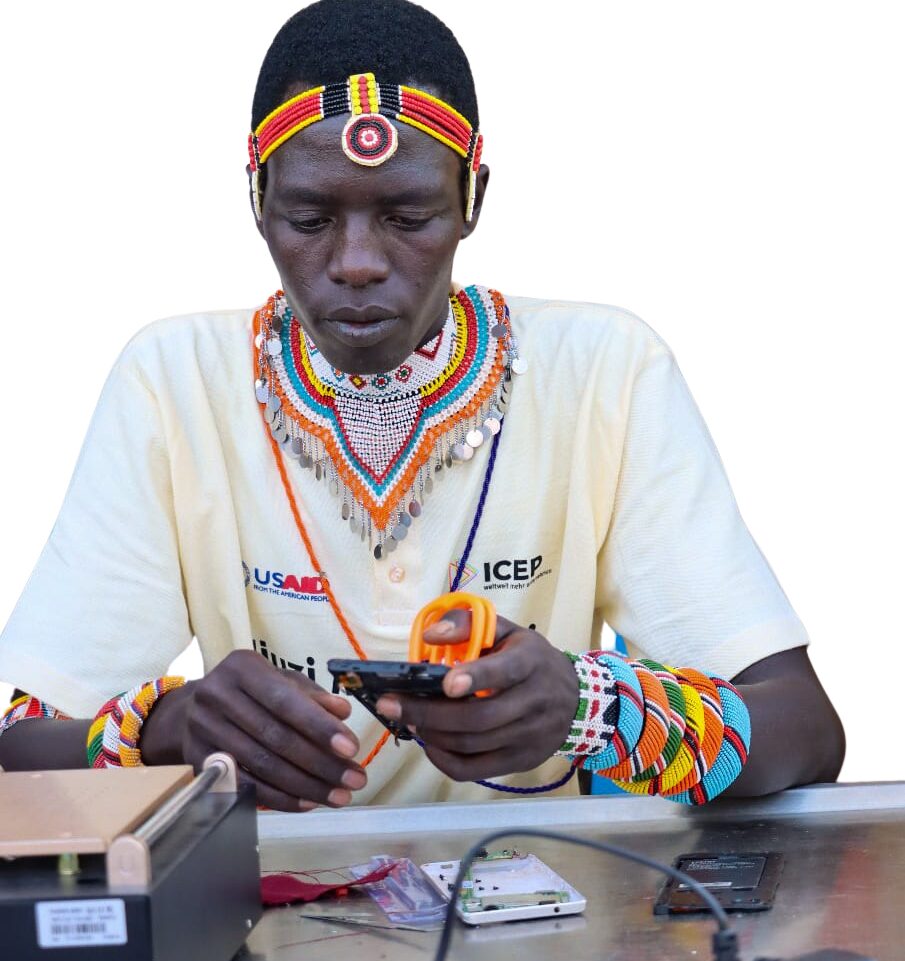
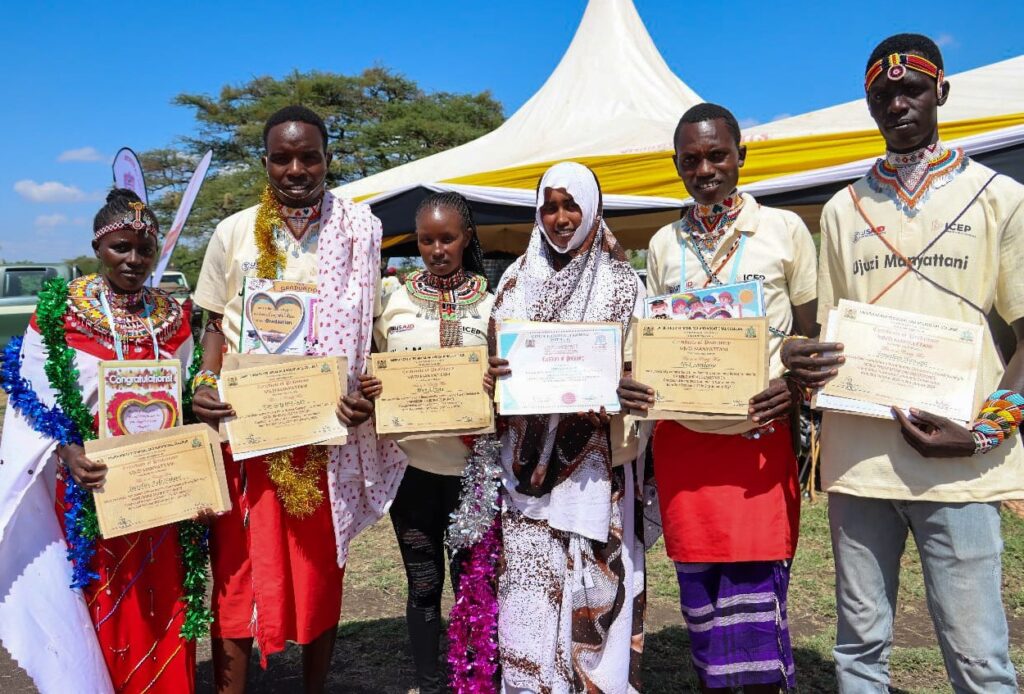
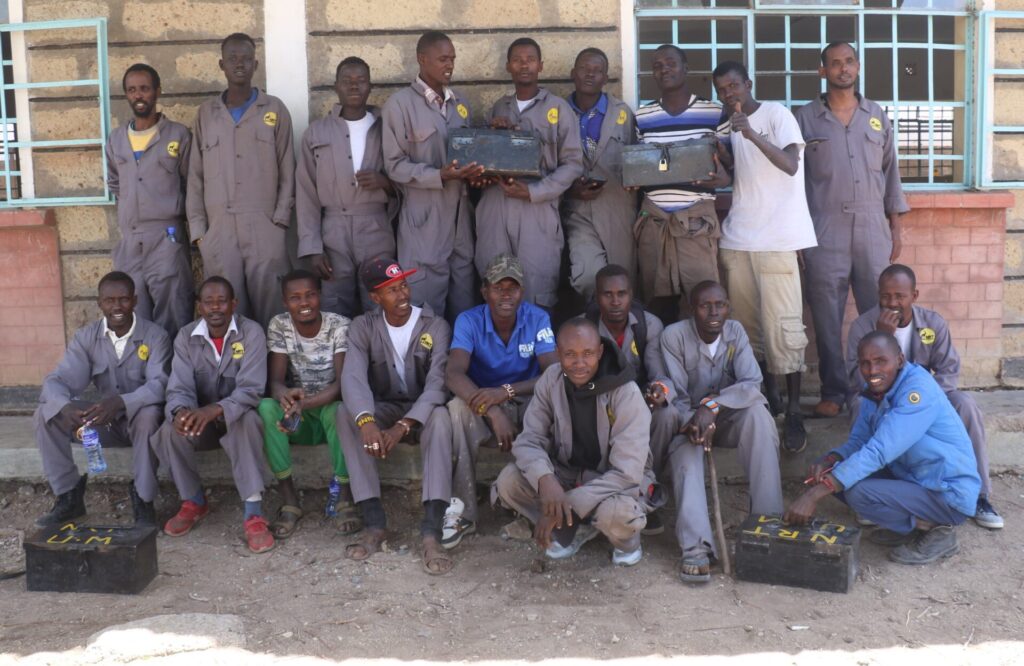
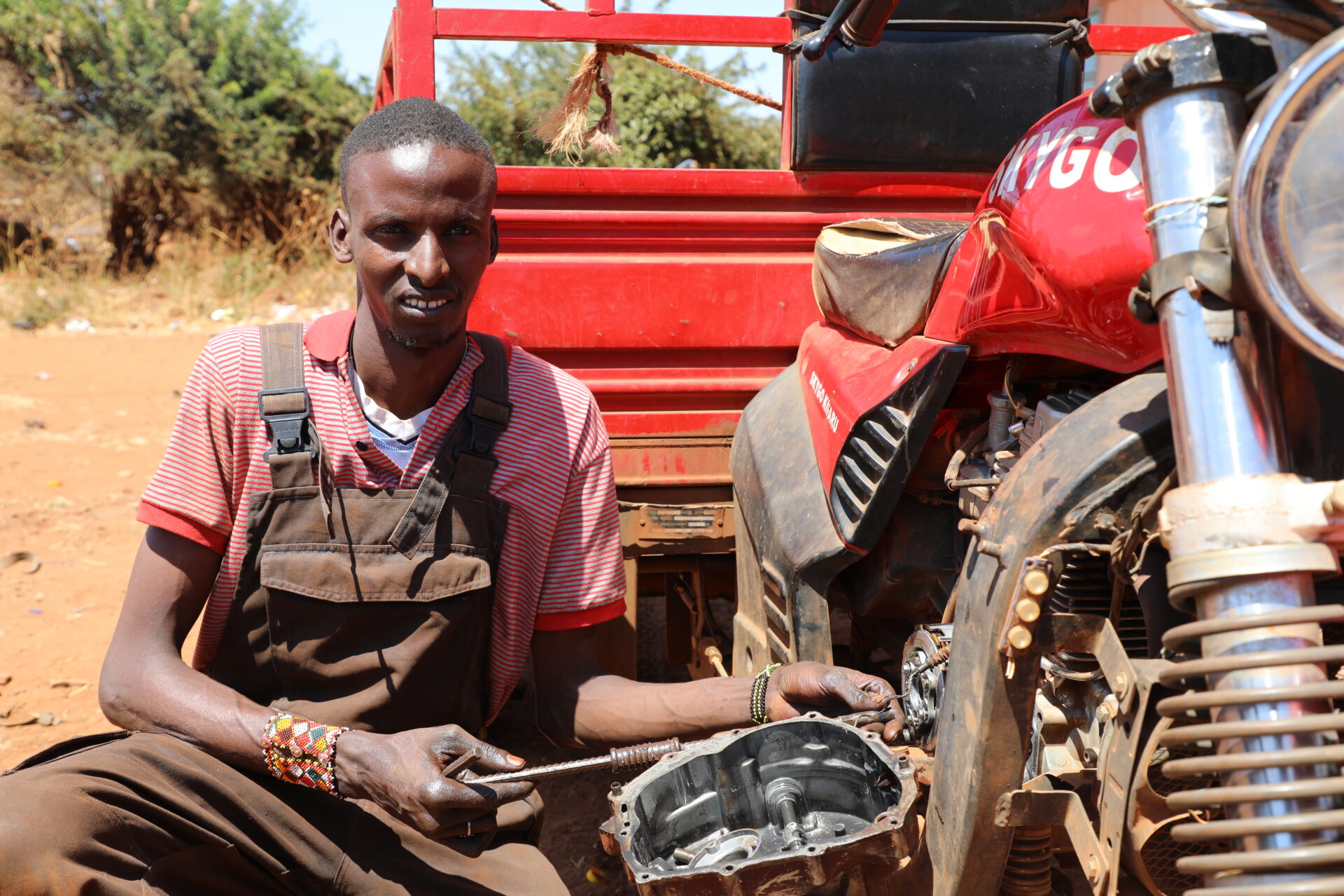
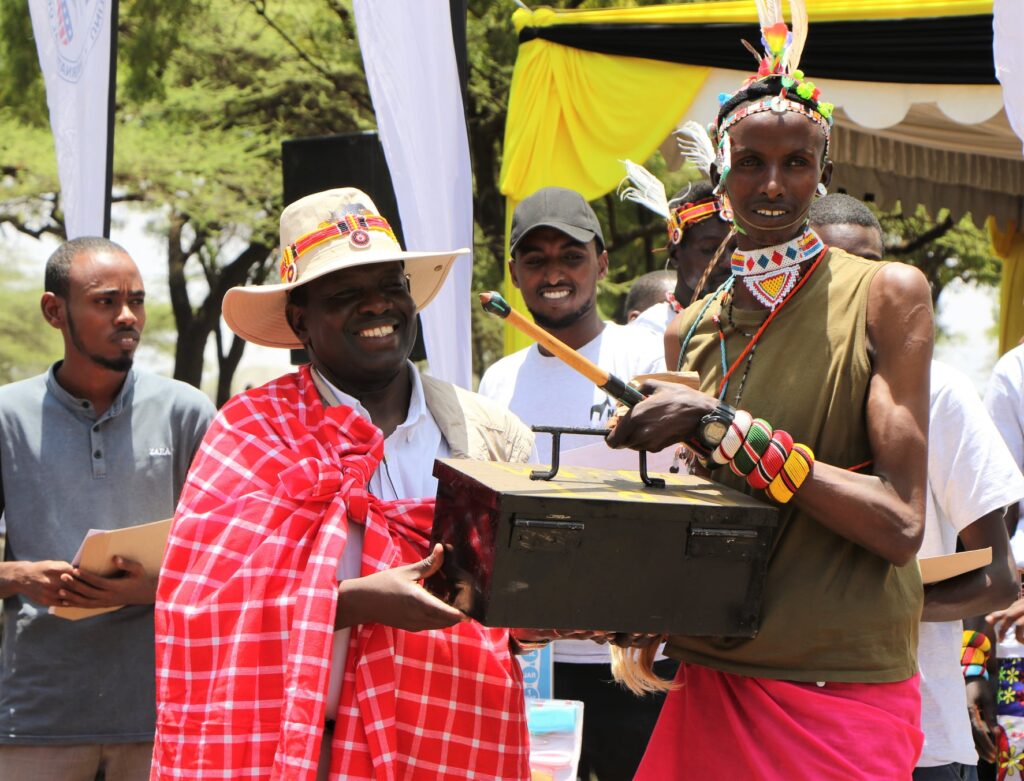
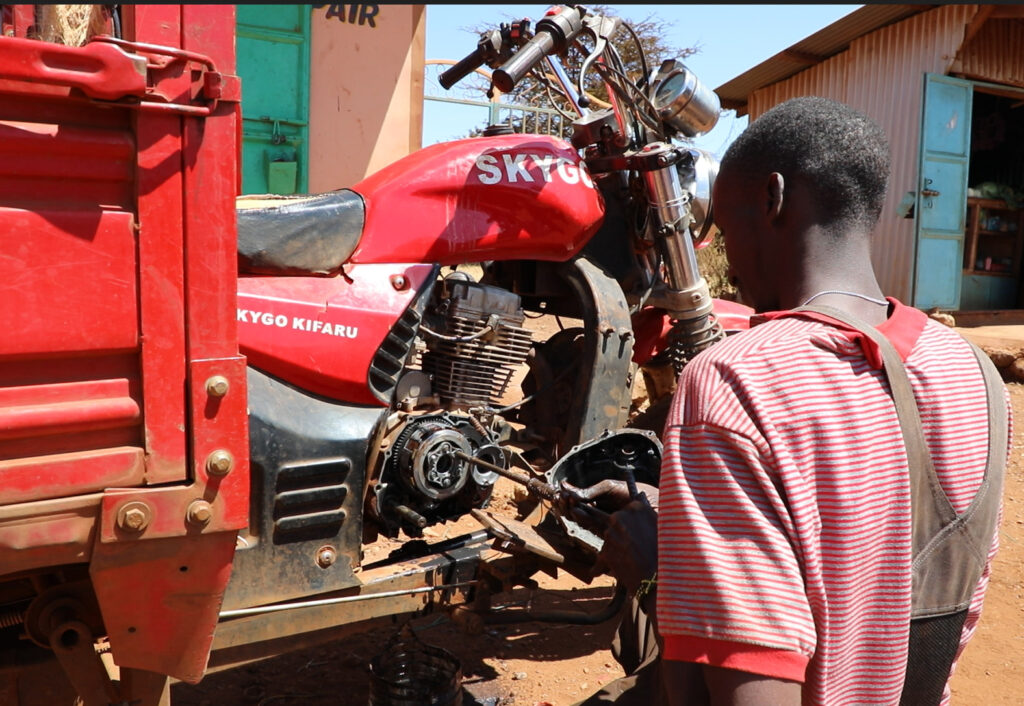
We are thrilled and deeply honoured to share that our Ujuzi Manyattani initiative, now formally established as Ujuzi Manyattani Training Institute (UMTI), has been accredited by the Technical and Vocational Education and Training Authority (TVETA). UMTI formally joins the ranks of recognised technical and vocational colleges nationwide.
This achievement is the culmination of 7 years of relentless dedication towards providing quality vocational training. Ujuzi Manyattani began as a flagship mobile vocational training program under MashinaniWORKS, with the mission to break down geographical, financial, and social barriers for women and youth locked out of formal education.
With this accreditation, UMTI now possesses the full autonomy, legal mandate, and institutional authority to design, pilot, and anchor its own quality-assurance frameworks, thereby transforming Ujuzi Manyattani into a pillar of national development. This also means that Ujuzi Manyattani will no longer be confined to the conservancies; rather, the training will be taken to other parts of the country.
“Through this unique training model, we will continue offering our market-responsive, hands-on courses and explore technology-based training options to maintain our training strategy and meet the needs of Kenyan women and youth,” says Mr Ture Boru, MashinaniWORKS Chief Economic Programs Officer.
Our MashinaniWORKS Board Chairperson, Dr Kevit Desai, PhD, MBS, CBS, FIET, added, “UMTI’s accreditation marks a transformative milestone for vocational education and skills development in Kenya. It reflects a bold and innovative approach to empowering youth and women through accessible, market-responsive training. Having championed TVET transformation and competency-based education nationally, I strongly believe institutions such as Ujuzi Manyattani Training Institute are critical in shaping the future workforce and advancing inclusive economic growth.”
To date, Ujuzi Manyattani has skilled 1,713 alumni, who have injected over Ksh. 180 million annually into the local economy, an income that did not exist before the programme’s introduction. With this official stamp of approval, the future looks even brighter as we prepare to reach thousands more, scaling up sustainable livelihoods and economic transformation.
We owe this monumental leap to our incredible partners, most especially the Livelihood Impact Fund (LIF) for their generous support in funding the accreditation process, the partnering TVET institutions, and the resilient communities across Northern and Coastal Kenya who trusted our vision from the very start.
Ujuzi Manyattani will always strive to invest in innovative approaches to reach vulnerable and disadvantaged youth wherever they are.
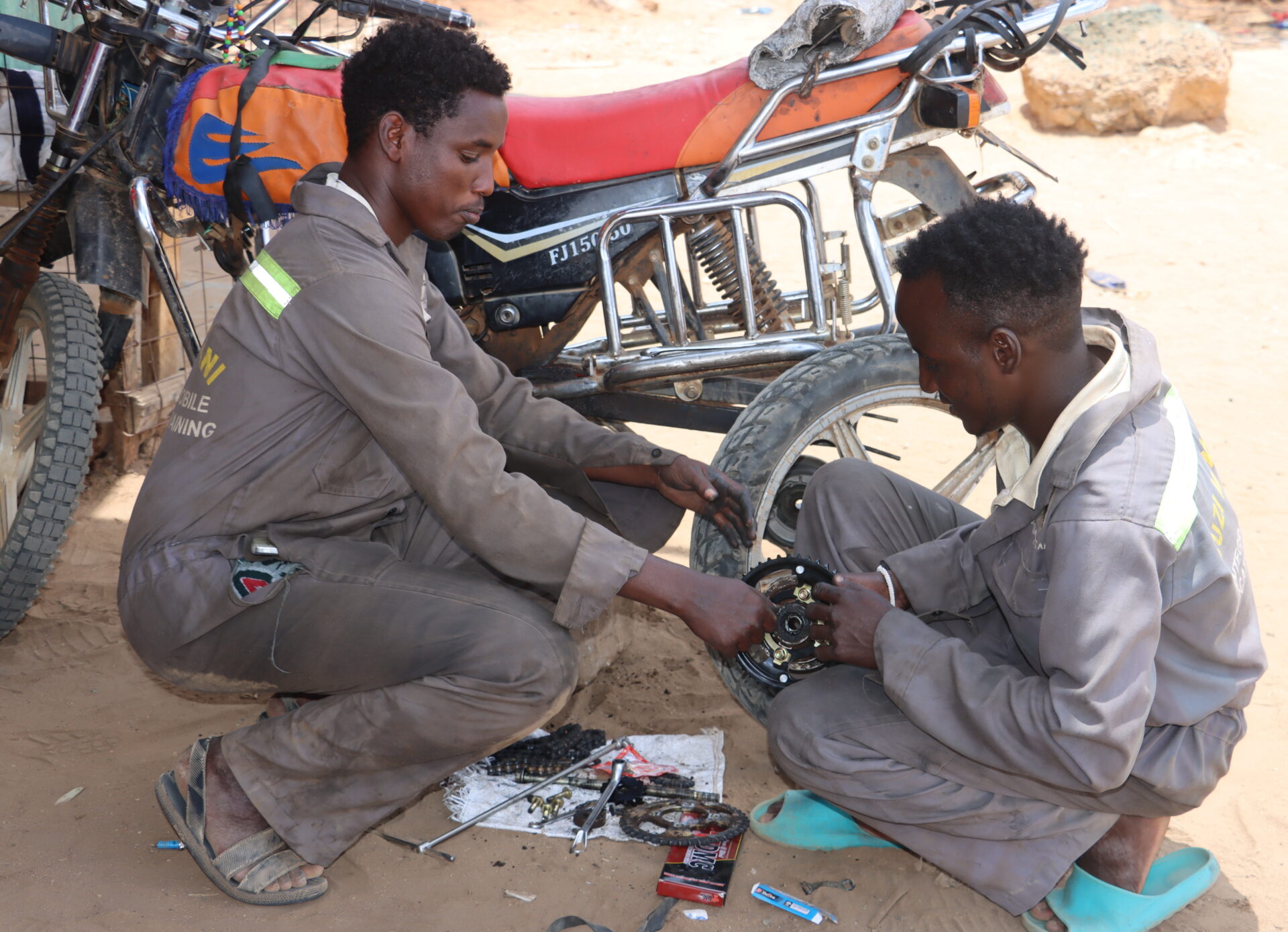
Ibrahim Adan (L) and Mohamud Mohammed (R) at their workshop in Saleti
If you’re scrolling through TikTok, you might stumble upon a video that feels different from the usual dance trends. It’s a close-up shot of two pairs of hands, steady as surgeons, working under a bright bulb or natural light. One hand holds a heat gun to the edge of a shattered smartphone, while the other carefully manoeuvres a thin prying tool.
This is the digital storefront of Moibra Phone Repair Services. It’s how Mohamud Mohammed and Ibrahim Adan, two friends from Saleti village, are telling the world that they’ve arrived.
To understand Moibra, you have to understand the bond between the two men behind the name. Mohamud and Ibrahim weren’t just classmates; they were friends who grew up in the same neighbourhood, navigating the same frustrations. After finishing Form Four, they found themselves in that hollow, quiet period that often follows secondary school in rural areas. For two years, they stayed at home, helping where they could, but feeling the weight of being “idle.” For Mohamud, the pressure was even more personal—he had started a family, who were counting on him, and he knew that just “getting by” wasn’t going to pay for the school fees his oldest child would soon need.
They didn’t want to just find any job; they wanted to solve a problem they saw every day in Saleti. The village was full of smartphones, but it was a “repair desert.” If your phone’s mouthpiece died or the speaker gave out, you were stuck. Seeing this, the two friends decided to enroll together in the three-month mobile repair course. While they were friends before the training, it was over those workbenches that they realised they functioned better as a team. By the time graduation came on February 13, 2024, they didn’t just have certificates; they had a business plan.
They knew that if they didn’t start immediately, the techniques they’d mastered would start to get “rusty.” Practice makes perfect, and they couldn’t afford to be anything less than perfect. They pooled KSh 10,000 each, a massive amount given they’d been out of work for two years, and rented a tiny room for KSh 1,000.
It was a tough, gritty start. The shop had no electricity. They had to rely on solar panels, which meant their workday was entirely at the mercy of the weather. On cloudy days, or once the sun began to dip toward the horizon at 4:00 PM, their tools went cold. They had the startup toolkits from the program—the fine-tipped screwdrivers, the multimeters, the soldering irons—but without consistent power, they were limited. Yet they stuck it out for six months in that dark shop, saving every coin and building a reputation as the only qualified technicians in the area.
By April 8, 2024, they officially launched the Moibra brand. They weren’t just “fixing phones”; they were running a professional service. To get the word out, they put up posters and took to TikTok, using social media to show off their repairs to a younger, tech-savvy audience. The strategy worked. Soon, customers weren’t just coming from Saleti, but travelling from Malkagalla and Merti because they finally had qualified technicians close to home. By October, the savings from their first shop allowed them to do something bold. They moved into their own new establishment that finally had electricity connectivity after the village got connected to the power grid.
It was an investment of over KSh 25,000 into their future. With constant power, they could finally handle the high-stakes jobs, like screen replacements that cost between KSh 2,800 and KSh 3,000. They also made a smart choice by adding a barber shop section. They realised that in Saleti, people travel a long way to get their phones fixed. By offering a haircut for KSh 700 or 800 while the client waited for a new phone speaker or mouthpiece, they ensured the shop was always buzzing, and income was always steady.
Thanks to the entrepreneurship and financial literacy lessons they received from Biashara Mashinani, the partners maintain strict records. They track their monthly profits and share them fairly, and they’ve learned the hard way to avoid unnecessary credit extensions that could drain their cash flow.
For Mohamud, the shop is a lifeline. It means his children have a father who can provide for them, and his oldest can stay in school without the fear of being sent home for fees. For the village, the two men have earned a new kind of respect. They aren’t just “the boys from the neighbourhood” anymore; they are the experts who brought the digital world back to life in Saleti.
Their plan for the next few years is to take Moibra even further, opening branches in other towns and eventually helping other young people get off the streets. They might eventually open their own separate shops one day, but for now, they are proving that a friendship forged in the village and tempered over a soldering iron is the strongest foundation a business can have.
It is a Wednesday morning in Archers Post, and by nine o’clock the town is already alive with activity. Just off the highway, a freshly painted pink door stands out among a row of stalls. Through the string curtain at its entrance, black-and-pink salon chairs are visible beneath warm gypsum lights reflected in wide mirrors. A customer, freshly shaved, leans forward to inspect his reflection. At the counter, a woman jots in a notebook, shelves of neatly arranged beauty products framing the space.
That woman is Priscilla Nchichi Juma, a 36-year-old entrepreneur and the owner of Vinpelo Spa & Salon. When Priscilla first expressed interest in studying hairdressing and beauty therapy, reactions were mixed. Some encouraged her; others dismissed it as impractical, a pastime rather than a profession. Today, her confidence is unmistakable, rooted in the experience of building a business from the ground up.
Before all of this took shape, Priscilla’s life was far from what it is today. The youngest of seven children, life changed drastically after losing both parents and the family’s circumstances shifted abruptly. Priscilla and her siblings were taken in by relatives, and her maternal aunt became her guardian, doing her best despite limited means. Although Priscilla completed primary school, financial constraints made secondary education unattainable.
In the years that followed, she relied on casual work to contribute to household needs. The income was modest and unpredictable, leaving little opportunity to save. At 22, she married and continued working to support her family. Together with her husband, they managed as best they could, but school fees, food, and daily expenses consumed most of their income, leaving little room to invest in a business of her own.
Her introduction to hairdressing came through informal work at local salons. She began with basic tasks like washing clients’ hair, cleaning up, and handing over hairpieces to stylists in the middle of braiding. Before long, she was helping with cornrows, blow-dries, and styling. “Watching clients light up when they looked in the mirror made me fall in love with this work,” she recalls.
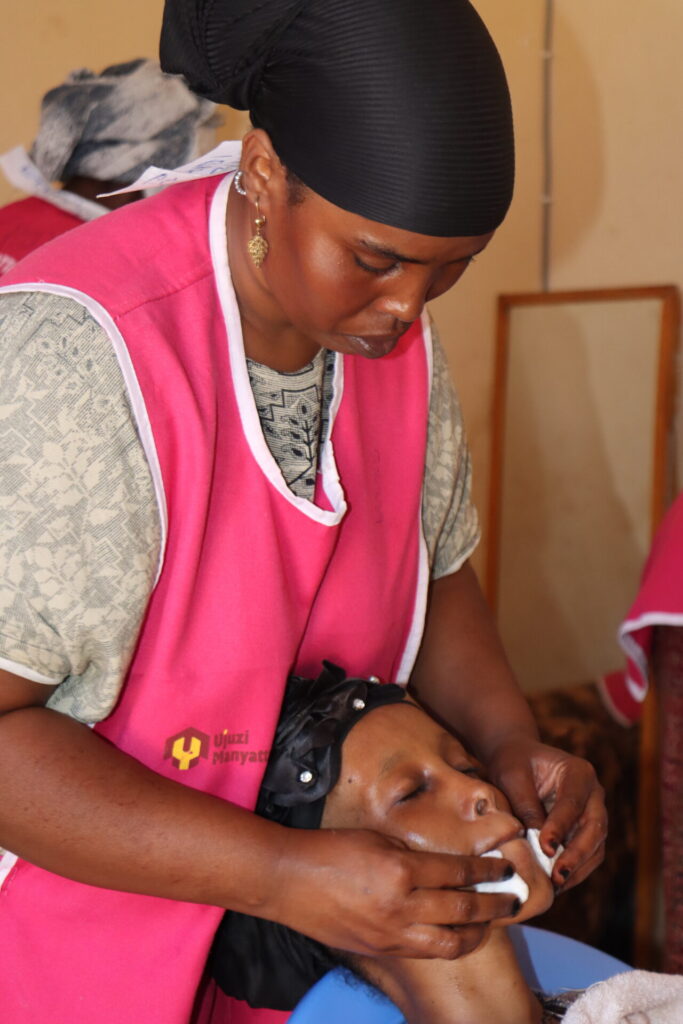
Priscilla performs a facial scrub for a client
Although she dreamed of owning a salon, Priscilla believed that proper training was essential – more than just skills learned by observation. She held onto her dream, considering it something for “one day.” That opportunity came in 2024, when she learned about Ujuzi Manyattani, a flagship mobile vocational training program under MashinaniWORKS that aimed to empower youth and women like her through practical skills training, without disrupting their way of life. The program, endorsed by the Sera Conservancy management, local leaders, and stakeholders, arrived at the right moment for her. Priscilla enrolled in a three-month course in hairdressing and beauty therapy and the program’s flexibility allowed her to attend classes while caring for her youngest child, making learning seamless for mothers like her.
Under the guidance of an instructor from Kiirua Technical Training Institute, Priscilla strengthened her technical skills, learning braiding, haircutting, skincare treatments, manicures, pedicures, and makeup application. Alongside vocational skills training, she and her classmates received business and financial literacy training, which is a key component to developing the skills needed to manage sustainable enterprises and generate profitable income. It has played an essential role in enhancing graduates’ business acumen, leading 88% of them to establish promising careers in related fields.
Priscilla completed the three-month training in June 2024, earning a Level 3 (Mastery) certificate in Hairdressing from Nyeri National Polytechnic, a nationally recognised qualification. She also received a startup toolkit to help her begin her journey in the beauty industry. Rather than opening a salon immediately, she took time to plan carefully. She began by working from home and offering mobile services within her neighbourhood, refining her skills while saving and learning about local demand.
Priscilla receives her certificate and start-up toolkits in the presence of dignitaries, led by Former British High Commissioner to Kenya, Neil Wigan, during the Ujuzi Manyattani graduation held in Doldol on 19th June 2024
As a member of a women’s table banking group, Priscilla had been saving and borrowing from their shared fund. When the time felt right, she combined her savings with a small loan. The funds allowed her to renovate a space, purchase salon furniture, and stock essential products. A few months later, her long-held dream became Vinpelo Spa & Salon.
The response from the community exceeded her expectations. Men came in for haircuts, while women booked appointments for styling and beauty services. Products that were previously difficult to find locally sold quickly. Saturdays, which coincide with market days in Archers Post, became especially busy, bustling from morning until afternoon. Today, the salon generates between KES 8,000 and 10,000 on a good day from services and product sales.
Competition in the beauty industry is unavoidable, especially in her industry, where loyalty runs deep. However, her clients keep returning. She attributes this to offering personalized attention, consistent follow-ups, and treating everyone as if they were the first of the day. This professionalism has earned her trust and word-of-mouth referrals which have slowly become her strongest marketing tools.
Her success now extends beyond her own household. The salon employs two young people, one as a barber and another assisting with hair and beauty services. The income she earns has also enabled her to support three teenagers in school, some of whom are orphans or come from financially vulnerable families.
Looking ahead, Priscilla plans to expand into wholesale beauty supplies and eventually become a Trainer of Trainers, which will offer a practical way to sharing skills to extend opportunity to other young people build livelihoods of their own, drawing directly on the pathway she accessed through Ujuzi Manyattani.
Before the sound of running water ever meant income, Paul Kiperus was known around Kiwanja as the guy you’d find at the riverbeds, loading sand onto lorries. Today, he’s the one people call when their tanks are leaking or when they finally decide to install indoor plumbing.
He was in Form 1 when everything changed. An elephant attacked his father while he was running errands. The injuries were serious, such that both legs were broken, and just like that, Paul had to stop school. The money that would have been allocated for his school fees was redirected to cover hospital bills and other medical expenses. As the eldest child, he stepped up, and school had to wait as he stayed back to take care of his siblings.
To make ends meet, Paul worked at sand harvesting sites. He’d get Ksh. 300 for every lorry he helped load. Most of the time, he was forced to work in the dead of night; it was cold, tiring, and risky. The riverbeds could flood without warning, and on more than one occasion, he feared for his life. But he kept going because staying idle was not an option.
While working as a sand harvester, Paul still found time to help around his community. He had volunteered for two years to monitor water pipes in a nearby Community Land Management Committee (CLMC) project, even though he didn’t know how to fix them. Whenever there was a leak, someone else had to be called in. The board saw his dedication, and when Ujuzi Manyattani came, they suggested he take it a step further by enrolling in a plumbing course under the vocational training program. It was something he had quietly been working toward all along.
At first, upon joining, he was nervous. He had never been to a classroom since dropping out of school. Some of the skills he was taught included pipe fitting, water supply, drainage systems, and plumbing fixtures, among others. They even had practical sessions in nearby schools.
After completing training, Paul didn’t sit still. He took on small jobs, such as fixing tanks, repairing leaks, and connecting homes to the water supply. His phone started ringing more often. For the first time in years, he had regular work and income he could count on. “I’d leave the house in the morning and come back in the evening with something for the family,” he says.
With his nationally recognized certificate in hand, Paul applied for a job under the Makurian Osirua Water Project with Laikipia County. He was accepted as a casual and has now been on the payroll for nine months, earning around Ksh. 9,000 monthly. For bigger jobs, he links his classmates from the program.
He’s also been involved by the Mayianat Conservancy management in repairing pipelines that elephants have destroyed.
Their area had always struggled with access to water. When a storage tank was finally built to help the community, many families wanted water piped directly to their homes. Paul took it upon himself to lend a hand. The demand grew so rapidly that he decided to open a small plumbing workshop, stocking fittings and connectors that people used to travel as far as Nanyuki to buy.
With support from Rangelands SACCO through FFI-Darwin, he got a Ksh. 50,000 loan to expand. Paul dreams of further growing his shop, adding things beyond plumbing and other hardware materials.
Born and raised in Kiwanja, within the Maiyanat Conservancy in Laikipia County, Jackline Wamoke was practically raised on the scent of hair oils, the rhythmic tug of braids being parted and plaited, and the lively chatter that fills a salon.
Her mother, a long-practicing hairdresser, passed down more than a profession; she nurtured a sense of possibility. Jackline’s older sister followed that same path, and together, they formed a kind of informal apprenticeship that shaped Jackline from an early age.
During school holidays, she would spend hours in the salon, slowly learning the techniques through observation and practice, the rhythm of customer care, and the business instinct required. These small acts of care and craft shaped Jackline’s childhood and, over time, revealed that she could one day take on the family trade.
After completing Form Four in 2023, she enrolled in Ujuzi Manyattani in March 2024, a program designed to empower young people in marginalized areas by offering hands-on vocational skills locally relevant to their communities’ needs, which can translate into immediate income. The training went far beyond what she had learned in her mother’s salon. Ujuzi Manyattani introduced her to contemporary trends in beauty and personal care, expanding her expertise to include beauty therapy, such as makeup, manicures, and pedicures. Jackline quickly distinguished herself among the top performers in her cohort, propelled by a desire to elevate her craft to a professional level.
Upon graduating, Jackline wasn’t looking for a job; she was returning to one. Her sister, who had been managing the family salon, passed the baton to Jackline and was ready for its next phase. She made immediate upgrades to the salon, starting with the tools she received through the Ujuzi Manyattani program to redefine the customer experience. She replaced the small wall-mounted mirror with a full-sized one, added a blow dryer and a sink for improved hair treatment services, and hair clippers to begin offering barbering, an in-demand service in the area.
These changes might seem small, but they made a world of difference in both the quality of service she could provide and how customers viewed her business. She didn’t need to win the community’s trust from scratch. They already knew her first as the young girl helping around the salon, later as a trained stylist with new skills to offer. In Kiwanja, where only two other salons operate, competition is limited, and Jackline’s reputation gives her a natural edge. She’s precise, whether it’s lines for schoolgirls, plaits for weekend weddings, or a fresh shave for the boys, she does it all with passion, making sitting on her salon chair something to look forward to.
On a regular day, she sees four to five customers, though that number often rises during peak periods, such as school openings and community events. Her mother, still very much part of this evolving journey, often steps in to help during these high-traffic days. On a good day, Jackline can make anywhere from Ksh. 800 to Ksh. 3,000, depending on the number of customers she serves.
Now, her income is directed to savings, but she still manages to set something aside for her younger siblings’ pocket money and help out with the little things that add up in a household, such as restocking sugar when it runs out or picking up flour on her way home. Her entrepreneurial spirit also pushed her to start selling shoes, clothes, and beads from her salon, which is another way to earn extra money.
Jackline dreams of expanding her salon into a larger space to accommodate more customers and offer additional services.
Born into a Turkana family in a remote village in northern Kenya’s Isiolo County, Jonathan Nawapa’s early life was shaped by financial crisis.
In a desperate attempt to improve their circumstances, Jonathan’s family relocated to the outskirts of Isiolo Town. However, escalating living costs and the difficulties of adjusting to a new environment compelled Jonathan’s parents to make tough decisions, including discontinuing Jonathan’s education.
Consequently, he withdrew from school after completing Grade 7. Ever since he was a little boy, Jonathan had been fascinated by the art of fixing things. Now that he had plenty of free time, he spent countless hours working beside his uncle, who often repaired household equipment such as radios, and learnt by observing each step.
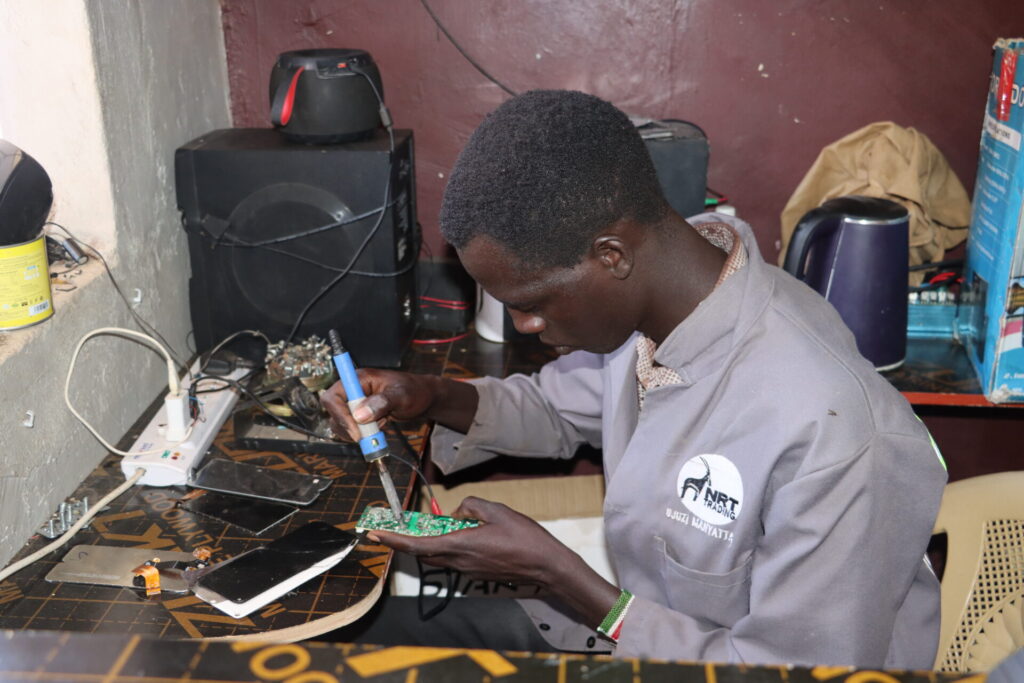
As fate would have it, Jonathan’s uncle passed away, and he felt the loss deeply. Death had robbed him of a mentor. Despite his devastation, Jonathan followed in the footsteps of his uncle and began repairing small gadgets in the house, including watches and radios. Having no access to electricity, he adopted his uncle’s improvisational techniques. He would heat a five-cent coin on a charcoal stove, then use it as a makeshift soldering tool to connect wires. His ingenuity did not go unnoticed. Over time, the community began to turn to him for assistance fixing broken equipment.
After turning 20, Jonathan sought ways to learn the intricacies of equipment repair and lift his family out of poverty. In Isiolo Town, he met an experienced technician who took him under his wing as an apprentice for five years. During this period, he learnt to repair a variety of home appliances. His interest was piqued, and he dreamed of expanding his skill set to include mobile phone repair.
Jonathan’s big break came when a Leparua Community Conservancy board member noticed his dedication and informed him of the ICEP-funded Ujuzi Manyattani vocational training programme. Without hesitation, Jonathan enrolled in the mobile phone repair and maintenance course. The next three months were life-changing for him, as he learned essential repair techniques from a professional TVET trainer.
On February 13, 2024, 140 trainees graduated from Ujuzi Manyattani, and Jonathan was among them. Like the other graduates, Jonathan was issued a certificate and a start-up toolkit, enabling him to establish a business right after graduation. Soon after, he joined a Village Savings and Loans Association and borrowed Ksh 30,000 (USD 232.55) to rent a small workshop and purchase additional tools.
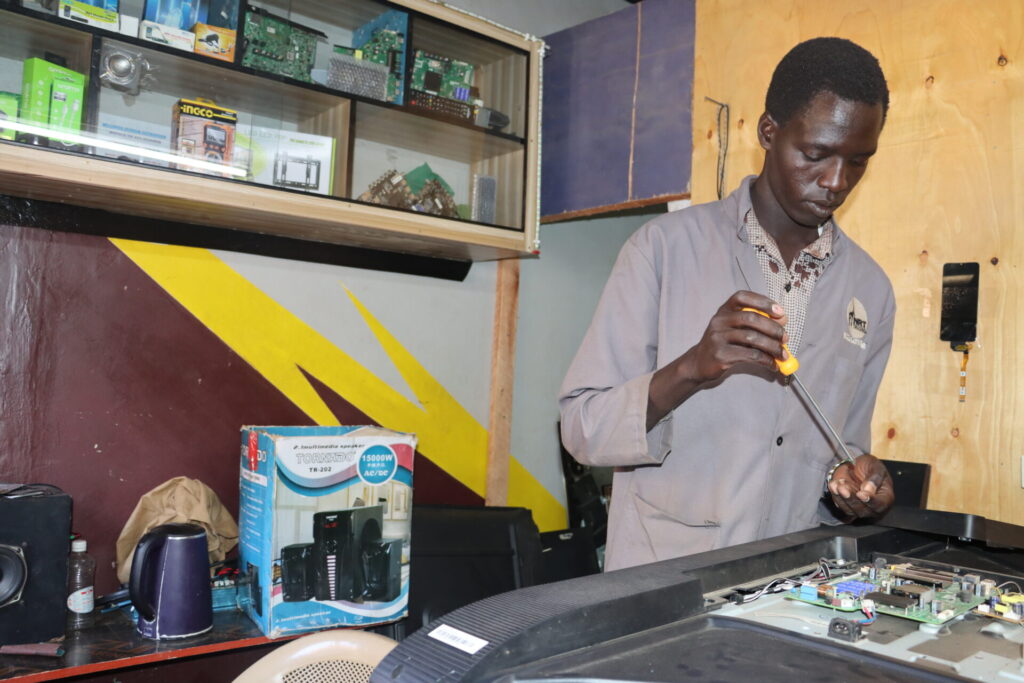
Today, Jonathan’s shop is a bustling hub of electronic repairs, attracting nearby clients as well as those from neighboring Samburu and Marsabit Counties, who send in their devices via bus. He earns at least Ksh 3,000 daily (approximately USD 23.25) and up to Ksh 10,000 (approximately USD 77.51) for complex repairs, such as fixing television screens.
Jonathan shares his workshop with a business partner. Their combined expertise enables them to expand their service offering, which ranges from repairing phones, thermostats, coils, cables, and kettle fuses to fixing television backlights, motherboards, power supplies, and screens.
Jonathan envisions stocking the workshop with spare parts to reduce costs and training youth in his community. He aspires to create opportunities for others like him to learn profitable skills, so they too can improve their livelihoods, just as he has.
Business partnerships have long been a powerful force for success, allowing individuals to pool their strengths, share risks, and create something far greater than what could be achieved alone. In many ways, collaboration can be the cornerstone of building sustainable ventures, particularly in regions where access to resources and capital is limited.
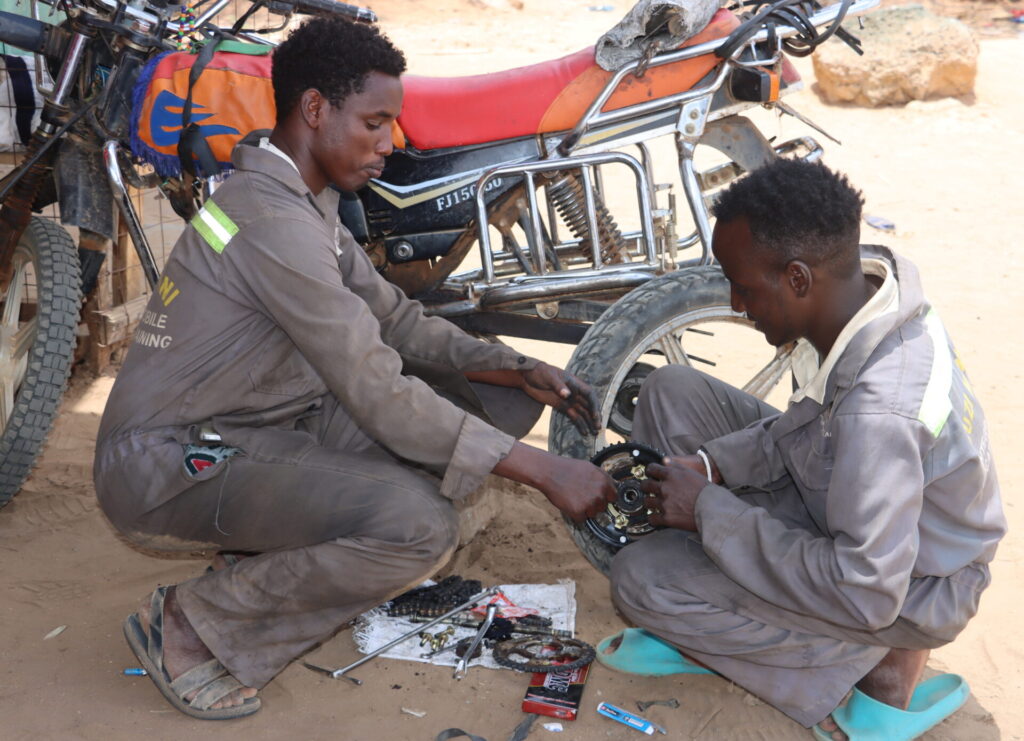
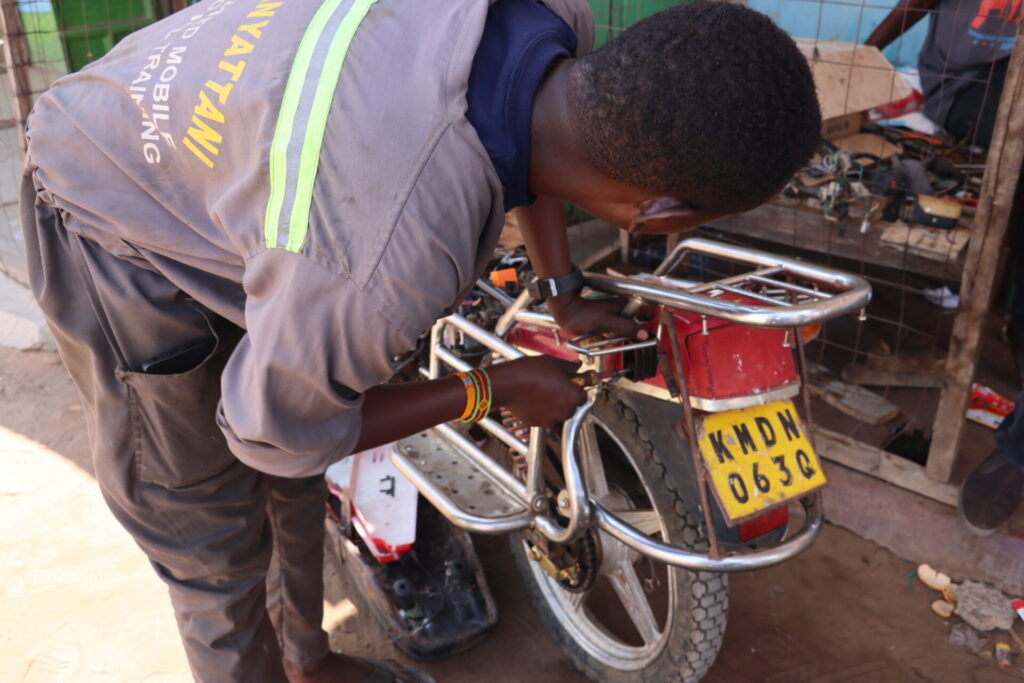
Settled under the shade of an iron sheet roofing, a small team of young men huddles together, tools in hand, working on a motorbike – Shadrack Kinyanjui, Amos Legalhaile, Joram Lemirgichan & Daddy Lemerketo are Ujuzi Manyattani graduates who, with the support of Basecamp Foundation, completed a three-month training in motorcycle repair and maintenance.
Shadrack Kinyanjui, known by his Samburu moniker ‘Lekokoyo,’ was born and raised in Sereolipi. He is the drive behind this partnership, and before joining the program, he was a boda boda operator. His motorbike would often break down in remote areas, far from any garage, leaving him frustrated and stranded. Each time, he would incur additional costs for labor and transport of mechanics who had to come from far away. The worst part? He could do nothing about it. “There were times I would come across a fellow rider stuck in the middle of nowhere with a broken-down bike, but I couldn’t help them. I had no idea how to fix anything,” Shadrack recalls.
Driven by the desire to solve these problems, Shadrack yearned for skills that could help him and others in his community. When he heard about Ujuzi Manyattani, a program that brings vocational training directly to the communities, he jumped at the opportunity, a decision that turned out to be life-changing. After graduating in June 2024, Shadrack didn’t just hold onto his toolkit—he had a bigger vision. Noticing a gap in qualified mechanics in his home area, he gathered his three friends, all fellow graduates from the course, and together, they set up a small garage for repair services outside an auto spares shop. “Working together has been a good decision,” Shadrack says. “Shared responsibilities and helping each other out. One may be good at wiring, while the other at fixing clutches.”
Shadrack repairs a motorcycle at their garage in Sereolipi, Samburu County
However, the path wasn’t easy. The young men faced skepticism from locals who hesitated to trust their expertise, fearing they were too new to the craft. But they’ve persisted, working hard to prove their worth. On good days, they receive 5-6 customers, earning around KES 1,000 per day each, while on slower days, they focus on smaller jobs like fixing punctures for KES 100. They also began offering mobile services, traveling to remote areas to fix bikes where other mechanics couldn’t reach. It’s this determination to serve their community that has slowly earned them a growing customer base.
Their business is still young, but their dreams are big. They’re currently training a fellow youth, passing on the skills learned through Ujuzi Manyattani. In the future, they dream of expanding their business, opening their own auto spares shop, and eventually establishing individual enterprises, continuing to grow and share in each other’s success.
What started as a three-month course has become a lifelong empowerment and entrepreneurship journey for these four young men. Through collaboration and a shared vision, they are not just fixing bikes but also breaking the cycle of poverty and unemployment in their community.
In a remote village in Masol Conservancy, West Pokot County, Teresa Elolia is a renowned entrepreneur with a reputation growing as quickly as her ambitions. Growing up, her world revolved around family, but as the years passed, she realized that her passion could be something more. When an unexpected opportunity came her way, Teresa saw the chance to turn her skills into something tangible, setting her on a path she hadn’t anticipated.
Born into a modest household, her family provided a stable environment, allowing her to focus on what mattered most—education. However, Teresa’s life took an unexpected turn when she became pregnant in Grade 7 with her first child, yet despite the odds, she managed to complete her primary school education. But after joining Form 1, she soon became pregnant with her second child. Struggling to balance motherhood and education, Teresa made the difficult decision to drop out of school and focus on raising her children. At a young age, Teresa later met a man who fathered her third child. However, this relationship proved to be another challenge. The man, often lost in alcohol, could barely provide for the family. Left with no choice, Teresa parted ways with him and returned to her parents’ home.
With limited options and children to care for, Teresa began wondering how she could change her life’s trajectory. In 2022, through MashinaniWORKS’ Ujuzi Manyattani program, with the support of USAID, Teresa found hope. One of the local community members informed Teresa’s father, who didn’t hesitate to submit her name for enrollment. The beauty of Ujuzi Manyattani lay in its inclusivity—there were no education-level restrictions. Teresa eagerly chose to pursue catering, a craft she had always been passionate about.
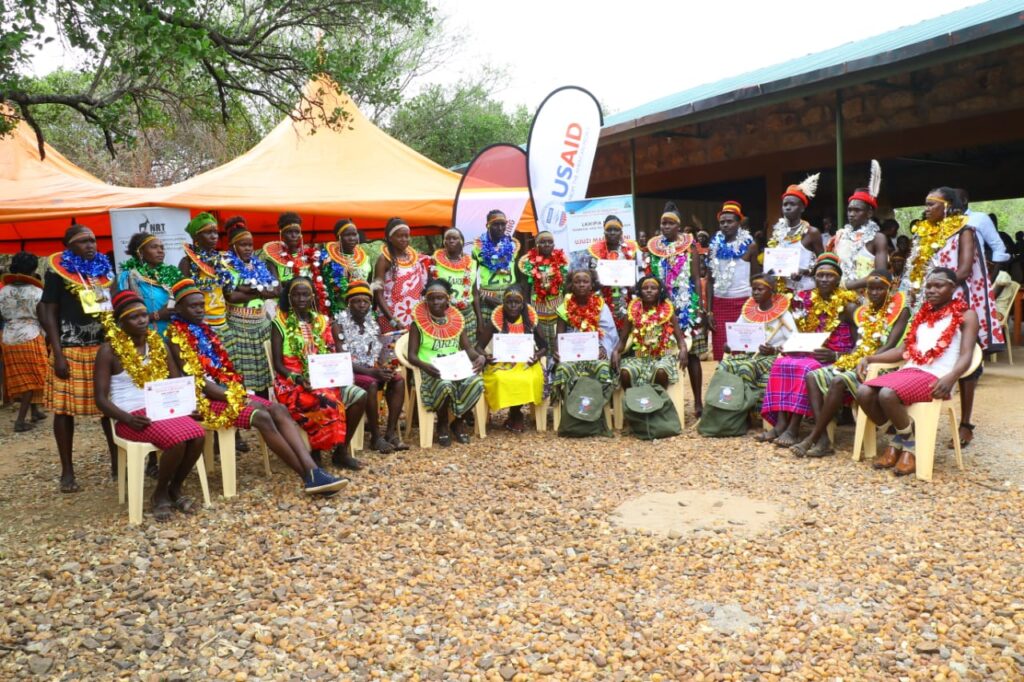
Teresa, second row, first from the right during the Masol Ujuzi Manyattani graduation in 2022
“A few months into the training, I noticed a gap in the local market for baked goods like cakes, donuts, and mandazi, and I seized the opportunity,”
With just a packet of wheat flour and cooking oil, she prepared small batches and hawked them to nearby shops while juggling her studies. This helped her earn an income while getting popular for her services.
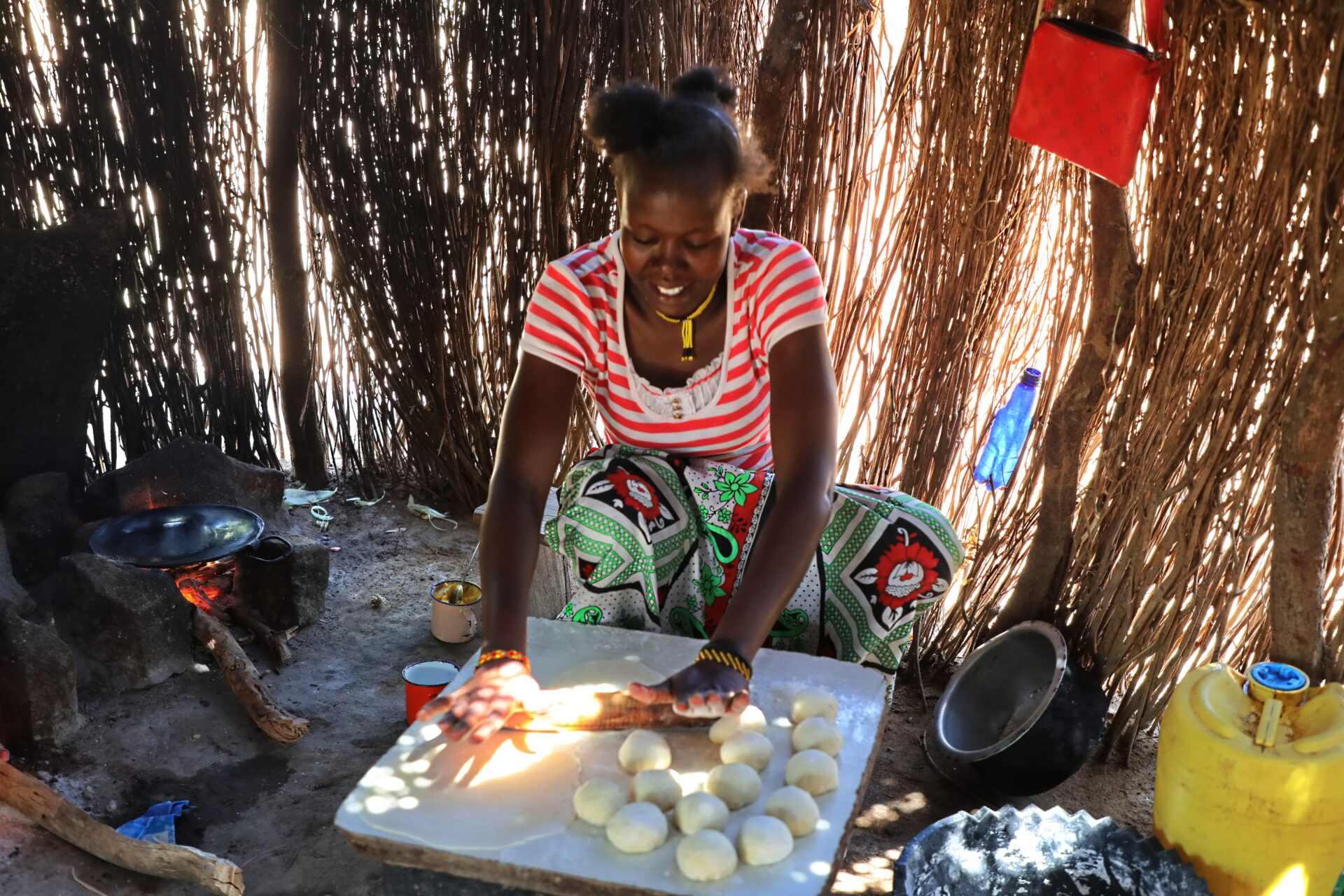
Upon graduating with her catering certificate and receiving a tool kit from the program, Teresa fully launched herself into the business world. Her catering skills allowed her to expand her offerings, and she soon started selling maize, beans, and sugar to local hotels, making around KES 12,000 from these sales alone. On a good day, Teresa’s catering business, including a mini hotel, brings in up to KES 6,000. Even on slower days, she can at least make KES 1,000—enough to sustain her family and ensure her children attend school. She no longer relies on her parents for financial support but also helps take care of her siblings; her stability has brought her a sense of independence she once only dreamed of.
With the growing settlement around the area, there has been increased competition in the local market, but the unique touch of her work and the skills she gained from Ujuzi Manyattani keep her ahead of the curve.
With dreams of expanding her business and even employing others, Teresa sees a future where her services are sought after far and wide. She also plans to invest in livestock, diversifying her income sources, and continually upgrading her skills to remain competitive.
A large, healthy livestock herd is a pastoralist’s pride and joy.
For indigenous pastoralist communities, it is the main currency, the only one that truly matters, culturally speaking. In the vast expanse of Nakuprat Gotu Conservancy, a young moran named Evans Echwa toiled in the fields, herding his family’s livestock for years. His journey, however, was far from the ordinary.
Echwa, a 26-year-old with a weathered spirit, dropped out of school at the tender age of class five, burdened by the responsibility of caring for his family’s cattle. Little did he know that his challenges would be as relentless as the scorching sun that beat down upon the arid land in northern Kenya.
Drought and banditry attacks became haunting shadows, casting uncertainty over his family’s livelihood. Preserving the cattle family’s only source of livelihood became critical. As pasture and water supplies dwindled, Echwa moved the herd further from home in search of grazing fields. Sometimes, he would cover distances of up to 100 kilometers to ensure the cattle were adequately fed and watered.
Echwa at his garage in Kiwanja, Nakuprat-Gotu Conservancy
A life without the livestock was unimaginable!
As northern Kenya endured its fifth consecutive failed rainy season, Echwa’s greatest fear became a reality when the prolonged drought eventually wiped out his family’s entire herd. Left with no alternative source of income and being a lower primary school dropout, Echwa and his family faced a grim future.
Faced with shame and the weight of family blame, he embarked on a daring journey to recover what was lost. In a desperate bid for retribution, Echwa joined fellow morans and raided the neighboring community for livestock.
The fateful raid unfolded with a tragic climax -Echwa was shot alongside his fellow morans, and some of his comrades paid the ultimate price. The merciless bullets sprayed upon them did not spare his comrades’ lives.
His Turning Point!
Lucky to survive, Echwa nursed back to health in the sterile walls of a hospital, where he found himself at a crossroads. With the ghosts of the past crimes haunting him and the loss of his comrades weighing heavy on his conscience, he contemplated a new path for his life. One that diverged from the shadows of violence and into the realm of a better life.
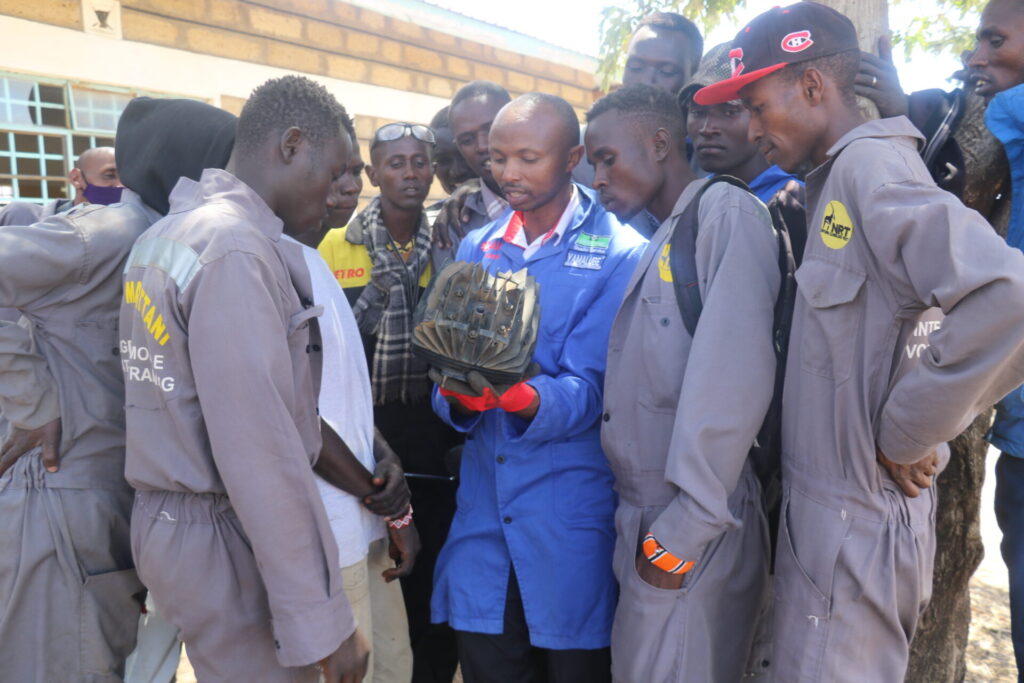
Echwa and his fellow Ujuzi Manyattani trainees during a two-day Yamaha motorcycle training in 2022 courtesy of Toyota Kenya
Determined to rewrite his narrative, Echwa faced the uphill battle alone, without support for his newfound ambition. However, fate intervened during one of his idle days. In 2021, he discovered that NRT Trading Ujuzi Manyattani was organizing a sensitization meeting at Nakuprat Community Conservancy. The vocational programs offered by the organization offered a beacon of hope for people like him who were looking for an opportunity to better their lives through marketable skills.”
Undeterred by his lack of formal schooling, he applied, half-expecting rejection. To his surprise, the opportunity embraced him. “I applied for a course in motorcycle repair, and I was surprised to qualify even at my level,” recounts Echwa with a spark of gratitude in his eyes.
The next three months became a transformative journey as Evans immersed himself in the Ujuzi Manyattani vocational training program that places trainers in the villages. In April 2022, he emerged not just as a graduate but as a symbol of resilience, armed with startup tool kits and a newfound sense of purpose.
Echwa and his fellow trainees pose for a photo
Echwa established his garage in the heart of Kiwanja village, located in Isiolo County, within Nakuprat Gotu Conservancy. He sees his enterprise as a business and a force for positive change. “Running my own garage has given me a lot of focus in life. I am no longer dependent on banditry crimes to survive. My mind is now focused on how to expand my business and be of more help to my community and family,” he says.
Evans Echwa, once a herder bound by the trials of the land into banditry, is among the 88% of Ujuzi Manyattani graduates who have embarked on self-employment through setting up their businesses, hence earning an income to secure their livelihoods.
Early last year, NRT Trading Ujuzi Manyattani held a graduation ceremony that marked a significant milestone for 337 women and youth from NRT member Community Conservancies of Nakuprat-Gotu, Nasuulu, Ltungai, Shurr, Jaldesa, and Songa in Isiolo, Samburu, and Marsabit Counties. These graduates had completed various vocational courses with the support of the USAID Local Works program, the Royal Danish Embassy, the Embassy of Sweden through the IMARA project, IUCN Save our Species co-funded by the European Union, The Nature Conservancy, and Northern Rangelands Trust.
Among the graduates was John Galwersi, a young man from Karare, Songa Conservancy, Marsabit County. Before joining Ujuzi Manyattani, John worked as a boda-boda operator, braving the elements to sustain himself and his family. However, long hours on the motorcycle began taking a toll on his health, leading him to seek alternatives. Fortunately, through the Songa Community Conservancy management, he learned about a vocational training program targeting women and youth from indigenous communities with marketable skills to diversify livelihoods and encourage entrepreneurship.
John receives start-up toolkits during the Ujuzi Manyattani graduation on April 6th, 2022
John enrolled in the motorcycle repair and maintenance course, envisioning it as an educational pursuit and the foundation for a future business. However, after completing his training and graduating, he struggled to secure a job but remained persistent. With the start-up toolkits he received during graduation, he put them to work and undertook a couple of attachment opportunities with skilled mechanics to increase his grip in repairing motorcycles. He occasionally searched for employment opportunities and set aside some modest earnings.
To fill a crucial gap in his community’s need for motorcycle repair services, John used his savings of KES 5,000 to establish an auto spares and motorcycle repair shop. He stocked it with essential items for motorbikes, such as engine oil, side mirrors, brake pads, and tubes. John would conduct tests on different motorcycle models and repair various motorcycle systems, including engines, transmissions, and brakes.
John’s journey didn’t stop with technical expertise. Biashara Mashinani provided him with tailored entrepreneurial and financial literacy training in business planning, analysis, risk management, branding, customer service, and record keeping. This comprehensive training paved the way for John to run a successful business and expand his services.
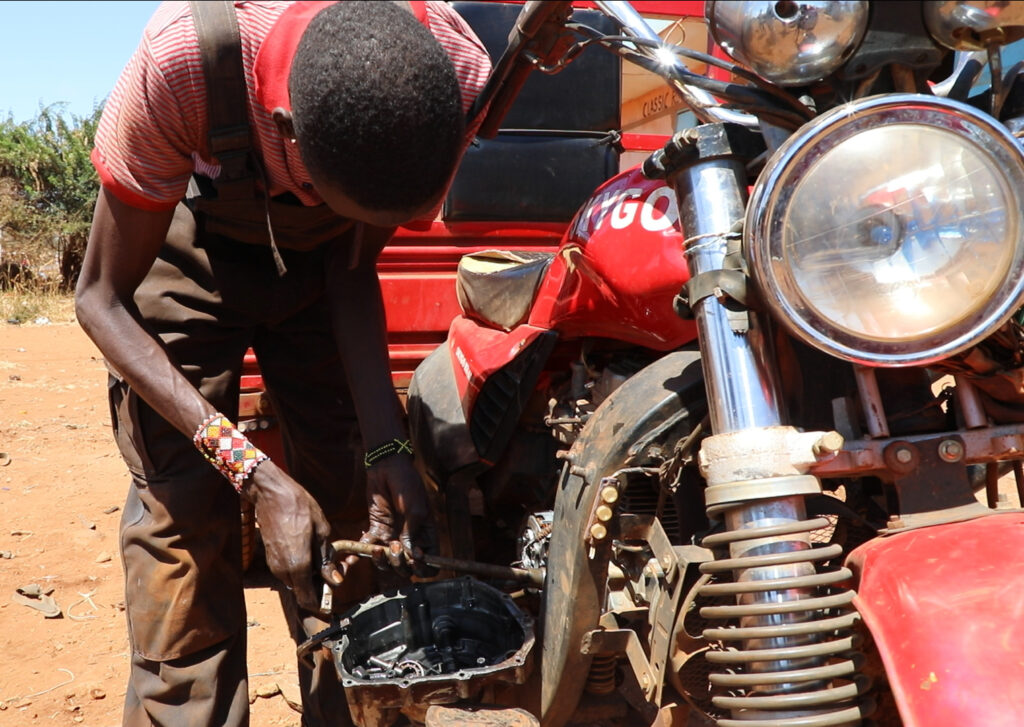
John repairs a tricycle outside his auto spares and motorcycle repair shop.
From his business dubbed “Johntes Auto Spares and Motorcycle Repair, John earns a daily income of between KES 1,000 and 5,000 and has also created job opportunities for other young individuals in his community. His mobile services also cater to customers who face challenges traveling to Karare town, contributing positively to the community’s convenience.
John has encountered some difficulties in his business journey. He has lost quite a lot of money to customers who promised to pay back the money after repair but disappeared without fulfilling their promise, resulting in significant losses. Additionally, since he often orders materials from other towns, they sometimes arrive damaged, forcing him to order new ones and incur unexpected expenses. These setbacks, however, have not deterred him.
From owning a box of tools to having a fully stocked auto spares shop, John’s decision to be self-employed was the best he could have made. He now runs his business smoothly while growing his skill set and knowledge, monitoring all the profits and losses, choosing what to outsource to others, and being his own boss!
John advises other young women and men to acquire skills and enroll in programs like Ujuzi Manyattani, which offers vocational skills to address market gaps and boost and diversify the livelihoods of women and youth without disrupting their normal ways of life.
John is among the 88% of Ujuzi Manyattani graduates who have embarked on self-employment through setting up their businesses, hence earning an income to secure their livelihoods.