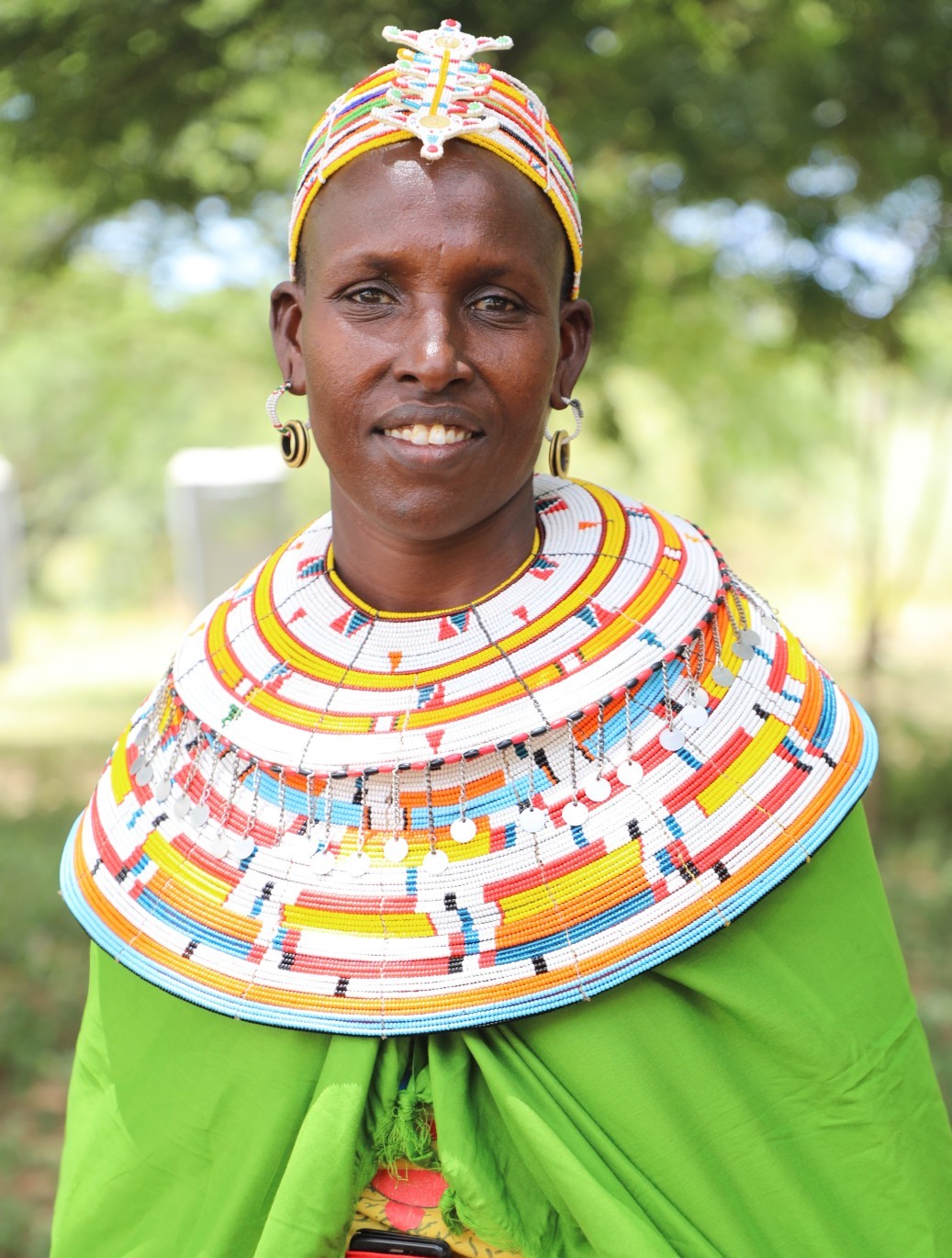
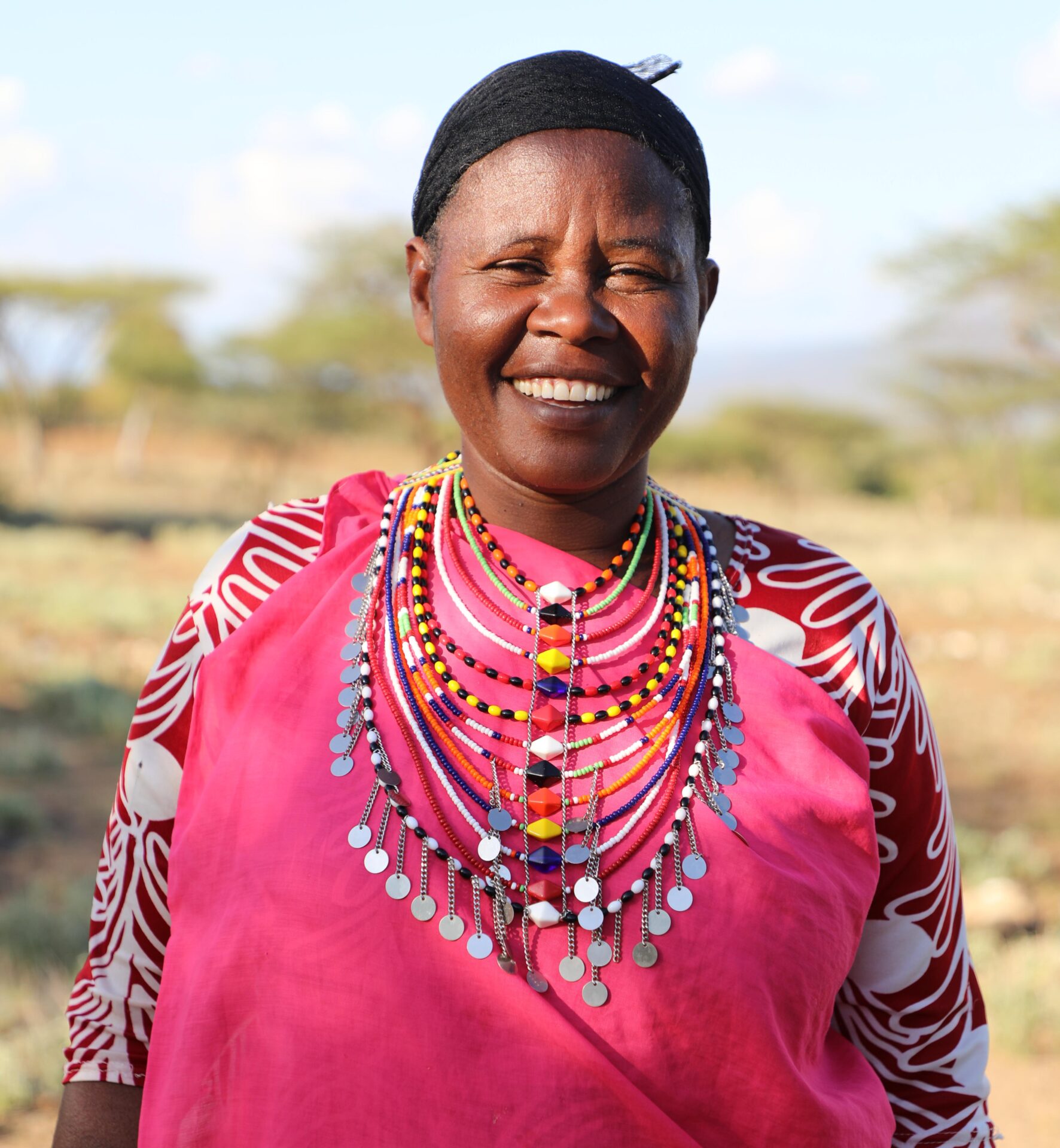
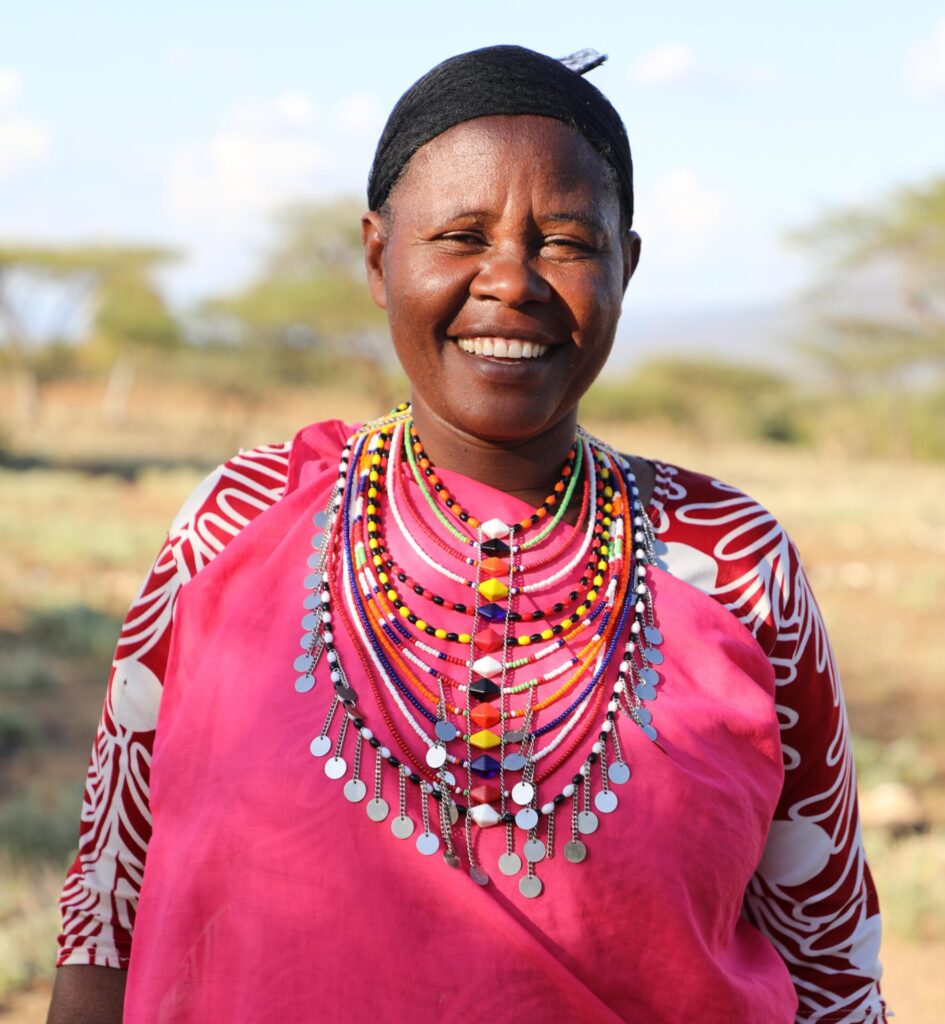
Pelina Kinyaga’s journey with BeadWORKS Kenya begins at a moment when the program itself was still taking shape. When BeadWORKS was introduced in Lekiji Village within the Leparua Conservancy, she was among the first women artisans who chose to participate. Initially, her involvement was cautious: she watched and learned, curious whether this emerging enterprise could really challenge the rhythms of their community’s economy, defined by livestock and seasonal uncertainty.
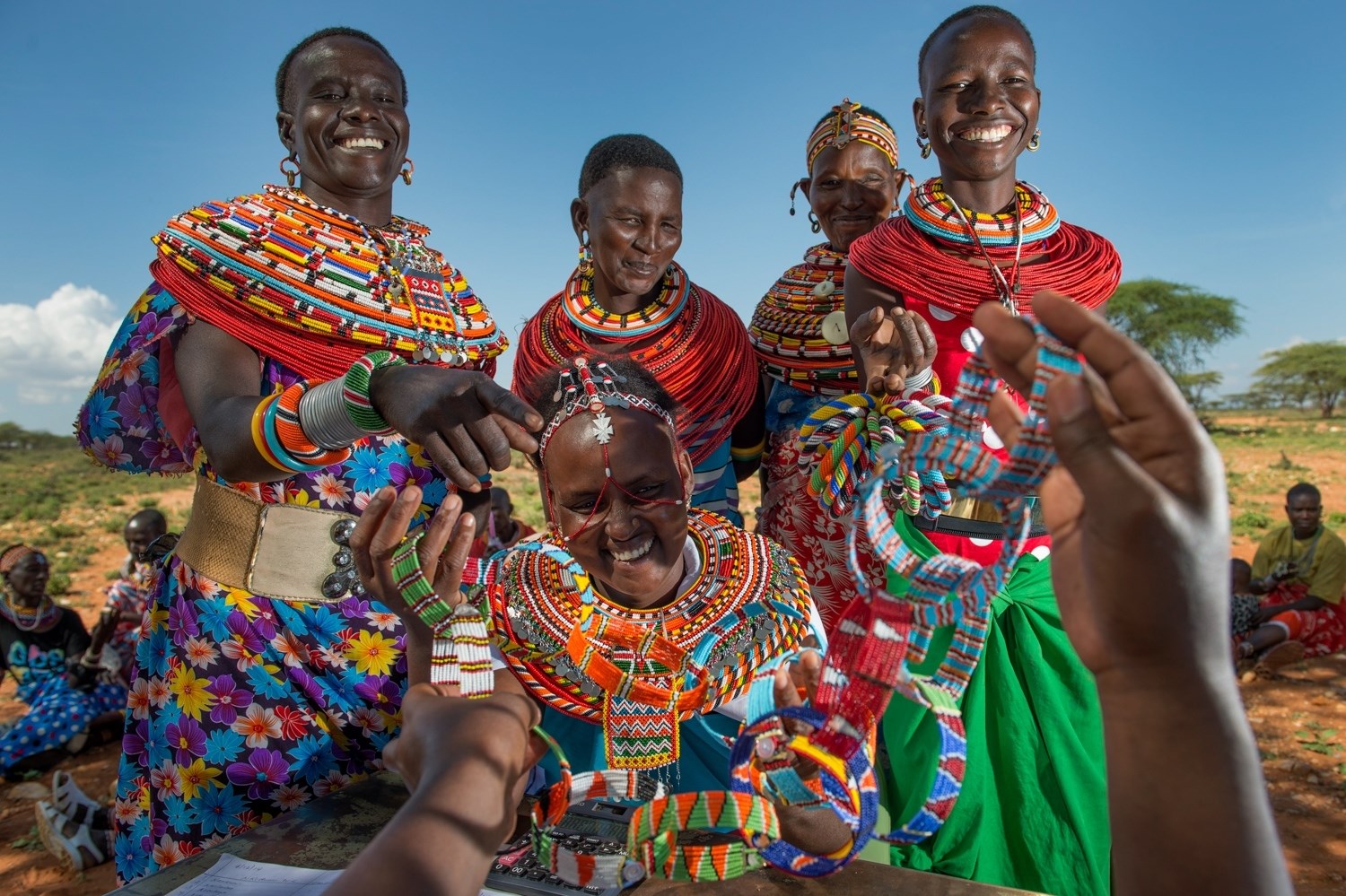
Beading, however, was already part of her life. As a Maasai woman, Pelina had acquired the skill informally, passed down from one generation of women to the next, and practised within the rhythms of community life. She produced necklaces, ceremonial headpieces, and bangles for morans (Maasai warriors), items valued for their cultural significance rather than their commercial potential. What BeadWORKS introduced was not the craft itself, but a reframing of it. Through clear systems of quality control, design guidance, and market access, the program demonstrated that beading could serve as a consistent source of income. For Pelina, the most compelling element was simple and persuasive: the opportunity to earn her own money and be paid fairly for her work. The social enterprise, which now supports 1,200 pastoralist women across nine community conservancies, confirms that these traditional skills can be linked to consistent, meaningful income rather than to episodic use or barter alone.
The income from beading introduced a new sense of predictability into her household. As a mother of six, aged from early childhood through adolescence, Pelina is responsible for her family’s daily needs and long-term well-being. What mattered most was stability. Unlike narratives of survival built on borrowing as default, Pelina’s life has seen that pattern decline. Earlier in her life, she might have borrowed money to meet day-to-day needs, but that was before she had reliable earnings. Her income from BeadWORKS now provides a dependable weekly cash flow: she receives regular payments for beaded products sold through local and international channels. In 2024 alone, the network of artisans collectively saw product sales exceed KES 25 million, with artisans earning over KES 4 million from items they produced and contributing to both household and conservation needs without reverting to unsustainable coping strategies.
One moment that clarified this change for her occurred when her last daughter was sent home from school for not having a school uniform. The uniform cost KES 600, a modest sum in absolute terms but significant in context. Instead of scrambling for casual credit, Pelina approached a local tailor with confidence, grounded in her upcoming payment; they agreed to credit based on it, and the situation was resolved without stress. This instance signalled both her prudence and the emerging financial agency she now exercises.
Beyond income, BeadWORKS also exposed her to leadership support, entrepreneurship, and financial literacy trainings. These sessions offered concepts that Pelina applies directly in her daily life, particularly in managing household resources and making decisions for her family. BeadWORKS artisans participate in entrepreneurship support that extends to savings mobilisation and access to financial institutions such as the Rangelands SACCO, where many now hold savings accounts and can access formal loans. This shift is reinforced by mutual support structures within the women’s groups themselves, through which members save together and secure loans, fostering a social community grounded not only in craft but also in shared economic planning and mentorship.
Pelina’s consistency over the years has made her a respected artisan and informal mentor. She continues to enjoy making belts and animal-inspired pieces, especially lion designs, that reflect her love for wildlife conservation, cultural heritage, and market appeal. Her contribution to the women’s saving group — and the mentorship she both gives and receives — is part of a communal ecosystem in which financial habits, marketing skills, and collective ambition are reinforced.
Today, Pelina’s life is marked by a practical stability that would have been hard to imagine before her association with BeadWORKS. She pays school fees, contributes to household nutrition and healthcare, and plans incremental improvements, such as building a permanent home to accommodate her family’s needs. Her story, situated within a program that has generated hundreds of millions in sales and elevated women’s participation in both local and global markets, illustrates how sustained, market-linked craft enterprises can reshape livelihoods through continuity, competence, and economic independence.
Read more on how “Bead Work Makes the Dream Work”, an article published by the San Diego Zoo Wildlife Alliance, a long-time partner of BeadWORKS Kenya.