Water for the People, Work for Paul

Before the sound of running water ever meant income, Paul Kiperus was known around Kiwanja as the guy you’d find at the riverbeds, loading sand onto lorries. Today, he’s the one people call when their tanks are leaking or when they finally decide to install indoor plumbing.

He was in Form 1 when everything changed. An elephant attacked his father while he was running errands. The injuries were serious, such that both legs were broken, and just like that, Paul had to stop school. The money that would have been allocated for his school fees was redirected to cover hospital bills and other medical expenses. As the eldest child, he stepped up, and school had to wait as he stayed back to take care of his siblings.

To make ends meet, Paul worked at sand harvesting sites. He’d get Ksh. 300 for every lorry he helped load. Most of the time, he was forced to work in the dead of night; it was cold, tiring, and risky. The riverbeds could flood without warning, and on more than one occasion, he feared for his life. But he kept going because staying idle was not an option.

While working as a sand harvester, Paul still found time to help around his community. He had volunteered for two years to monitor water pipes in a nearby Community Land Management Committee (CLMC) project, even though he didn’t know how to fix them. Whenever there was a leak, someone else had to be called in. The board saw his dedication, and when Ujuzi Manyattani came, they suggested he take it a step further by enrolling in a plumbing course under the vocational training program. It was something he had quietly been working toward all along.

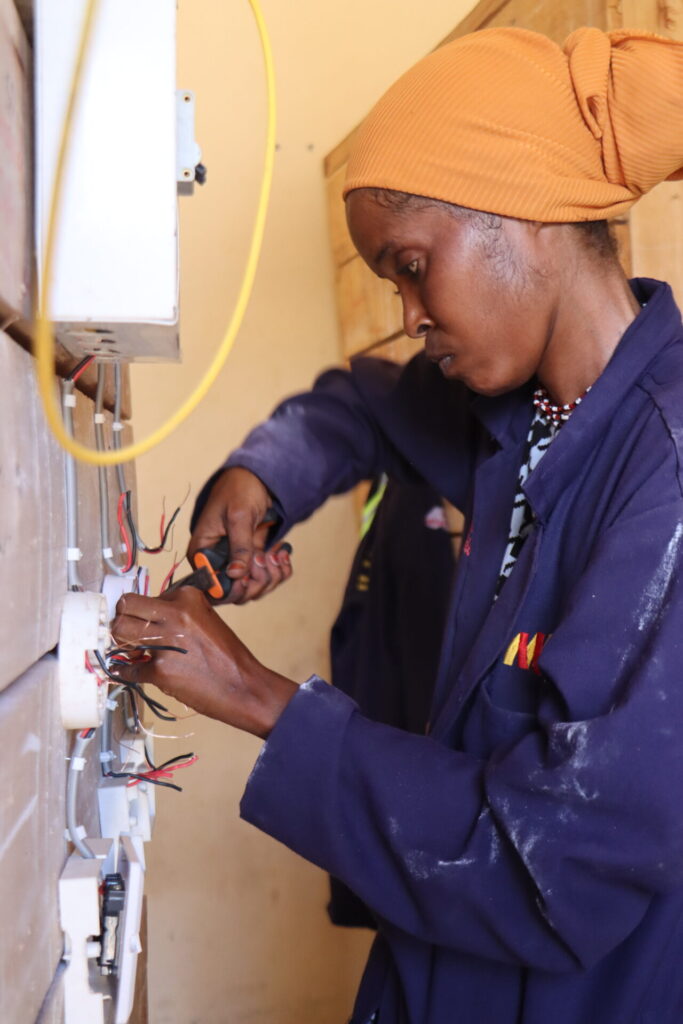
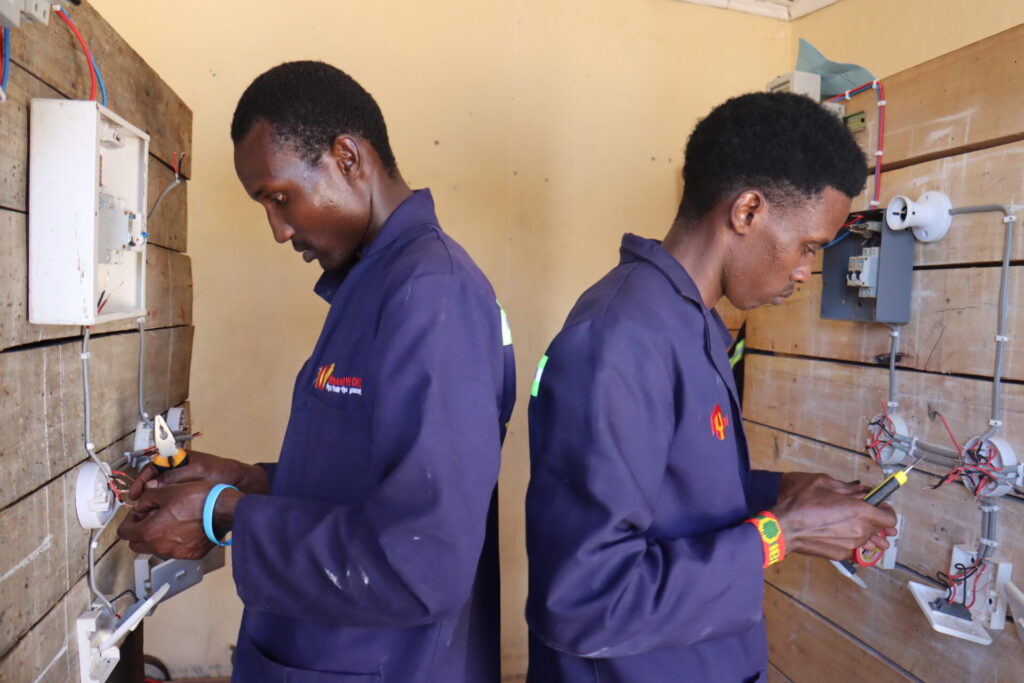
At first, upon joining, he was nervous. He had never been to a classroom since dropping out of school. Some of the skills he was taught included pipe fitting, water supply, drainage systems, and plumbing fixtures, among others. They even had practical sessions in nearby schools.

After completing training, Paul didn’t sit still. He took on small jobs, such as fixing tanks, repairing leaks, and connecting homes to the water supply. His phone started ringing more often. For the first time in years, he had regular work and income he could count on. “I’d leave the house in the morning and come back in the evening with something for the family,” he says.

With his nationally recognized certificate in hand, Paul applied for a job under the Makurian Osirua Water Project with Laikipia County. He was accepted as a casual and has now been on the payroll for nine months, earning around Ksh. 9,000 monthly. For bigger jobs, he links his classmates from the program.

He’s also been involved by the Mayianat Conservancy management in repairing pipelines that elephants have destroyed.

Their area had always struggled with access to water. When a storage tank was finally built to help the community, many families wanted water piped directly to their homes. Paul took it upon himself to lend a hand. The demand grew so rapidly that he decided to open a small plumbing workshop, stocking fittings and connectors that people used to travel as far as Nanyuki to buy.

With support from Rangelands SACCO through FFI-Darwin, he got a Ksh. 50,000 loan to expand.  Paul dreams of further growing his shop, adding things beyond plumbing and other hardware materials.

A 19-Year-Old Turning Her Passion Into a Paycheck

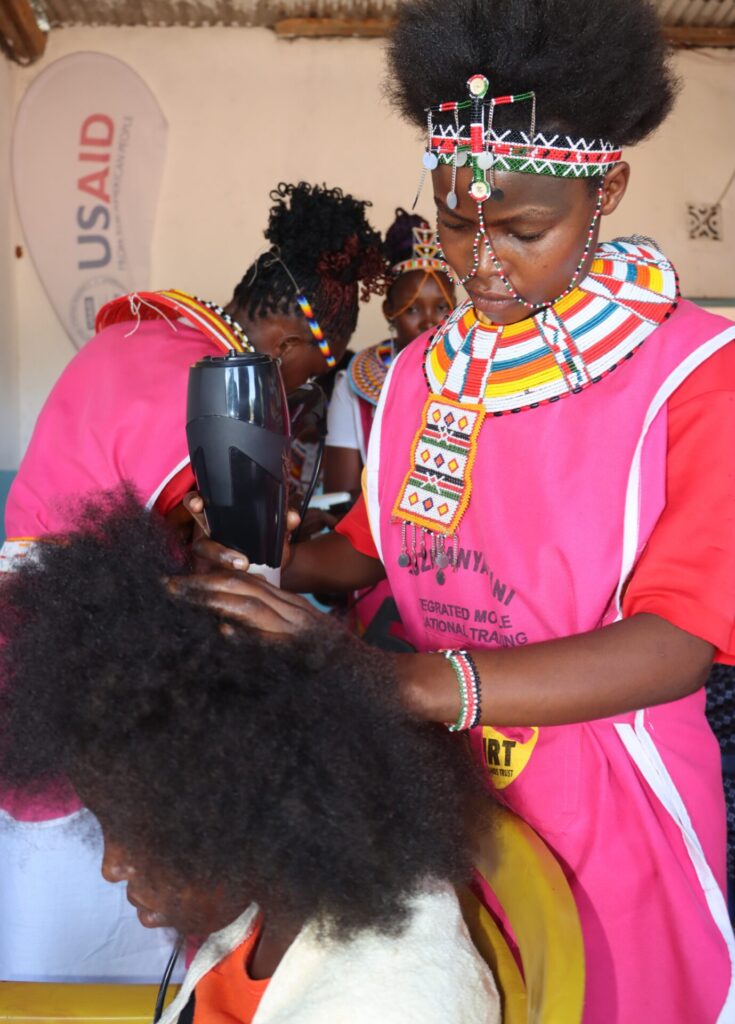
Born and raised in Kiwanja, within the Maiyanat Conservancy in Laikipia County, Jackline Wamoke was practically raised on the scent of hair oils, the rhythmic tug of braids being parted and plaited, and the lively chatter that fills a salon.

Her mother, a long-practicing hairdresser, passed down more than a profession; she nurtured a sense of possibility. Jackline’s older sister followed that same path, and together, they formed a kind of informal apprenticeship that shaped Jackline from an early age.

During school holidays, she would spend hours in the salon, slowly learning the techniques through observation and practice, the rhythm of customer care, and the business instinct required. These small acts of care and craft shaped Jackline’s childhood and, over time, revealed that she could one day take on the family trade.

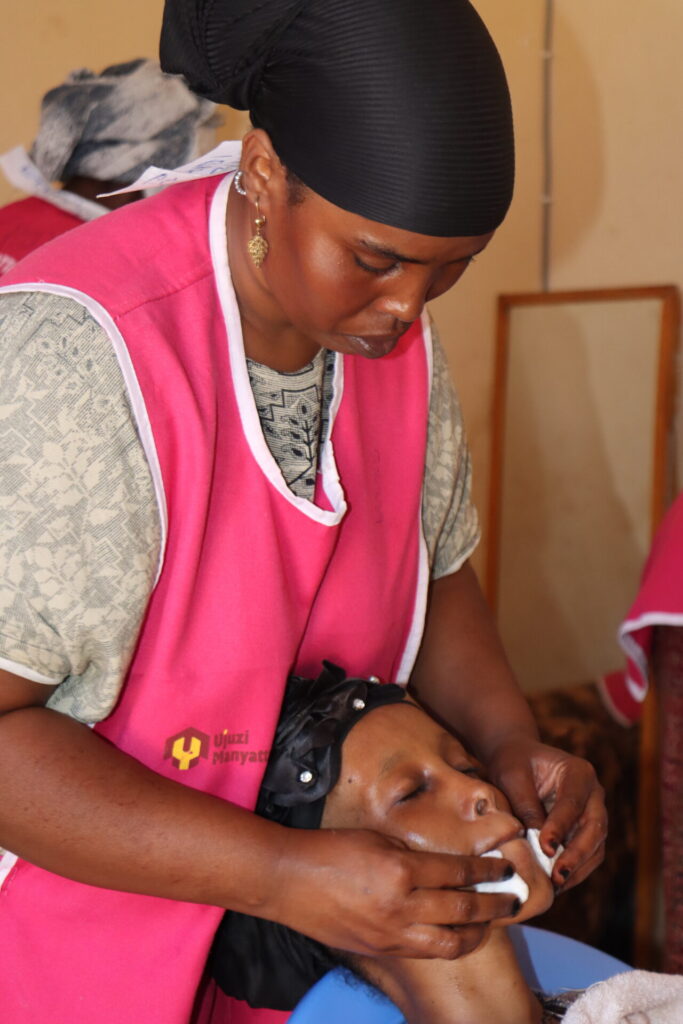
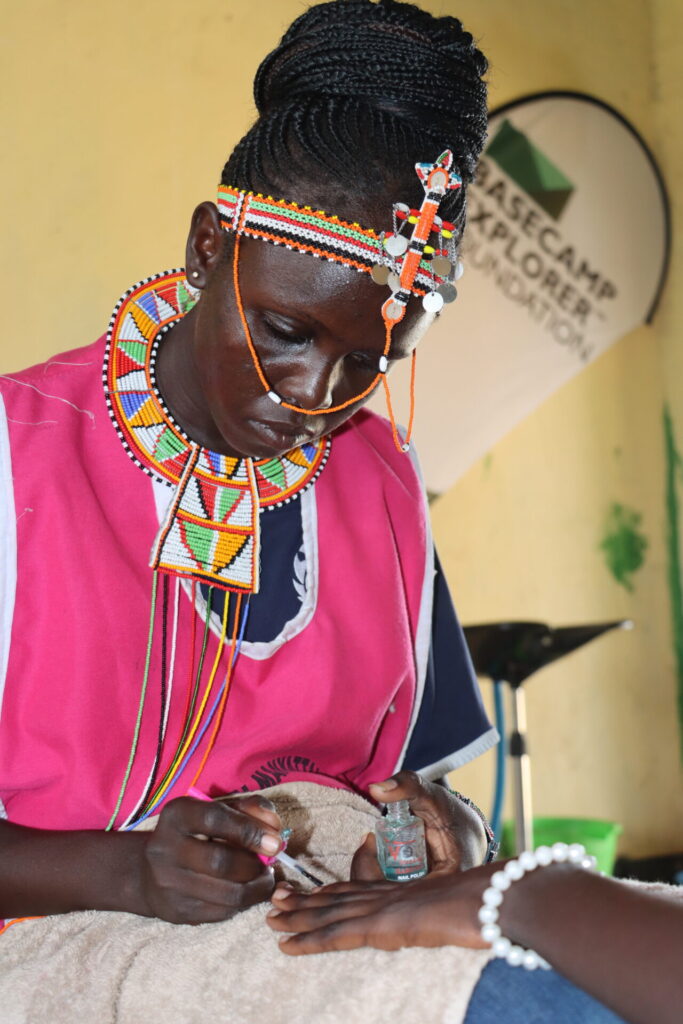
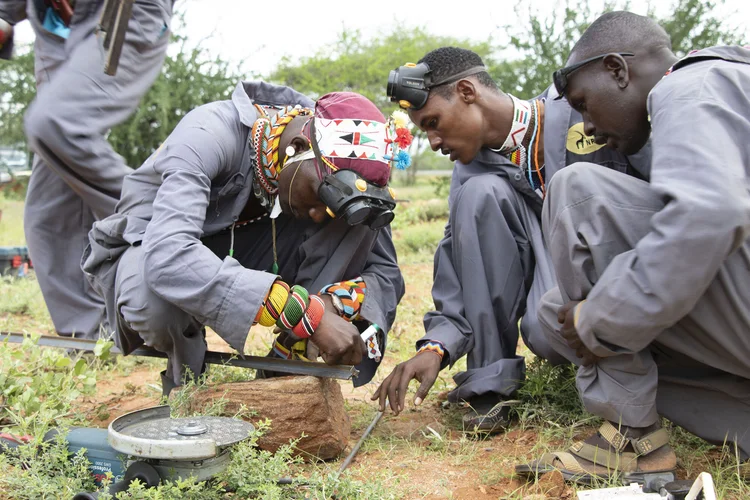
After completing Form Four in 2023, she enrolled in Ujuzi Manyattani in March 2024, a program designed to empower young people in marginalized areas by offering hands-on vocational skills locally relevant to their communities’ needs, which can translate into immediate income. The training went far beyond what she had learned in her mother’s salon. Ujuzi Manyattani introduced her to contemporary trends in beauty and personal care, expanding her expertise to include beauty therapy, such as makeup, manicures, and pedicures. Jackline quickly distinguished herself among the top performers in her cohort, propelled by a desire to elevate her craft to a professional level.

Upon graduating, Jackline wasn’t looking for a job; she was returning to one. Her sister, who had been managing the family salon, passed the baton to Jackline and was ready for its next phase. She made immediate upgrades to the salon, starting with the tools she received through the Ujuzi Manyattani program to redefine the customer experience. She replaced the small wall-mounted mirror with a full-sized one, added a blow dryer and a sink for improved hair treatment services, and hair clippers to begin offering barbering, an in-demand service in the area.

These changes might seem small, but they made a world of difference in both the quality of service she could provide and how customers viewed her business. She didn’t need to win the community’s trust from scratch. They already knew her first as the young girl helping around the salon, later as a trained stylist with new skills to offer. In Kiwanja, where only two other salons operate, competition is limited, and Jackline’s reputation gives her a natural edge. She’s precise, whether it’s lines for schoolgirls, plaits for weekend weddings, or a fresh shave for the boys, she does it all with passion, making sitting on her salon chair something to look forward to.

On a regular day, she sees four to five customers, though that number often rises during peak periods, such as school openings and community events. Her mother, still very much part of this evolving journey, often steps in to help during these high-traffic days. On a good day, Jackline can make anywhere from Ksh. 800 to Ksh. 3,000, depending on the number of customers she serves.

Now, her income is directed to savings, but she still manages to set something aside for her younger siblings’ pocket money and help out with the little things that add up in a household, such as restocking sugar when it runs out or picking up flour on her way home. Her entrepreneurial spirit also pushed her to start selling shoes, clothes, and beads from her salon, which is another way to earn extra money.

Jackline dreams of expanding her salon into a larger space to accommodate more customers and offer additional services.

Thanks to the funding support from Fauna and Flora, under the Darwin Initiative through the Northern Rangelands Trust (NRT).

Defying Gravity: How Ujuzi Manyattani Transformed a Young Man’s Life

Born into a Turkana family in a remote village in northern Kenya’s Isiolo County, Jonathan Nawapa’s early life was shaped by financial crisis.

In a desperate attempt to improve their circumstances, Jonathan’s family relocated to the outskirts of Isiolo Town. However, escalating living costs and the difficulties of adjusting to a new environment compelled Jonathan’s parents to make tough decisions, including discontinuing Jonathan’s education.

Consequently, he withdrew from school after completing Grade 7. Ever since he was a little boy, Jonathan had been fascinated by the art of fixing things. Now that he had plenty of free time, he spent countless hours working beside his uncle, who often repaired household equipment such as radios, and learnt by observing each step.

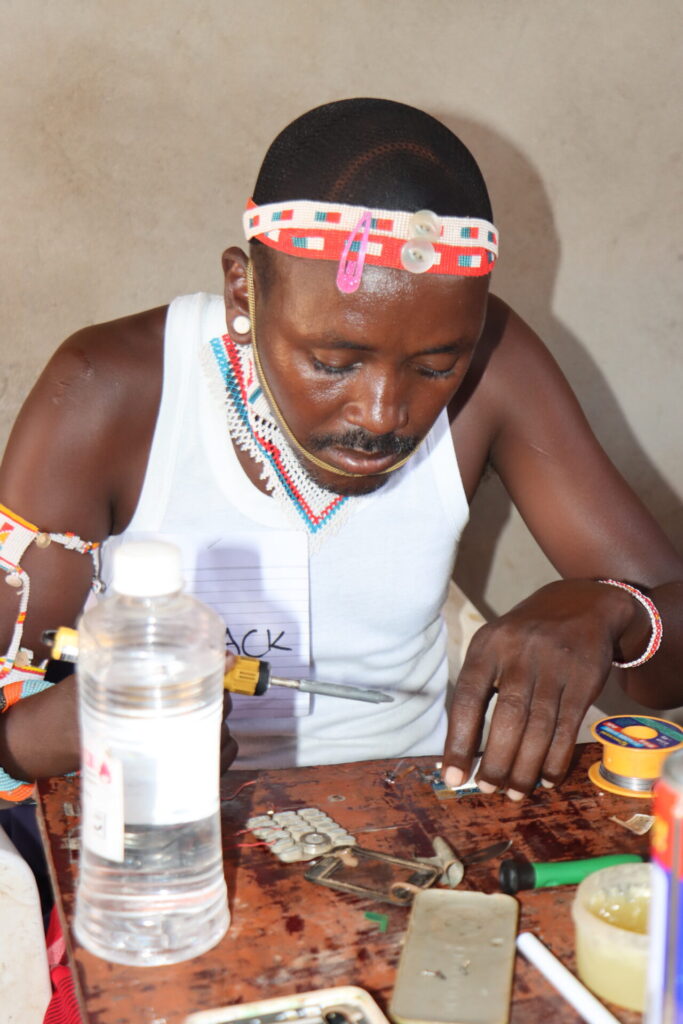
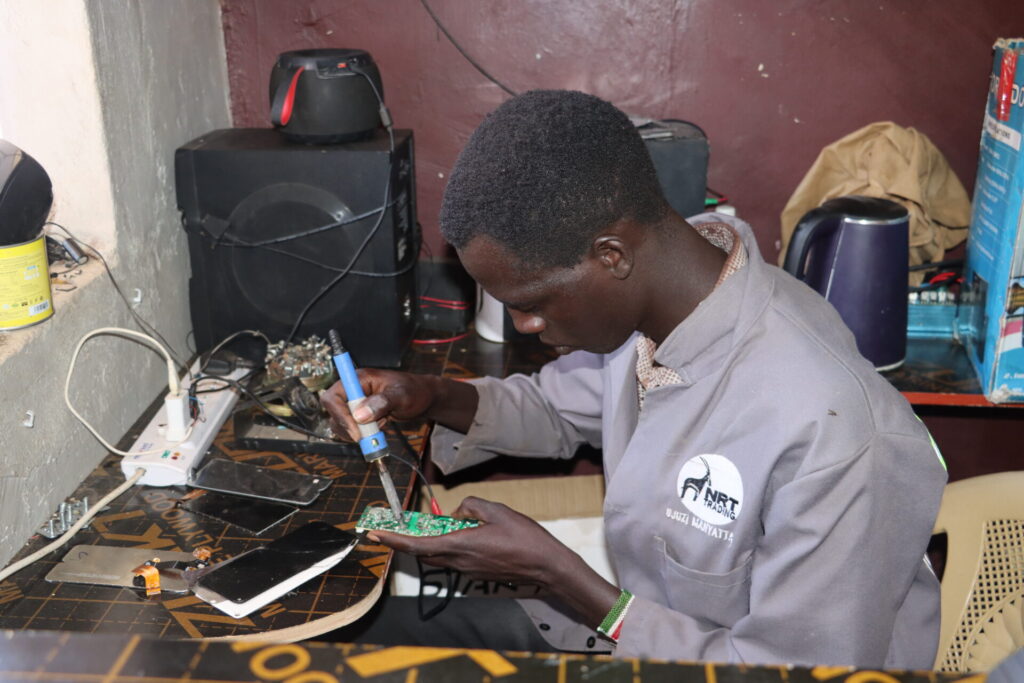
As fate would have it, Jonathan’s uncle passed away, and he felt the loss deeply. Death had robbed him of a mentor. Despite his devastation, Jonathan followed in the footsteps of his uncle and began repairing small gadgets in the house, including watches and radios. Having no access to electricity, he adopted his uncle’s improvisational techniques. He would heat a five-cent coin on a charcoal stove, then use it as a makeshift soldering tool to connect wires. His ingenuity did not go unnoticed. Over time, the community began to turn to him for assistance fixing broken equipment.

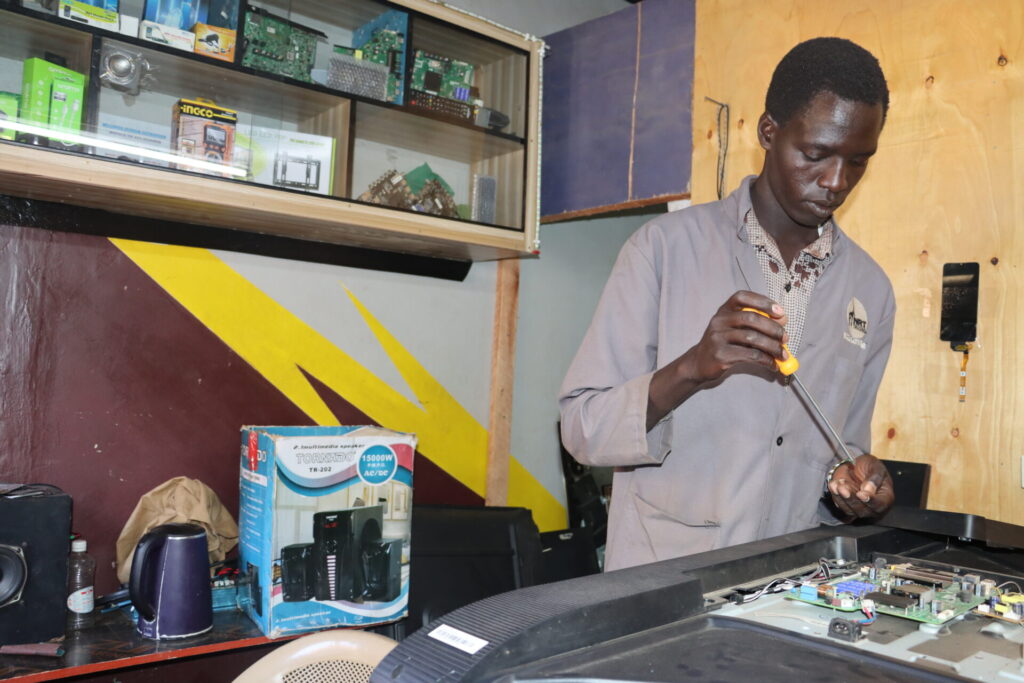
Jonathan repairs a television at his workshop. ©MashinaniWORKS

After turning 20, Jonathan sought ways to learn the intricacies of equipment repair and lift his family out of poverty. In Isiolo Town, he met an experienced technician who took him under his wing as an apprentice for five years. During this period, he learnt to repair a variety of home appliances. His interest was piqued, and he dreamed of expanding his skill set to include mobile phone repair.

Jonathan’s big break came when a Leparua Community Conservancy board member noticed his dedication and informed him of the ICEP-funded Ujuzi Manyattani vocational training programme. Without hesitation, Jonathan enrolled in the mobile phone repair and maintenance course. The next three months were life-changing for him, as he learned essential repair techniques from a professional TVET trainer.

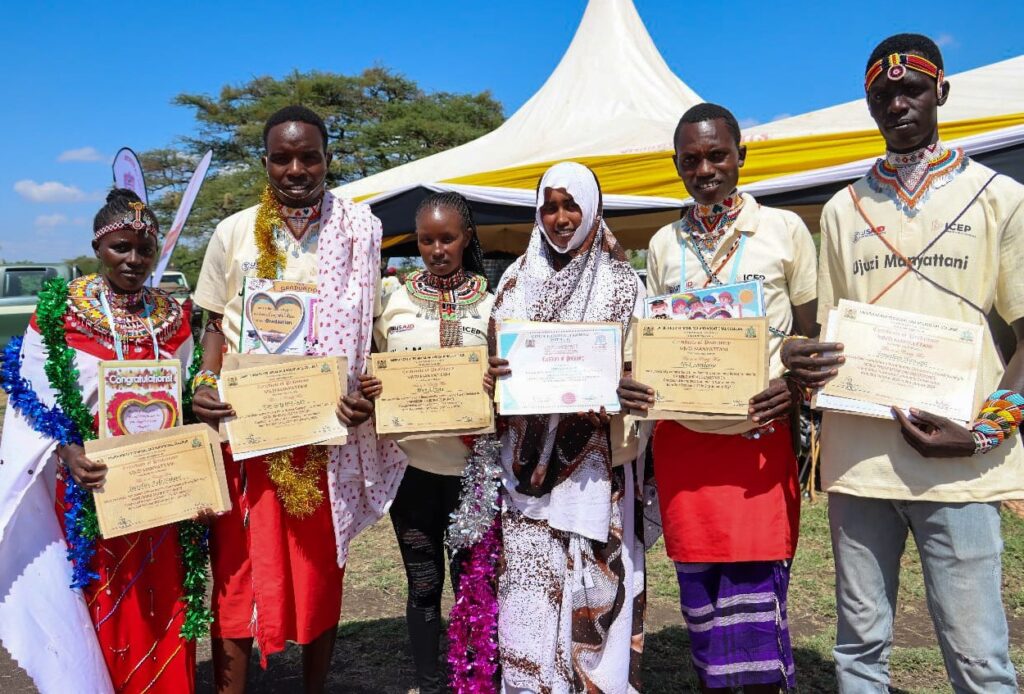
On February 13, 2024, 140 trainees graduated from Ujuzi Manyattani, and Jonathan was among them.
Like the other graduates, Jonathan was issued a certificate and a start-up toolkit, enabling him to establish a business right after graduation. Soon after, he joined a Village Savings and Loans Association and borrowed Ksh 30,000 (USD 232.55) to rent a small workshop and purchase additional tools.

Jonathan (far right) poses for a photo with his classmates as they proudly hold up their certificates during the Ujuzi Manyattani graduation ceremony on February 13th. ©MashinaniWORKS

Today, Jonathan’s shop is a bustling hub of electronic repairs, attracting nearby clients as well as those from neighboring Samburu and Marsabit Counties, who send in their devices via bus. He earns at least Ksh 3,000 daily (approximately USD 23.25) and up to Ksh 10,000 (approximately USD 77.51) for complex repairs, such as fixing television screens.

Jonathan shares his workshop with a business partner. Their combined expertise enables them to expand their service offering, which ranges from repairing phones, thermostats, coils, cables, and kettle fuses to fixing television backlights, motherboards, power supplies, and screens.

Jonathan envisions stocking the workshop with spare parts to reduce costs and training youth in his community. He aspires to create opportunities for others like him to learn profitable skills, so they too can improve their livelihoods, just as he has.