
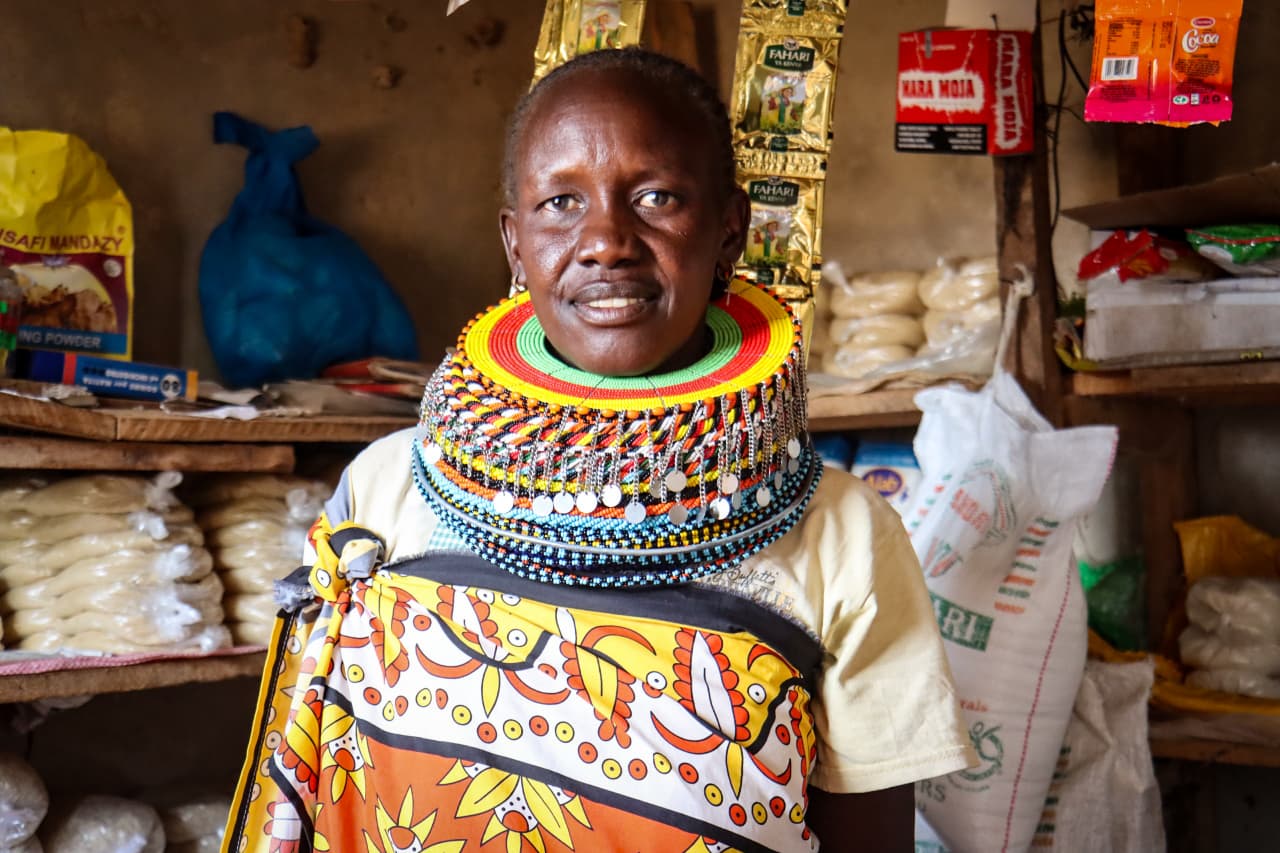
When Jamarose Moru thinks about her childhood, she remembers her parents struggling to keep them in school. They had never received formal education themselves, especially given their pastoralist background, which has a record of some of the lowest school-completion rates in the country, largely due to poverty and a lack of financial support. Livestock was the family’s only asset, and when schoolbooks or uniforms were needed, a goat or sheep would often be sold. Her eldest sister reached Class Eight before dropping out; the two subsequent siblings never enrolled. Jamarose managed to finish primary school, but the cost of secondary education was far beyond what her family could afford.
After leaving school, Jamarose found herself on a path that many young women in her situation often tread. She rose early to fetch water, sometimes firewood, helping her mother with chores, and tended to the family’s herd until she got married by the time she was 18. Her husband’s income as a casual security guard was irregular, and with children to care for, Jamarose turned to selling charcoal, a demanding, environmentally taxing trade, but the only option available at the time.
In the middle of her day-to-day activities, she would often pass a group of women who met regularly under a tree, with a locked metal box at the centre of their circle. In a place where little went unnoticed, everyone knew what the gatherings were about: the local Village Savings and Loans Association (VSLA). Jamarose had always known of it but never thought it could apply to her; saving a few coins seemed pointless when every shilling already had a purpose. Yet she couldn’t ignore how the group seemed to weather difficulties differently by finding help among themselves. That quiet sense of security and the way they supported one another began to shift her thinking. After a while, she joined them, considering it a small but hopeful beginning.
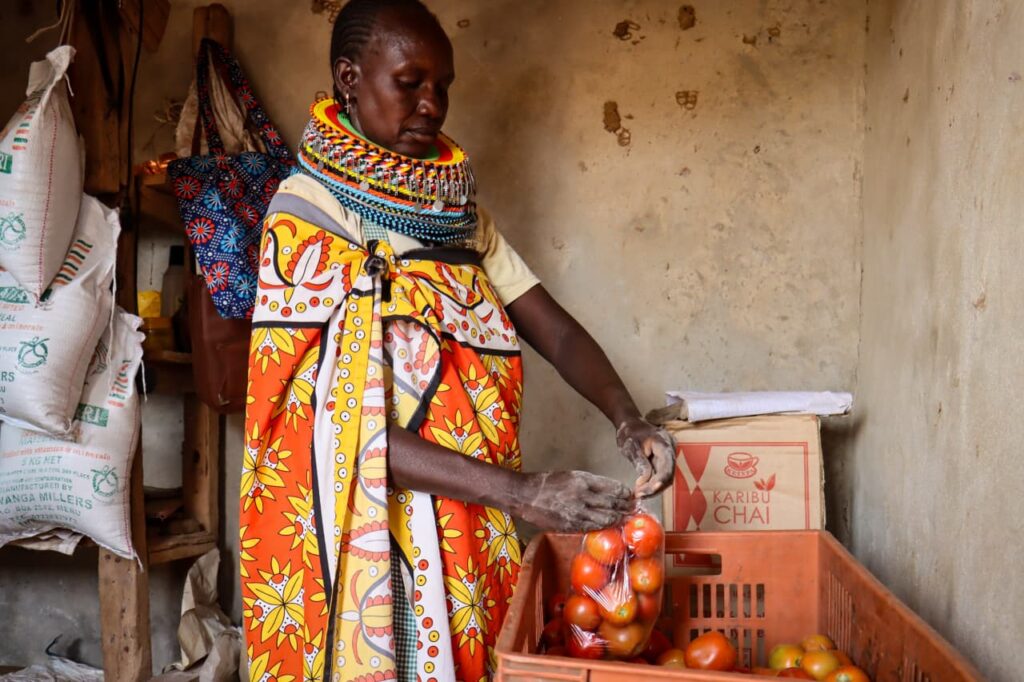
In January 2018, she was also introduced to Rangelands SACCO through its Community Enterprise Agent. As a member of a formal financial institution, she saw it as an opportunity to strengthen her growing financial discipline and began saving consistently. By 2023, her savings were enough to qualify her for a first loan of Ksh. 60,000. With that, she opened a small shop near their manyatta in Attan, just about a kilometre from Tractor, the nearby town centre within the Nakuprat-Gotu Conservancy. Her shop became a direct response to the everyday challenges her community faced. Many residents had to travel long distances to Isiolo town to buy basic supplies, making the trip inconvenient and costly. By stocking essential goods such as sugar, cooking oil, rice, cereals, and even stationery, she met local demand and eased the financial and physical burdens of access.
That same year, a Biashara Mashinani endline survey found that 99.7% of businesses supported in NRT community conservancies had survived the 2022–2023 drought. Among them was Jamarose’s, which, despite enduring significant losses, remained operational. Her customers, mostly livestock keepers, were struck, forcing them to migrate in search of pasture and water. Much of her income was also channelled towards ensuring the survival of their animals, including veterinary services, supplements, and water. In 2024, determined to recover and strengthen her business, she secured a second loan of Ksh. 70,000 from the Sacco, which she used to renovate and expand her shop, ensuring it could better serve her customers’ needs.
On good days, she can serve up to 30 customers, bringing in around Ksh. 5,000. However, there are also slower days when her earnings might only reach Ksh. 1,000. When the business is less busy in the afternoon, she tends to their one-acre maize and bean farm and sells the surplus in her shop for extra income.
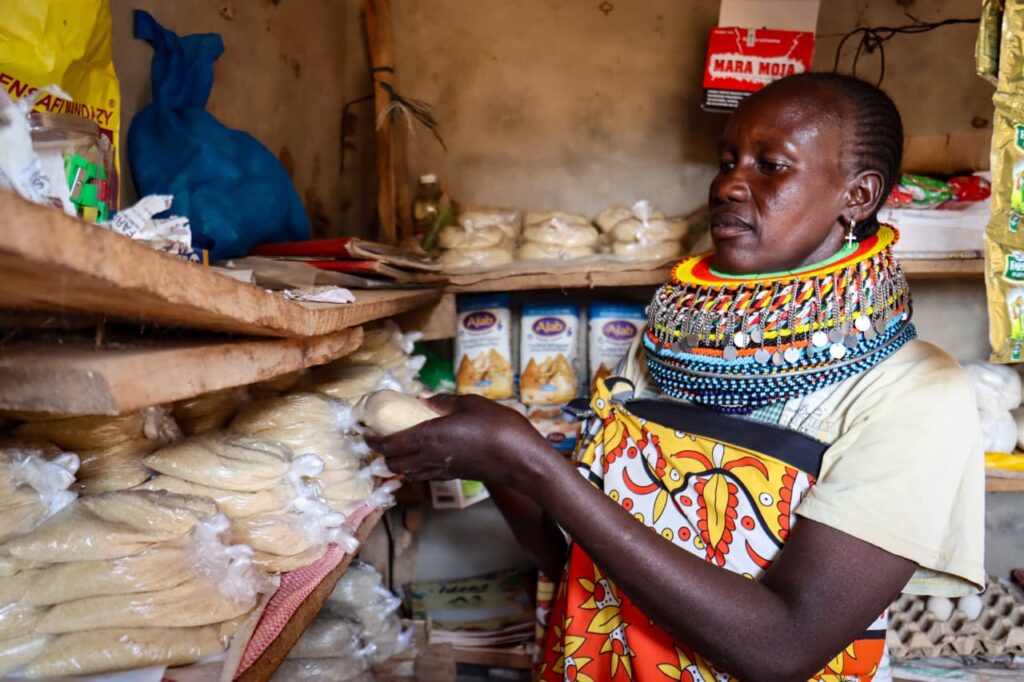
The mother of seven has long-term plans to take her business to the next level. One of her big goals is to enrol in a driving school so she can obtain her license and eventually secure another loan to buy a vehicle to help her deliver goods more efficiently. With reliable transportation, she hopes to reduce delivery costs and grow her business into a supply hub for other local shopkeepers.
Jamarose has become an advocate for sustainable, climate-conscious entrepreneurship, encouraging other women to explore alternatives to charcoal-burning and to join financial institutions such as Rangelands SACCO. She believes that access to tailored services, including savings, credit, investment opportunities, and valuable training in entrepreneurship and financial literacy, can transform lives, and she’s determined to help others tap into that potential.